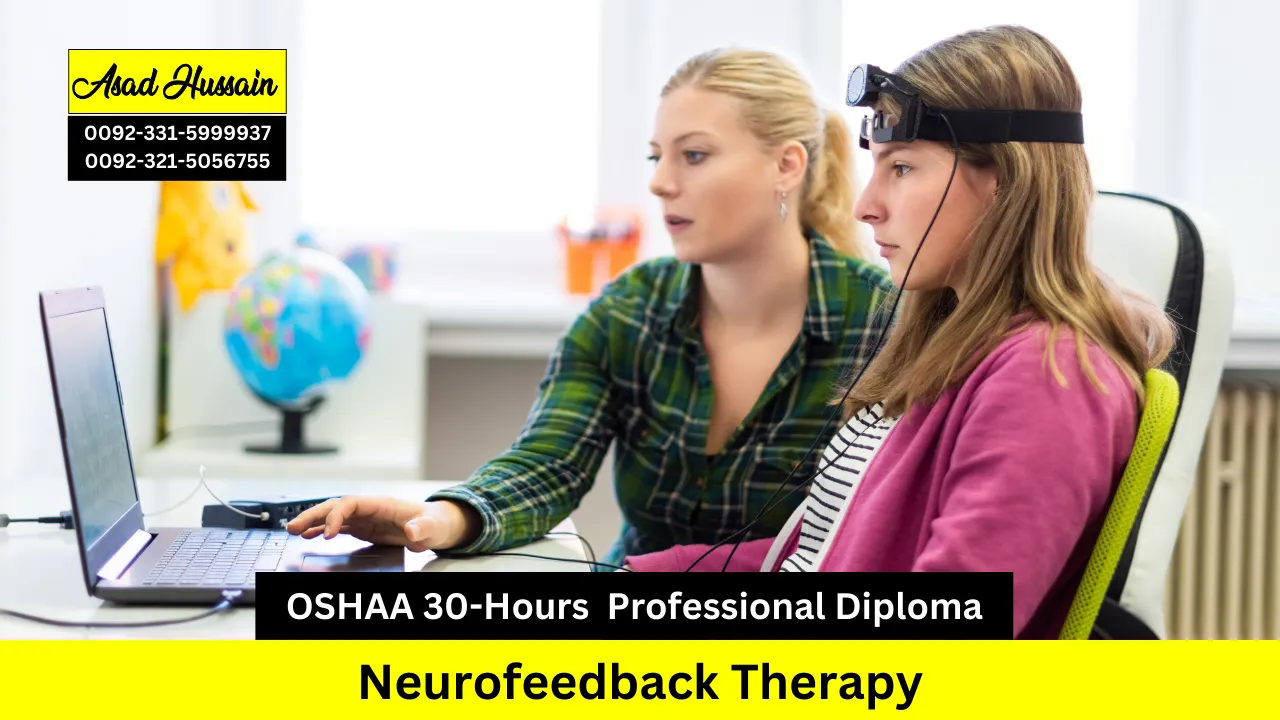
Official Training: Professional Diploma in Neurofeedback Therapy
The OSHAA 30-Hours Professional Diploma in Neurofeedback Therapy is an advanced training program meticulously designed to combine cutting-edge brain-training technology with rigorous clinical safety and occupational health standards. This curriculum focuses on the precise application of electroencephalogram (EEG) biofeedback, emphasizing electrical safety, equipment sterilization, and the ethical management of neurological data. Students explore the intersection of neurotechnology and workplace safety frameworks, learning to mitigate risks such as technical malfunctions or patient discomfort. By mastering these specialized protocols, professionals ensure that brain-regulation treatments are delivered within a secure, compliant, and highly organized environment that prioritizes patient health and practitioner safety at every stage.
This comprehensive program bridges the gap between sophisticated neuroscientific theory and the practical safety requirements of modern clinical facilities. You will gain deep insights into hazard communication, the proper maintenance of sensitive electronic sensors, and the implementation of infection control within a high-tech wellness setting. While this course is not Ofqual regulated, it delivers the high-level technical expertise necessary to lead neurofeedback initiatives effectively within a professional environment. The training emphasizes a proactive culture of safety, empowering you to design and oversee robust cognitive therapy protocols that meet international expectations. You will emerge with the specialized skills needed to handle complex neurofeedback scenarios while ensuring operational excellence.
OSHAA 30-Hours Professional Diploma in Neurofeedback Therapy graduates are exceptionally well-positioned to pursue advanced career paths and prestigious professional recognitions in the global neurotechnology and mental health sectors. Completing this diploma serves as a powerful validation of your expertise, opening doors to specialized roles such as Neurofeedback Lab Manager or Clinical Brain-Training Consultant. Your comprehensive understanding of these safety standards acts as a vital foundation for those pursuing additional professional certifications and diplomas in cognitive behavioral management or medical technology safety. By building this world-class foundation, you significantly enhance your professional portfolio, making you a top-tier candidate for leadership positions and specialized consultancy roles in the healthcare industry.
Program Highlights
Study Units
- Introduction to Neurofeedback Therapy: Principles and Applications (3 hours)
- Understanding Brainwaves and Their Role in Mental Health (4 hours)
- Neurofeedback Protocols and Techniques (4 hours)
- Setting Up and Using Neurofeedback Equipment (3 hours)
- Assessing Clients for Neurofeedback Therapy (3 hours)
- Applications of Neurofeedback in Mental Health Treatment (4 hours)
- Monitoring and Adjusting Neurofeedback Sessions (3 hours)
- Neurofeedback for Cognitive Enhancement and Peak Performance (3 hours)
- Advanced Techniques and Future Trends in Neurofeedback Therapy (3 hours)
Entry Requirements
To enroll in the OSHAA 30-Hours Professional Diploma in Neurofeedback Therapy, applicants must satisfy the following essential criteria to ensure they can manage the technical, scientific, and safety demands of this advanced field:
- Age and Education: Candidates must be at least 18 years of age and hold a high school diploma. Preference is given to those holding a Diploma in Psychology, a Certificate in Neuroscience Basics, or a Level 3 Diploma in Health and Social Care.
- Language Proficiency: A high level of proficiency in English is required to accurately interpret complex EEG data, neuroscientific terminology, and clinical safety protocols.
- Work Experience: While not mandatory, 6–12 months of experience in a clinical, laboratory, or healthcare environment—or holding a Professional Certificate in Medical Technology Support—is highly recommended for contextual understanding.
These requirements ensure that every participant possesses the foundational knowledge necessary to master specialized brain-regulation protocols and advance their professional standing in the neurotechnology sector.
Learning Outcomes
Introduction to Neurofeedback Therapy: Principles and Applications
- Understand the core scientific principles of neurofeedback and how it facilitates brain self-regulation.
- Gain insight into the primary applications of neurofeedback for mental health stability and cognitive enhancement.
- Learn why neurofeedback is a preferred non-invasive, drug-free treatment option for modern practitioners.
- Develop an understanding of how neurofeedback effectively addresses conditions like anxiety, ADHD, and depression.
Understanding Brainwaves and Their Role in Mental Health
- Study different brainwave frequencies—Delta, Theta, Alpha, Beta, and Gamma—and their physiological functions.
- Understand how imbalances in brainwave activity directly contribute to chronic mental health challenges.
- Develop the ability to recognize specific brainwave patterns for accurate diagnosis and clinical treatment.
- Explore the critical relationship between brainwave regulation and emotional or behavioral states.
Neurofeedback Protocols and Techniques
- Understand the various neurofeedback protocols used to target and modify specific brainwave patterns.
- Learn the clinical techniques for applying neurofeedback to promote sustained cognitive improvements.
- Develop the skills to implement tailored neurofeedback protocols designed for individual client needs.
- Gain an understanding of how to customize neurofeedback sessions for specific therapeutic goals.
Setting Up and Using Neurofeedback Equipment
- Learn how to set up and calibrate sensitive neurofeedback equipment for precise brainwave measurements.
- Understand how to interpret live EEG data and make real-time adjustments during a therapy session.
- Gain practical skills in using neurofeedback devices to monitor and train active brainwave patterns.
- Explore the technical aspects of equipment maintenance, software applications, and effective troubleshooting.
Assessing Clients for Neurofeedback Therapy
- Learn how to evaluate clients to determine their suitability for neurofeedback intervention.
- Understand critical assessment factors, including medical history and specific presenting psychological issues.
- Develop the ability to design comprehensive, data-driven neurofeedback plans based on initial assessments.
- Learn how to gather and interpret client data to optimize the efficacy of every treatment session.
Applications of Neurofeedback in Mental Health Treatment
- Gain deep insights into applying neurofeedback for treating PTSD, ADHD, anxiety, and clinical depression.
- Learn the specific protocols required to address diverse psychological issues within a neurofeedback framework.
- Understand how to integrate neurofeedback therapy with other clinical methods for comprehensive patient care.
- Explore real-world case studies demonstrating successful neurofeedback applications in diverse mental health settings.
Monitoring and Adjusting Neurofeedback Sessions
- Learn how to track client progress and monitor shifts in brainwave activity over multiple sessions.
- Understand the necessity of adjusting neurofeedback protocols based on real-time client responses and data.
- Develop skills in fine-tuning treatments to maximize neurological effectiveness and enhance patient outcomes.
- Gain insight into how feedback loops help clients learn to self-regulate their own brainwave patterns.
Neurofeedback for Cognitive Enhancement and Peak Performance
- Understand the use of neurofeedback for boosting memory, focus, and overall concentration levels.
- Learn how neurofeedback is applied to enhance mental performance in elite athletes, professionals, and students.
- Explore techniques for promoting mental clarity, creative thinking, and cognitive agility.
- Develop the ability to create protocols specifically optimized for peak performance and brain health.
Advanced Techniques and Future Trends in Neurofeedback Therapy
- Gain an understanding of the latest technological advancements and emerging trends in neurofeedback.
- Explore advanced clinical techniques for treating complex neurological and psychological conditions.
- Learn about the future potential of neurofeedback in areas like neuroplasticity and anti-aging.
- Develop the ability to stay updated with the latest research and technological developments in the neurofeedback field.
Target Audience
The OSHAA 30-Hours Professional Diploma in Neurofeedback Therapy is an intensive program designed for forward-thinking professionals and healthcare providers who are eager to master the intersection of brain-monitoring technology, clinical safety, and non-invasive cognitive regulation.
Mental Health and Clinical Practitioners
- Clinical psychologists looking to integrate biofeedback into their therapeutic toolkit.
- Licensed counselors seeking drug-free alternatives for anxiety and ADHD management.
- Psychiatric nurses responsible for monitoring neurological stability in clinical settings.
- Trauma specialists utilizing neurofeedback for PTSD and emotional regulation.
- Behavioral therapists aiming to enhance patient self-regulation through EEG training.
- Mental health support workers assisting in high-tech rehabilitation clinics.
Neuroscientists and Laboratory Specialists
- Research assistants working in neurological or cognitive science laboratories.
- EEG technicians specializing in brainwave data collection and analysis.
- Lab managers overseeing the safety and calibration of neurotechnology equipment.
- Cognitive scientists exploring the practical applications of neuroplasticity.
- Data analysts focusing on neurological patterns and clinical outcomes.
- Biomedical technicians maintaining sensitive brain-monitoring hardware.
High-Performance and Executive Coaches
- Sports psychologists working with elite athletes on peak performance and focus.
- Executive coaches training corporate leaders in stress resilience and mental clarity.
- Performance consultants for high-pressure professions like aviation or surgery.
- Memory training specialists helping students and professionals optimize cognition.
- Wellness consultants designing advanced neuro-wellness programs for private clients.
- Mindfulness instructors integrating biofeedback data into meditation practices.
Healthcare Administrators and Compliance Officers
- Hospital department heads managing neurotechnology and psychiatric wings.
- Clinical safety officers auditing the electrical and data safety of EEG labs.
- Quality assurance managers ensuring high standards in neurotherapy services.
- Regulatory affairs specialists overseeing the use of non-invasive medical devices.
- Health center directors expanding their facility’s mental health service offerings.
- Ethics committee members reviewing protocols for neurological data management.
Aspiring Specialists and Career Changers
- Science graduates holding a Diploma in Psychology or a biology-related field.
- Individuals with a Level 3 Diploma in Health and Social Care seeking a niche.
- Professionals holding a foundational Certificate in Neuroscience Basics.
- Career changers transitioning from general healthcare into neurotechnology.
- Aspiring Neurofeedback Technicians building a professional, safety-first portfolio.
- Students aiming for leadership roles in the emerging brain-health industry.
Educational and Rehabilitation Specialists
- Special educational needs (SEN) coordinators supporting students with ADHD.
- Occupational therapists using brain-training to assist in cognitive recovery.
- Speech and language therapists exploring the neurological roots of communication.
- Educational psychologists focusing on brain-based learning strategies.
- Rehabilitation center staff working with patients recovering from brain injuries.
- School counselors seeking evidence-based tools for student behavioral support.
By completing this diploma, you will secure the authoritative expertise required to lead sophisticated neurofeedback sessions while maintaining the highest levels of clinical integrity and patient safety.