OSHAA 30 Hours Gestalt Therapy for Palliative Care Professional Training
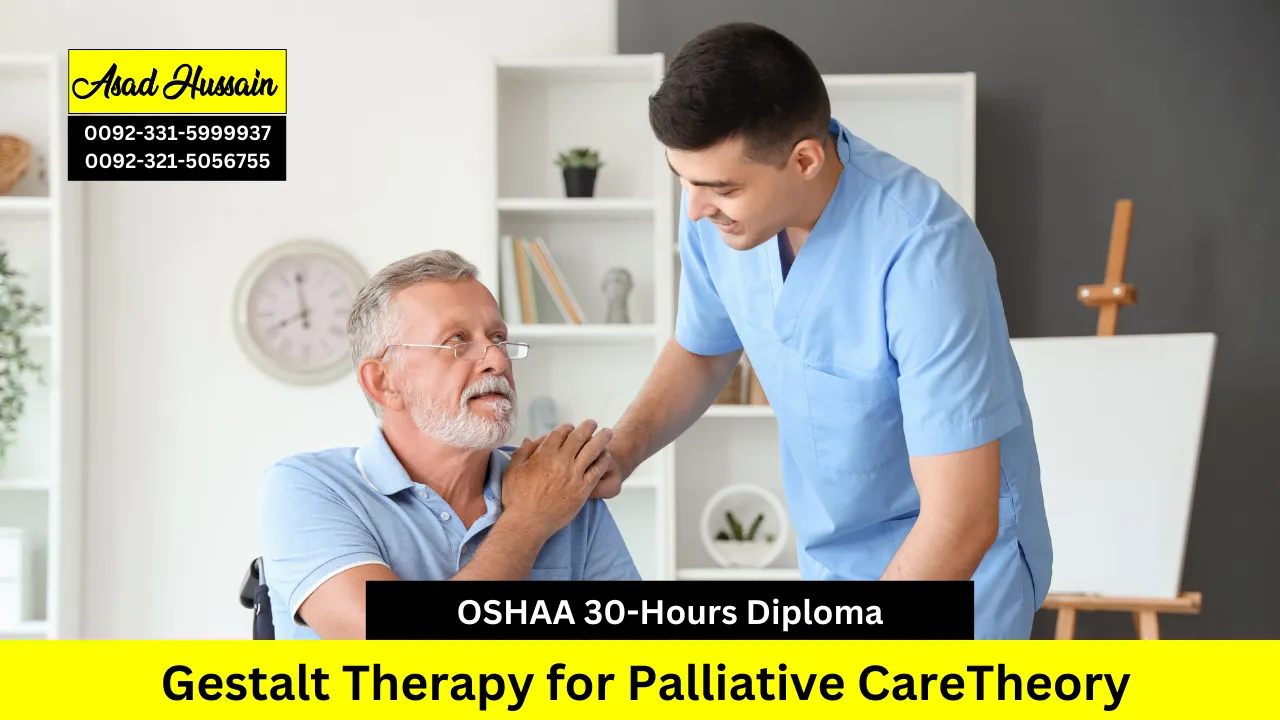
The OSHAA 30-Hours Professional Diploma in Gestalt Therapy for Palliative Care is designed to equip learners with the practical skills and knowledge needed to provide effective emotional and psychological support in palliative care settings. Participants will explore core Gestalt therapy principles such as awareness, presence, and relational techniques, learning how to foster meaningful connections with patients and their families. The course emphasizes hands-on applications, helping learners develop confidence in addressing sensitive issues, managing stress, and promoting well-being for those facing life-limiting conditions.
This diploma also focuses on enhancing communication, empathy, and active listening skills, which are critical in palliative care environments. Learners will gain insight into recognising emotional needs, handling difficult conversations, and applying therapeutic strategies to support patients and their families. The training also highlights ethical considerations, self-care practices for caregivers, and approaches to managing complex emotional situations. By combining theory with practical exercises, participants can immediately apply their learning to real-world care scenarios.
OSHAA 30-Hours Professional Diploma in Gestalt Therapy for Palliative Care prepares learners for further certifications and diplomas in related care and therapy fields. This course provides a strong foundation for anyone looking to enhance their professional skills in emotional support, patient-centred care, and therapeutic interventions. Participants will leave with practical expertise, improved confidence, and the ability to implement Gestalt therapy techniques effectively within palliative care environments, making a meaningful difference in the lives of patients and caregivers alike.
Program Highlights
Study Units
- Introduction to Gestalt Therapy and Palliative Care Principles (3 hours)
- The Therapeutic Relationship and Presence in End-of-Life Support (5 hours)
- Grief, Loss, and Emotional Processing in Palliative Settings (4 hours)
- Working in the Here and Now: Gestalt Awareness Techniques (5 hours)
- Communication with Patients and Families Facing Terminal Illness (3 hours)
- Supporting Spiritual and Existential Exploration (4 hours)
- Creative Gestalt Interventions for Emotional Expression (3 hours)
- Managing Family Dynamics and Relational Tensions (3 hours)
Entry Requirement
To enrol in the OSHAA 30-Hours Professional Diploma in Gestalt Therapy for Palliative Care, candidates should meet the following criteria:
- Age Requirement: Participants must be at least 18 years of age to ensure maturity and readiness for palliative care training.
- Educational Background: Learners should have a minimum of a high school diploma, GCSEs, or equivalent. Individuals with prior certifications or diplomas in health, social care, counselling, or related fields are highly encouraged to apply.
- Language Proficiency: A good command of English is required, as all course materials, communication exercises, and assessments are delivered in English.
- Work Experience: While prior professional experience in healthcare, social care, counselling, or support roles is not mandatory, it is beneficial for understanding real-world palliative care scenarios and applying therapeutic techniques effectively.
Candidates who meet these requirements will be well-prepared to engage fully with the course content and gain practical skills in Gestalt therapy for palliative care, building a strong foundation for further diplomas and certifications in counselling, therapy, or healthcare support.fessionals who are motivated to understand human behavior and personality dynamics, providing valuable knowledge and practical tools for personal and professional growth.
Learning Outcomes
Introduction to Gestalt Therapy and Palliative Care Principles (3 Hours)
- Understand the foundational concepts of Gestalt therapy within palliative care
- Identify the core principles of holistic and person-centred end-of-life support
- Recognise the relevance of Gestalt therapy in addressing emotional and psychological needs
- Explore the integration of therapeutic approaches within multidisciplinary palliative care teams
The Therapeutic Relationship and Presence in End-of-Life Support (5 Hours)
- Establish authentic therapeutic presence with individuals facing terminal illness
- Develop relational awareness to support deep emotional engagement
- Explore boundary-setting and emotional regulation in emotionally intense settings
- Understand how trust and empathy enhance the therapeutic alliance in palliative care
Grief, Loss, and Emotional Processing in Palliative Settings (4 Hours)
- Recognise the different forms of grief experienced by patients and families
- Facilitate emotional expression and acknowledgement of loss
- Support anticipatory grief and unresolved emotional pain using Gestalt techniques
- Understand the stages and non-linear nature of the grieving process
Working in the Here and Now: Gestalt Awareness Techniques (5 Hours)
- Apply ‘here and now’ interventions to enhance client self-awareness
- Encourage moment-to-moment exploration of thoughts, emotions, and sensations
- Support individuals in identifying internal conflicts and unfinished business
- Use mindfulness-based approaches to promote presence and grounding
Communication with Patients and Families Facing Terminal Illness (3 Hours)
- Practise compassionate and clear communication in sensitive situations
- Use Gestalt-based dialogue to facilitate meaningful conversations
- Address difficult topics such as dying, regret, and closure with care
- Support emotional safety and openness in verbal and non-verbal interactions
Supporting Spiritual and Existential Exploration (4 Hours)
- Identify common spiritual and existential concerns at end-of-life
- Use Gestalt inquiry to explore meaning, purpose, and personal values
- Facilitate conversations around acceptance, legacy, and life reflection
- Respect diverse belief systems and promote spiritual dignity
Creative Gestalt Interventions for Emotional Expression (3 Hours)
- Integrate art, imagery, and role-play into therapeutic sessions
- Enable symbolic expression of unspoken feelings and fears
- Encourage personal storytelling and metaphor to process complex emotions
- Apply creative tools to deepen connection and support psychological release
Managing Family Dynamics and Relational Tensions (3 Hours)
- Support relational healing and promote compassionate interaction
- Understand common family dynamics in the context of palliative care
- Navigate intergenerational conflict, caregiving stress, and emotional distance
- Facilitate open dialogue and mutual understanding among family members
Target Audience
This course is ideal for professionals and caregivers who wish to enhance their skills in providing compassionate, therapeutic, and person-centred support for individuals in palliative care settings. It is suitable for those looking to deepen their understanding of emotional, psychological, and relational aspects of end-of-life care.
Healthcare Professionals and Palliative Care Workers
- Nurses, healthcare assistants, and hospice staff aiming to improve patient support
- Professionals working in home care or community-based palliative services
- Individuals seeking to enhance empathy and therapeutic presence in their work
- Staff who manage end-of-life care planning and patient well-being
- Caregivers wishing to integrate Gestalt therapy techniques into daily practice
Counsellors and Psychotherapists
- Practising counsellors supporting clients with terminal illnesses or chronic conditions
- Therapists looking to expand their skills into palliative and end-of-life care
- Individuals seeking techniques for grief and emotional processing
- Professionals aiming to provide holistic therapeutic interventions
- Practitioners who want to strengthen client-centred communication
Social Workers and Support Staff
- Social workers supporting patients and families during end-of-life care
- Staff involved in community outreach for terminally ill individuals
- Professionals navigating family dynamics and relational tensions
- Individuals who coordinate multidisciplinary care and provide emotional support
- Workers advocating for patient well-being and dignity
Family Caregivers and Volunteers
- Family members involved in home-based palliative care
- Volunteers in hospices or support networks assisting patients and families
- Individuals aiming to develop practical tools for emotional and spiritual support
- Caregivers seeking strategies to manage grief, stress, and challenging situations
- Volunteers who wish to enhance communication and presence in care delivery
Mental Health Practitioners and Life Coaches
- Professionals supporting clients with existential or spiritual concerns
- Practitioners addressing anticipatory grief and emotional processing
- Life coaches seeking tools for therapeutic conversation and self-awareness
- Mental health workers aiming to integrate Gestalt interventions into practice
- Those interested in promoting emotional resilience and well-being in clients
Educators and Trainers in Healthcare
- Trainers responsible for teaching palliative care techniques
- Educators aiming to include emotional and relational training in curricula
- Professionals providing workshops on grief, coping, and therapeutic communication
- Staff developing training programmes for caregivers and healthcare personnel
- Educators seeking practical skills for integrating Gestalt therapy methods
This course is designed to equip all participants with practical knowledge, therapeutic techniques, and emotional support skills, empowering them to make a meaningful difference in the lives of patients, families, and caregivers within palliative care settings.