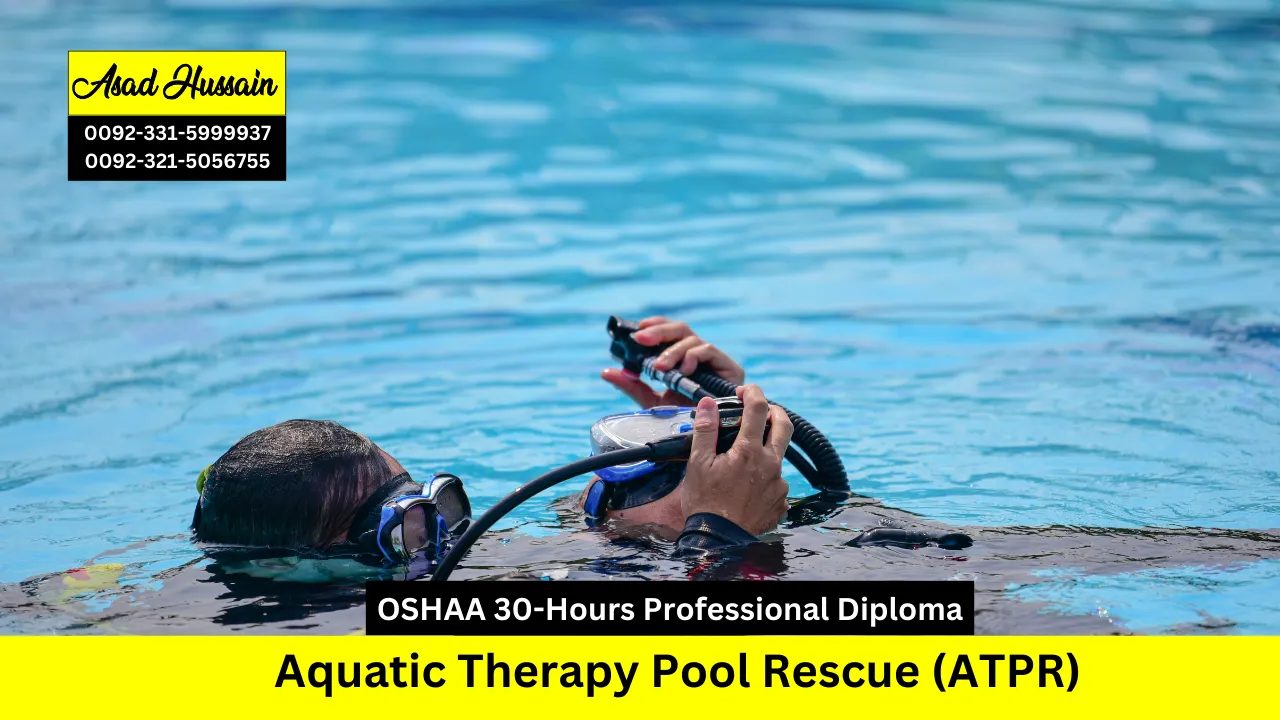
Professional OSHAA 30-Hours Diploma in Aquatic Therapy Pool Rescue (ATPR) for Safe Intervention
The OSHAA 30-Hours Professional Diploma in Aquatic Therapy Pool Rescue (ATPR) is a specialised professional training programme designed to support safe and effective emergency response within aquatic therapy pool environments. This course focuses on the unique safety challenges associated with therapy pools, including vulnerable participants, controlled movements, and specialised equipment. Learners gain practical knowledge of rescue awareness, emergency preparedness, and safe intervention techniques tailored specifically to therapeutic aquatic settings. The programme promotes confidence, responsibility, and professionalism when managing incidents in rehabilitation and therapy-based water environments.
Throughout the course, participants explore key areas such as hazard identification, risk management, emergency planning, and coordinated response within aquatic therapy pools. The structured curriculum supports effective decision-making during incidents while prioritising participant dignity, comfort, and safety. Emphasis is placed on communication, teamwork, and adherence to safety procedures in healthcare-oriented aquatic facilities. This professional diploma complements a range of recognised safety certifications and aquatic rescue diplomas, strengthening professional capability and credibility for those working in therapy pool safety roles.
OSHAA 30-Hours Professional Diploma in Aquatic Therapy Pool Rescue (ATPR) is designed to enhance competence and readiness in managing emergency situations within specialised aquatic therapy environments. The course equips learners with the skills to support organisational safety policies, respond calmly during emergencies, and contribute to a proactive safety culture. By focusing on practical application and environment-specific rescue principles, this programme enables learners to play a vital role in maintaining high standards of safety and care across aquatic therapy facilities.
Program Highlights
Study Units
- Introduction to Aquatic Therapy Pool Rescue and Roles (3 Hours)
- Understanding Aquatic Therapy Environments and Safety Considerations (3 Hours)
- Risk Assessment and Hazard Prevention in Therapy Pools (3 Hours)
- Rescue Equipment and Techniques Specific to Aquatic Therapy (4 Hours)
- Casualty Assessment and Immediate Response in Therapeutic Settings (3 Hours)
- Spinal Injury Recognition and Management in Aquatic Therapy Pools (4 Hours)
- Emergency Action Planning and Incident Management (3 Hours)
- Communication and Coordination with Healthcare Professionals (3 Hours)
- Post-Rescue Care, Documentation, and Reflection (2 Hours)
- Quality Assurance and Continuous Improvement in Aquatic Therapy Safety (2 Hours)
Entry Requirements
- Age Requirement: Learners should be 18 years of age or above, reflecting the level of responsibility required when responding to emergencies in aquatic therapy pool environments.
- Educational Background: A basic secondary school education or equivalent is recommended. Learners with related credentials such as aquatic therapy support certificates, pool safety awards, lifeguarding certificates, first aid diplomas, water safety certifications, rehabilitation support training, or occupational safety diplomas may find the course particularly beneficial.
- Language Proficiency: Learners should have a good working knowledge of English to understand course materials, follow rescue instructions, and communicate clearly during emergency situations.
- Work Experience: Previous work experience is not mandatory, however experience in aquatic therapy pools, rehabilitation centres, healthcare support roles, swimming pools, or leisure facilities is considered an advantage.
Learning Outcomes
Introduction to Aquatic Therapy Pool Rescue and Roles (3 Hours)
- Understand the role and responsibilities of rescuers in aquatic therapy settings
- Recognise the importance of specialised rescue approaches for therapy pools
- Identify key safety priorities in aquatic therapy environments
Understanding Aquatic Therapy Environments and Safety Considerations (3 Hours)
- Describe the unique characteristics of aquatic therapy pools
- Recognise safety challenges specific to therapeutic aquatic environments
- Implement measures to ensure a safe setting for both clients and staff
Risk Assessment and Hazard Prevention in Therapy Pools (3 Hours)
- Conduct comprehensive risk assessments tailored to aquatic therapy pools
- Identify common hazards and implement effective prevention strategies
- Develop safety protocols to minimise risks in therapy pool operations
Rescue Equipment and Techniques Specific to Aquatic Therapy (4 Hours)
- Identify specialised rescue equipment used in aquatic therapy settings
- Demonstrate appropriate rescue techniques adapted for therapy pools
- Ensure safe and effective use and maintenance of rescue equipment
Casualty Assessment and Immediate Response in Therapeutic Settings (3 Hours)
- Perform rapid and accurate casualty assessments within therapy pool contexts
- Apply immediate response techniques appropriate for therapeutic clients
- Prioritise actions to stabilise casualties before advanced medical assistance
Spinal Injury Recognition and Management in Aquatic Therapy Pools (4 Hours)
- Recognise signs and symptoms of spinal injuries in therapy pool emergencies
- Apply safe spinal injury management and rescue procedures
- Minimise further injury risk during casualty handling and extraction
Emergency Action Planning and Incident Management (3 Hours)
- Develop effective emergency action plans tailored for therapy pools
- Manage incidents efficiently using structured protocols
- Coordinate responses to minimise impact and ensure safety
Communication and Coordination with Healthcare Professionals (3 Hours)
- Use clear communication methods during rescue and emergency situations
- Collaborate effectively with healthcare staff and emergency responders
- Facilitate smooth handover and care continuity post-rescue
Post-Rescue Care, Documentation, and Reflection (2 Hours)
- Provide appropriate post-rescue care to clients in therapy pools
- Complete accurate incident documentation and reporting
- Reflect on rescue incidents to identify areas for improvement
Quality Assurance and Continuous Improvement in Aquatic Therapy Safety (2 Hours)
- Implement quality assurance practices in aquatic therapy safety management
- Monitor and evaluate safety protocols for effectiveness
- Promote continuous improvement through feedback and professional development
Target Audiences
This course is designed for individuals and professionals who are responsible for safety, supervision, and emergency response within aquatic therapy pool and rehabilitation-focused water environments.
Aquatic Therapy and Rehabilitation Professionals
- Therapists delivering aquatic treatment sessions
- Rehabilitation assistants supporting therapy activities
- Clinical support staff working in therapy pools
- Professionals responsible for client safety in water
- Practitioners seeking structured rescue awareness training
Swimming Pool and Facility Support Staff
- Pool attendants working in specialist or therapy pools
- Facility staff monitoring poolside safety conditions
- Maintenance teams supporting safe pool operations
- Staff assisting clients with pool access and movement
- Personnel involved in daily safety checks and controls
Health, Safety, and Risk Management Personnel
- Safety officers overseeing aquatic therapy facilities
- Risk management staff supporting hazard control
- Compliance personnel involved in safety monitoring
- Individuals responsible for incident prevention
- Teams supporting organisational safety procedures
Emergency Response and Support Teams
- Staff assisting during therapy pool emergencies
- Individuals involved in emergency action plans
- Personnel supporting casualty care until help arrives
- Teams coordinating communication during incidents
- Workers trained to support calm and controlled responses
Leisure, Wellness, and Care Support Workers
- Wellness centre staff managing therapeutic water use
- Support workers assisting clients in aquatic settings
- Programme coordinators supervising therapy sessions
- Individuals responsible for participant supervision
- Professionals aiming to enhance safety readiness
Aspiring Aquatic Safety Practitioners
- Individuals seeking entry into aquatic safety roles
- Learners building foundational therapy pool rescue skills
- Career starters aiming to work in specialist aquatic facilities
- Individuals enhancing professional credibility
- Those interested in supporting safe aquatic therapy delivery