Comprehensive General Industry Safety and Health Training
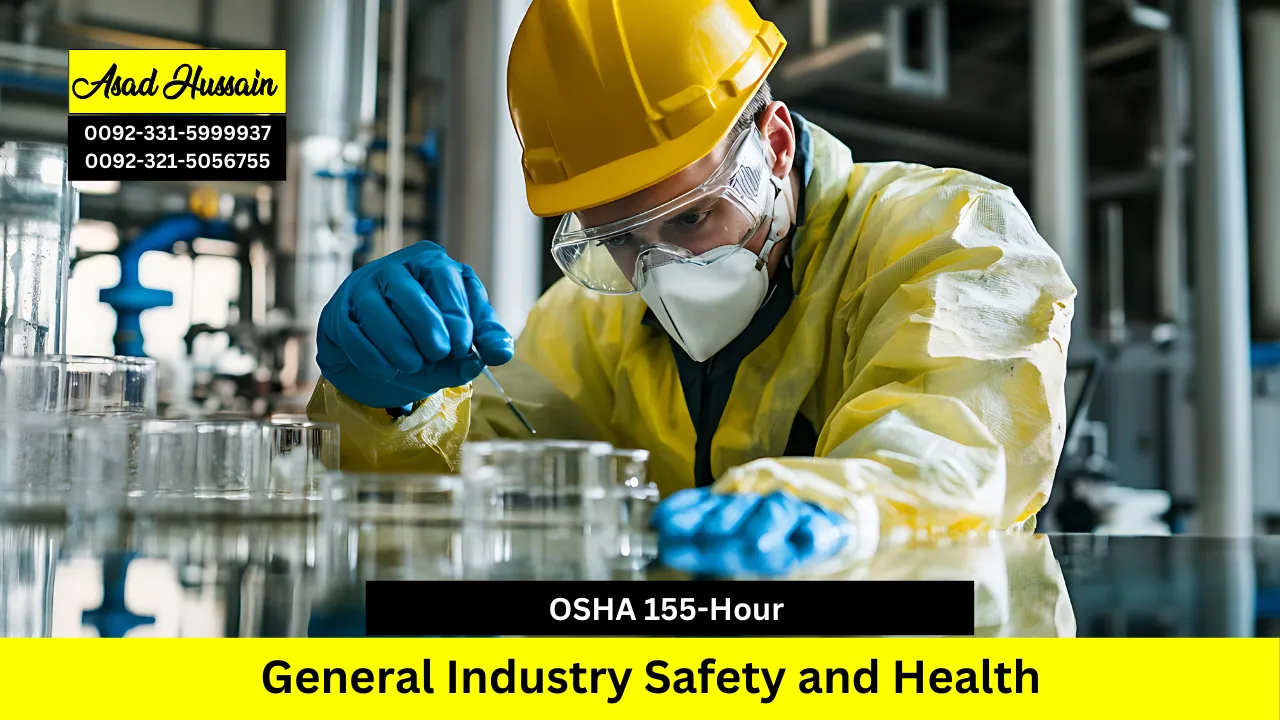
The OSHA 155-Hour General Industry Safety and Health course is a comprehensive professional programme designed to build advanced knowledge of occupational safety and health across a wide range of industrial environments. This course provides a strong foundation in workplace safety principles, hazard control, and regulatory awareness, enabling learners to understand how effective safety systems protect workers, assets, and organisational reputation. Through structured learning, participants gain practical insight into managing safety responsibilities, promoting compliance, and supporting safer working conditions in general industry settings.
This programme focuses on developing real-world safety competence by covering critical areas such as hazard identification, risk assessment, incident prevention, emergency preparedness, and employee safety management. Learners explore how safety standards are applied in manufacturing, logistics, utilities, warehouses, and service-based industries. Emphasis is placed on proactive risk control, effective communication, and leadership in safety, helping participants contribute confidently to workplace safety performance and continuous improvement initiatives.
The OSHA 155-Hour General Industry Safety and Health course is ideal for professionals seeking to strengthen their safety expertise and align their skills with globally recognised practices. Upon completion, learners are well positioned to pursue additional safety certifications and professional diplomas that enhance their credentials and industry recognition. This course supports career growth by equipping participants with practical safety knowledge, compliance confidence, and leadership capability required in today’s demanding industrial environments.
Program Highlights
Study Units
- Introduction to OSHA and General Industry Safety Standards (10 Hours)
- Hazard Communication and Chemical Safety (HAZCOM) (15 Hours)
- Workplace Hazard Identification and Risk Management (15 Hours)
- Personal Protective Equipment (PPE) (10 Hours)
- Fire Safety and Emergency Response (10 Hours)
- Electrical Safety and Lockout/Tagout (LOTO) Procedures (10 Hours)
- Ergonomics and Musculoskeletal Disorders (MSDs) Prevention (15 Hours)
- Machine Guarding and Equipment Safety (15 Hours)
- Incident Reporting, Investigation, and Root Cause Analysis (15 Hours)
- Workplace Environmental Safety and Hazardous Waste Management (15 Hours)
- Safety Auditing and Compliance Inspections (15 Hours)
- Creating a Safety Culture and Employee Training (10 Hours)
TThis course is designed for individuals seeking to develop strong competence in general industry safety and health while ensuring learners have the appropriate background to benefit from advanced safety concepts.
- Age Requirement: Applicants should be a minimum of 18 years of age to ensure readiness for professional safety responsibilities and workplace leadership roles.
- Educational Background: A basic educational qualification such as secondary school completion is recommended. Candidates holding diplomas or certificates in occupational health and safety, industrial safety, fire safety, environmental safety, engineering, construction, manufacturing, or risk management will find the course especially relevant.
- Language Proficiency: Learners should have a good level of English proficiency to understand technical terminology, engage in discussions, and complete course assessments effectively.
- Work Experience: Prior experience in general industry, manufacturing, logistics, construction, utilities, or supervisory roles is beneficial but not mandatory.
These entry requirements ensure participants can fully engage with the course content, apply safety principles effectively, and develop the practical skills needed to manage workplace safety and health in general industry environments fessional environments.
Learning Outcomes
Introduction to OSHA and General Industry Safety Standards (10 Hours)
- Gain a comprehensive understanding of OSHA’s mission, structure, and regulatory framework
- Learn how OSHA standards apply to general industry operations and compliance obligations
- Develop the ability to interpret and implement workplace safety guidelines in alignment with OSHA standards
- Understand the rights and responsibilities of employers and employees under OSHA regulations
Hazard Communication and Chemical Safety (HAZCOM) (15 Hours)
- Learn to classify and communicate chemical hazards according to OSHA’s Hazard Communication Standard
- Gain skills in interpreting Safety Data Sheets (SDS) for effective workplace hazard management
- Understand labeling requirements and safe handling procedures for hazardous substances
- Apply best practices in chemical storage, transportation, and disposal
Workplace Hazard Identification and Risk Management (15 Hours)
- Acquire techniques to systematically identify potential hazards across different workplace environments
- Learn to assess and prioritize risks using industry-standard methodologies
- Develop the ability to implement effective risk mitigation strategies
- Strengthen decision-making skills for proactive workplace safety management
Personal Protective Equipment (PPE) (10 Hours)
- Understand OSHA requirements for selecting, using, and maintaining PPE
- Learn to evaluate workplace risks and determine appropriate protective equipment
- Gain hands-on knowledge of proper PPE fitting, inspection, and storage
- Enhance worker safety by integrating PPE use into daily operations
Fire Safety and Emergency Response (10 Hours)
- Develop knowledge of fire prevention strategies and hazard control measures
- Learn to operate and maintain fire protection systems and extinguishing equipment
- Understand OSHA’s requirements for emergency preparedness and evacuation planning
- Build competencies in coordinating workplace emergency response efforts
Electrical Safety and Lockout/Tagout (LOTO) Procedures (10 Hours)
- Gain a clear understanding of OSHA electrical safety standards and their workplace applications
- Learn to identify electrical hazards and implement protective measures
- Acquire practical knowledge of lockout/tagout procedures to control hazardous energy
- Understand the importance of training and enforcement in LOTO compliance
Ergonomics and Musculoskeletal Disorders (MSDs) Prevention (15 Hours)
- Learn to recognize risk factors for ergonomic hazards and musculoskeletal injuries
- Develop strategies for ergonomic workplace design to reduce injury risks
- Understand OSHA guidelines for preventing repetitive strain and overexertion injuries
- Promote worker well-being through effective ergonomic practices
Machine Guarding and Equipment Safety (15 Hours)
- Gain knowledge of OSHA machine guarding requirements and equipment safety standards
- Learn to assess equipment hazards and implement effective safeguarding measures
- Understand the role of engineering and administrative controls in injury prevention
- Acquire practical insights into training workers on safe equipment operation
Incident Reporting, Investigation, and Root Cause Analysis (15 Hours)
- Learn the proper procedures for incident reporting in compliance with OSHA standards
- Gain skills in conducting detailed workplace incident investigations
- Develop competencies in identifying root causes of accidents and near-misses
- Apply corrective and preventive measures to reduce future risks
Workplace Environmental Safety and Hazardous Waste Management (15 Hours)
- Understand OSHA and EPA requirements for managing environmental hazards
- Learn safe procedures for handling, storing, and disposing of hazardous waste
- Gain knowledge of pollution prevention strategies and environmental compliance
- Acquire skills to integrate environmental management into workplace safety programs
Safety Auditing and Compliance Inspections (15 Hours)
- Learn the principles and procedures of workplace safety audits
- Gain the ability to prepare for and conduct compliance inspections
- Understand OSHA inspection protocols and how to respond effectively
- Apply findings from audits to drive continuous safety improvements
Creating a Safety Culture and Employee Training (10 Hours)
- Understand the role of leadership in sustaining long-term safety performance
- Develop strategies to promote a proactive and positive workplace safety culture
- Learn effective communication techniques for safety training and awareness programs
- Gain knowledge of adult learning principles to enhance safety education
This course is designed for individuals and organizations seeking to build strong, compliant, and proactive occupational safety and health practices across general industry environments.
Safety Officers and HSE Professionals
- Professionals responsible for implementing and managing workplace safety systems
- Individuals overseeing hazard identification, risk assessments, and control measures
- Safety personnel seeking deeper understanding of OSHA general industry standards
- HSE staff involved in audits, inspections, and compliance monitoring
- Practitioners aiming to strengthen safety leadership and decision-making skills
Supervisors and Line Managers
- Frontline leaders responsible for daily operational safety
- Managers supervising teams in manufacturing, logistics, or service industries
- Personnel tasked with enforcing safe work procedures and PPE compliance
- Supervisors involved in incident reporting and corrective actions
- Leaders seeking to build a strong safety culture within their teams
Engineers and Technical Professionals
- Engineers working in industrial, mechanical, electrical, or maintenance roles
- Technical staff involved in equipment safety and machine guarding
- Professionals supporting safe system design and operational controls
- Personnel contributing to risk assessments and hazard control planning
- Technical specialists seeking structured safety knowledge aligned with OSHA
Operations and Facility Managers
- Managers responsible for overall workplace safety and compliance
- Professionals coordinating safety programs across departments or sites
- Facility leaders managing emergency preparedness and response plans
- Decision-makers involved in safety budgeting and resource allocation
- Managers aiming to improve safety performance and operational efficiency
Quality, Compliance, and Audit Personnel
- Professionals conducting internal safety audits and inspections
- Staff responsible for maintaining compliance records and documentation
- Personnel supporting regulatory inspections and corrective action plans
- Compliance teams integrating safety into organizational systems
- Individuals focused on continuous improvement and risk reduction
Individuals Aspiring to Safety Leadership Roles
- Professionals seeking to transition into occupational safety roles
- Employees aiming to expand their safety responsibilities
- Individuals looking to strengthen safety awareness and competence
- Learners preparing for leadership positions in safety management
- Professionals committed to promoting safe and healthy work environments
The OSHA 155-Hour General Industry Safety and Health Course is ideal for anyone committed to improving workplace safety, strengthening compliance, and leading effective safety initiatives that protect people, operations, and organizational reputation across general industry sectors.