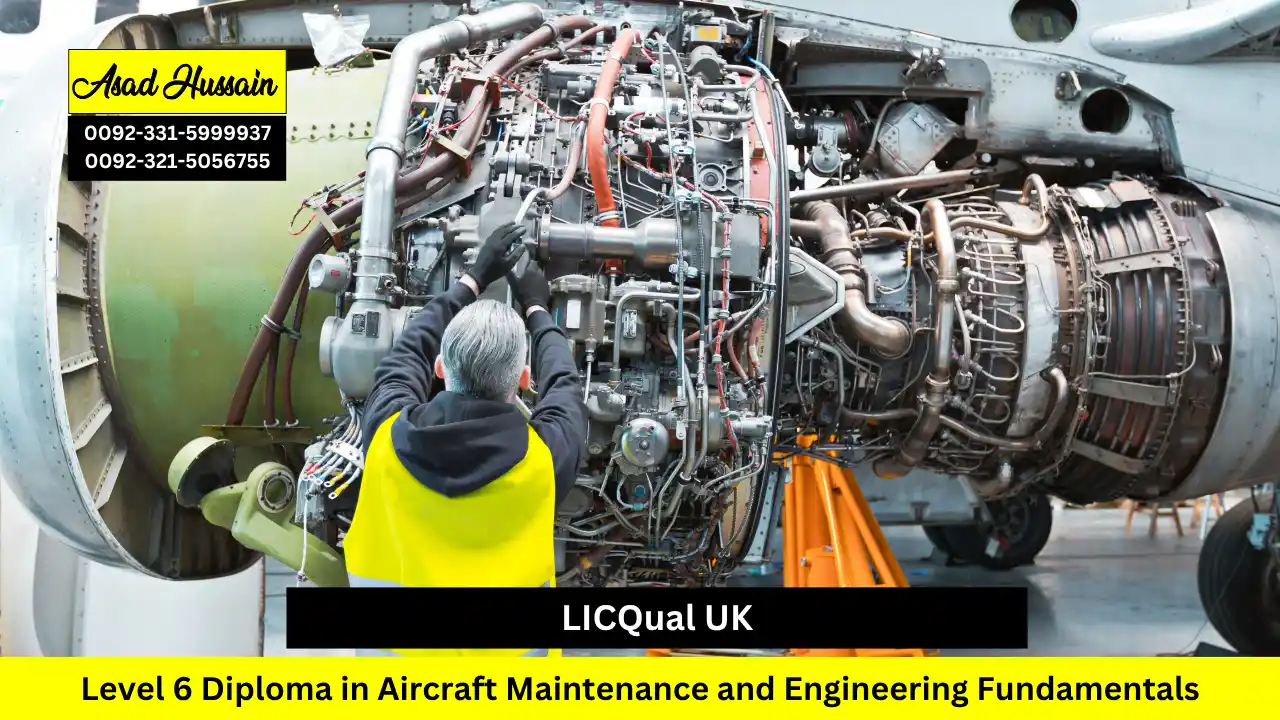
The LICQual UK Level 6 Diploma in Aircraft Maintenance and Engineering Fundamentals is an advanced qualification designed to provide learners with comprehensive knowledge of aircraft systems, maintenance practices, engineering principles, and aviation safety standards. The programme equips learners with the technical understanding and professional competencies required to support the inspection, maintenance, troubleshooting, and continued airworthiness of modern aircraft.
As the global aviation industry continues to expand, the demand for highly skilled aircraft maintenance and engineering professionals remains strong. This diploma offers in-depth coverage of aircraft structures, propulsion systems, avionics, maintenance planning, quality assurance, regulatory compliance, and safety management, enabling learners to develop a solid foundation in aviation engineering and maintenance operations.
The qualification is ideal for aspiring aircraft engineers, maintenance technicians, aviation professionals, and individuals seeking to advance their careers in aircraft maintenance and engineering. Learners will develop analytical, technical, and problem-solving skills essential for maintaining aircraft safety, reliability, and operational efficiency.
Program Highlights
Study Units
- Advanced Aerodynamics, Aircraft Performance, and Flight Mechanics
- Aircraft Propulsion Systems and Powerplant Engineering
- Avionics, Electrical, and Instrumentation Systems
- Advanced Aircraft Maintenance Procedures and Troubleshooting
- Aviation Legislation, Quality Assurance, and Compliance Management
- Applied Research Project in Aircraft Engineering Fundamentals
Entry Requirements
The following entry requirements are recommended to ensure learners can successfully complete the program:
- Age Requirement: Learners must be at least 19 years of age.
- Educational Background: Applicants should ideally hold a Level 5 qualification or an equivalent qualification in aircraft maintenance, aviation engineering, mechanical engineering, aerospace engineering, electrical engineering, aviation technology, or a related technical discipline.
- Professional Experience: Relevant experience in aircraft maintenance, aviation engineering, aerospace operations, mechanical maintenance, technical services, or related engineering fields is highly beneficial.
- English Proficiency: Learners should have a good understanding of English and strong communication skills.
Course Learning Outcome
By the end of this course, learners will be able to:
Advanced Aerodynamics, Aircraft Performance, and Flight Mechanics
Learners will be able to:
- Analyze advanced aerodynamic principles and their impact on aircraft performance.
- Evaluate flight mechanics including stability, control, and maneuverability.
- Apply performance calculations to real-world flight operations and engineering tasks.
- Assess the effects of environmental conditions on aircraft performance and safety.
- Interpret aerodynamic data to support maintenance and engineering decisions.
- Demonstrate knowledge of international standards in flight performance analysis.
Aircraft Propulsion Systems and Powerplant Engineering
Learners will be able to:
- Explain the design, operation, and performance of piston, turbine, and jet engines.
- Diagnose common issues in propulsion systems using advanced troubleshooting methods.
- Apply engineering principles to optimize powerplant efficiency and reliability.
- Evaluate maintenance procedures for compliance with international aviation standards.
- Analyze the environmental and safety considerations of aircraft propulsion systems.
- Demonstrate practical understanding of powerplant engineering documentation.
Avionics, Electrical, and Instrumentation Systems
Learners will be able to:
- Describe the function and integration of avionics, electrical, and instrumentation systems.
- Apply diagnostic tools to identify and resolve faults in avionics and electrical circuits.
- Evaluate the role of digital systems and automation in modern aircraft.
- Interpret wiring diagrams, schematics, and technical manuals accurately.
- Ensure compliance with international aviation standards for avionics maintenance.
- Demonstrate effective troubleshooting of complex electrical and instrumentation systems.
Advanced Aircraft Maintenance Procedures and Troubleshooting
Learners will be able to:
- Apply advanced maintenance techniques to ensure aircraft airworthiness.
- Diagnose and resolve complex faults in aircraft systems and structures.
- Evaluate maintenance schedules and procedures for efficiency and compliance.
- Demonstrate safe use of advanced tools, equipment, and diagnostic technologies.
- Implement predictive and preventive maintenance strategies in aviation.
- Align maintenance practices with ICAO, EASA, and CAA international standards.
Aviation Legislation, Quality Assurance, and Compliance Management
Learners will be able to:
- Interpret international aviation legislation and regulatory frameworks.
- Apply quality assurance principles to aircraft maintenance and engineering.
- Evaluate compliance requirements for safety, documentation, and certification.
- Demonstrate knowledge of auditing processes in aviation organizations.
- Develop strategies to ensure continuous improvement in aviation compliance.
- Promote a culture of safety, accountability, and regulatory adherence.
Applied Research Project in Aircraft Engineering Fundamentals
Learners will be able to:
- Design and conduct an applied research project in aircraft maintenance or engineering.
- Collect, analyze, and interpret aviation-related data using research methodologies.
- Apply critical thinking to solve real-world aviation engineering challenges.
- Present research findings in a professional, technical, and well-documented format.
- Evaluate the impact of research outcomes on aviation safety and engineering practices.
- Demonstrate independent learning, project management, and academic integrity.
Target Audience
The LICQual UK Level 6 Diploma in Aircraft Maintenance and Engineering Fundamentals is designed for individuals who want to develop advanced knowledge and technical expertise in aircraft maintenance, aviation engineering, and aerospace systems. The qualification is ideal for professionals seeking to enhance their engineering competencies and progress into specialist or supervisory roles within the aviation industry.
This course is ideal for:
- Aircraft maintenance technicians seeking to advance their technical knowledge and career prospects.
- Aspiring aircraft engineers looking to build a strong foundation in aviation engineering principles.
- Aviation professionals wishing to specialise in aircraft maintenance and engineering operations.
- Aerospace engineering professionals seeking industry-relevant aviation maintenance knowledge.
- Mechanical and electrical engineers interested in transitioning into the aviation sector.
- Maintenance supervisors and technical personnel aiming to enhance their leadership and technical capabilities.
- Airline maintenance staff responsible for aircraft inspection, servicing, and airworthiness.
- Professionals working in Maintenance, Repair, and Overhaul (MRO) organisations.
- Graduates in engineering or aviation-related disciplines seeking specialised aviation qualifications.
- Learners preparing for higher-level studies or professional development in aviation engineering and aircraft maintenance.
This qualification is particularly suitable for individuals who want to gain expertise in aircraft systems, maintenance planning, aviation regulations, quality assurance, safety management, fault diagnosis, and engineering best practices. in passenger experience, customer satisfaction, complaint handling, effective communication, and service quality improvement within the aviation industry.ion service excellence. regulatory compliance are critical to operational success.tor.orldwide.ng within the global aviation industry.