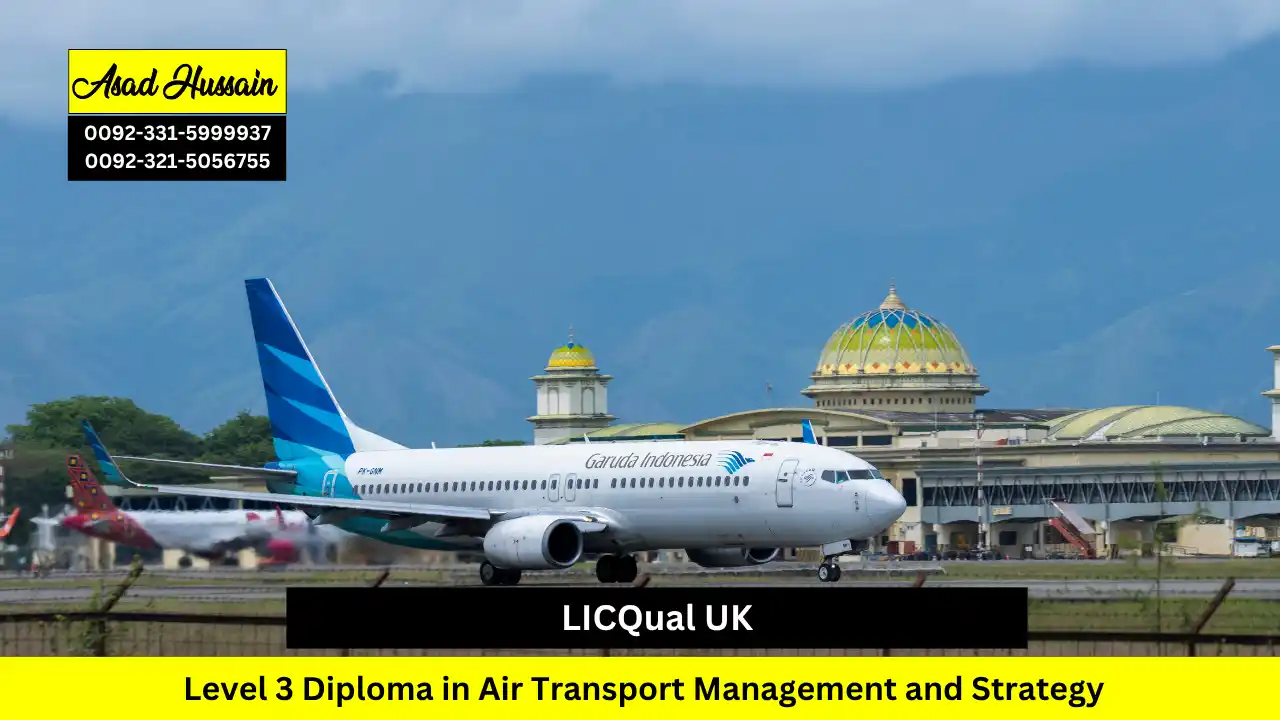
The LICQual UK Level 3 Diploma in Air Transport Management and Strategy is a career-focused qualification designed to provide learners with a strong foundation in the principles of air transport operations, aviation management, and strategic planning. As the global aviation industry continues to evolve, there is growing demand for professionals who understand how airlines, airports, and air transport organisations operate efficiently within a competitive and highly regulated environment. This diploma equips learners with the essential knowledge and practical understanding required to begin a successful career in the aviation sector.
The programme introduces key areas of air transport management, including airline operations, airport management, aviation regulations, customer service, aviation economics, transport planning, and business strategy. Learners develop an understanding of how strategic decision-making supports operational performance, passenger satisfaction, safety compliance, and sustainable growth within the aviation industry.
This internationally recognised qualification is ideal for aspiring aviation professionals, school leavers, and individuals seeking to enter the dynamic world of air transport. Through a combination of industry-relevant knowledge and practical management concepts, learners gain the skills needed to pursue opportunities in airlines, airports, ground handling services, aviation logistics, and transport operations. The qualification also provides a solid foundation for further professional development within the aviation and transport management sectors.
Program Highlights
Study Units
- Introduction to Air Transport Industry
- Fundamentals of Airline and Airport Operations
- Principles of Air Transport Economics
- Aviation Safety, Security, and Compliance Basics
- Customer Service and Communication in Air Transport
- Introduction to Air Transport Strategy and Planning
Entry Requirements
The following entry requirements are recommended to ensure learners can successfully complete the program:
- Age Requirement: Learners must be at least 18 years of age.
- Educational Background: Applicants should have a minimum of secondary school education or an equivalent qualification. A basic understanding of business, geography, transport systems, or aviation-related subjects can be beneficial but is not mandatory.
- Professional Experience: No prior work experience in aviation or air transport is required. This qualification is designed to support both new entrants and individuals seeking to begin a career in the aviation industry.
- English Proficiency: Learners should have a good understanding of English and strong communication skills.
Course Learning Outcome
By the end of this course, learners will be able to:
1. Introduction to Air Transport Industry
By the end of this unit, learners will be able to:
- Explain the structure and global significance of the air transport industry.
- Identify the roles of airlines, airports, regulators, and service providers.
- Describe the historical development and future trends in air transport.
- Demonstrate understanding of the economic and social impact of aviation.
- Recognize the importance of sustainability and innovation in air transport.
- Apply basic industry knowledge to real‑world aviation scenarios.
2. Fundamentals of Airline and Airport Operations
By the end of this unit, learners will be able to:
- Describe the key functions of airline and airport operations.
- Demonstrate knowledge of ground handling, check‑in, and baggage systems.
- Explain the coordination between airlines, airports, and regulatory bodies.
- Apply operational procedures to ensure efficiency and safety.
- Recognize the importance of customer service in airline and airport operations.
- Evaluate the challenges of managing day‑to‑day aviation operations.
3. Principles of Air Transport Economics
By the end of this unit, learners will be able to:
- Explain the basic principles of air transport economics and market demand.
- Demonstrate understanding of airline pricing, revenue, and cost structures.
- Analyze the impact of competition and regulation on air transport economics.
- Apply economic principles to route planning and capacity management.
- Evaluate the role of global trade and tourism in shaping air transport demand.
- Recognize the importance of financial sustainability in aviation businesses.
4. Aviation Safety, Security, and Compliance Basics
By the end of this unit, learners will be able to:
- Explain the importance of aviation safety and regulatory compliance.
- Identify international safety standards set by ICAO, EASA, and FAA.
- Demonstrate knowledge of airport and airline security procedures.
- Apply basic risk management and hazard identification techniques.
- Recognize the role of compliance in maintaining passenger trust and safety.
- Evaluate the impact of safety culture on aviation operations.
5. Customer Service and Communication in Air Transport
By the end of this unit, learners will be able to:
- Demonstrate effective communication skills in aviation contexts.
- Explain the importance of customer service in airline and airport operations.
- Apply strategies to manage passenger expectations and resolve conflicts.
- Recognize cultural diversity and its impact on customer interactions.
- Evaluate the role of customer service in building airline and airport reputation.
- Develop professional communication skills for aviation careers.
6. Introduction to Air Transport Strategy and Planning
By the end of this unit, learners will be able to:
- Explain the principles of strategic planning in air transport management.
- Demonstrate understanding of route planning, scheduling, and fleet management.
- Apply strategic tools to analyze competition and market opportunities.
- Recognize the role of government policy and regulation in air transport strategy.
- Evaluate the impact of global trends such as sustainability and digitalization.
- Develop basic strategic insights for future career progression in aviation.
Target Audience
The LICQual UK Level 3 Diploma in Air Transport Management and Strategy is designed for learners who want to build a strong foundation in aviation operations, airline management, airport services, and air transport strategy. It is suitable for individuals seeking to enter the aviation industry or enhance their understanding of how modern air transport organisations operate.
This qualification is ideal for:
- Aspiring aviation professionals looking to start a career in the airline, airport, or air transport sector.
- School leavers seeking an internationally recognised qualification in aviation management.
- Learners interested in understanding airline operations, airport management, and transport planning.
- Individuals planning to pursue careers in passenger services, ground operations, flight support, or aviation administration.
- Customer service professionals who want to transition into the aviation and travel industry.
- Airport and airline support staff seeking to improve their operational and management knowledge.
- Travel, tourism, and logistics professionals looking to expand their expertise into air transport management.
- Entrepreneurs interested in aviation-related business opportunities and transport services.
- Learners preparing for higher-level qualifications in aviation, airport management, transport management, or business leadership.
- Individuals seeking a comprehensive introduction to aviation strategy, regulations, and operational management.
This diploma is particularly beneficial for those who want to develop industry-relevant knowledge, gain a competitive advantage in the aviation job market, and build the skills needed to succeed in airlines, airports, cargo operations, ground handling services, and other air transport-related organisations. It provides an excellent starting point for learners aiming to establish a long-term career in the global aviation industry.