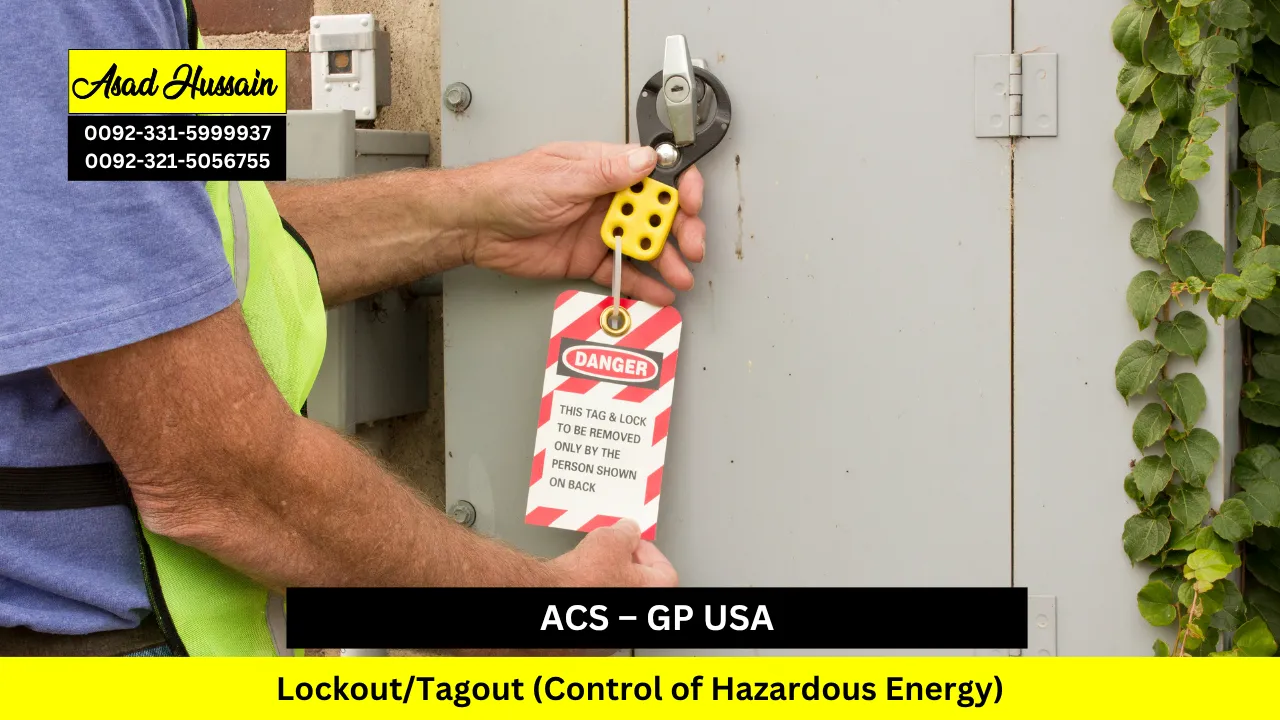
The ACS – GP USA Lockout/Tagout (Control of Hazardous Energy) Course is designed to provide Learners with essential knowledge and practical understanding of controlling hazardous energy sources during equipment servicing, maintenance, repair, installation, and cleaning activities. Unexpected energisation or the release of stored energy can result in serious injuries, fatalities, equipment damage, and costly operational disruptions.
This course focuses on the principles and procedures of Lockout/Tagout (LOTO), a critical workplace safety system used to isolate and control hazardous energy sources before work begins. Learners will gain an understanding of electrical, mechanical, hydraulic, pneumatic, thermal, chemical, and stored energy hazards commonly found in industrial and commercial environments.
Throughout the programme, Learners will explore energy isolation methods, lockout devices, tagout systems, authorised employee responsibilities, group lockout procedures, verification of isolation, and safe equipment restart practices. The course also covers hazard identification, risk assessment, regulatory requirements, incident prevention, and employer responsibilities for maintaining an effective energy control programme.
The ACS – GP USA Lockout/Tagout (Control of Hazardous Energy) Course is highly beneficial for maintenance personnel, engineers, technicians, supervisors, contractors, safety professionals, and operational staff working in manufacturing, construction, utilities, oil and gas, mining, processing plants, and other high-risk industries. Successful completion helps organisations strengthen workplace safety, reduce accidents, improve compliance, and protect workers from hazardous energy-related incidents.
Program Highlights
Course Objective
- Understand OSHA’s lockout/tagout standard and its application to hazardous energy control.
- Identify hazardous energy sources, such as electrical, mechanical, and hydraulic systems.
- Learn to develop and implement LOTO procedures for safe equipment maintenance.
- Develop skills to apply lockout/tagout devices and verify energy isolation.
- Explore the use of personal protective equipment (PPE) during LOTO activities.
- Gain knowledge of emergency response procedures for LOTO-related incidents.
- Understand the importance of LOTO training and communication in the workplace.
- Learn to document LOTO procedures and incidents for compliance and safety records.
Entry Requirements
The following entry requirements are recommended to ensure learners can successfully complete the program:
- Age Requirement: Learners must be at least 18 years of age.
- Educational Background: There are no formal academic qualification requirements for this course. However, a basic secondary school education or equivalent is recommended to support understanding of workplace safety concepts and procedures.
- Professional Experience:No prior Lockout/Tagout (LOTO) experience is required. The course is suitable for both new and experienced workers involved in equipment operation, maintenance, servicing, inspection, or supervision activities.
- English Proficiency: Learners should have a good understanding of English and strong communication skills.
Course Learning Outcomes
- Demonstrate compliance with OSHA Lockout/Tagout (LOTO) standards in workplace environments.
- Identify, assess, and control hazardous energy sources in industrial equipment and systems.
- Apply proper Lockout/Tagout procedures to ensure safe maintenance and servicing operations.
- Use LOTO devices effectively and verify complete energy isolation before work begins.
- Select and use appropriate PPE to ensure personal safety during LOTO activities.
- Respond appropriately to Lockout/Tagout-related emergencies and unsafe conditions.
- Maintain accurate records of LOTO procedures, inspections, and incident reports.
Target Audience
The ACS – GP USA Lockout/Tagout (Control of Hazardous Energy) Course is designed for individuals responsible for operating, maintaining, repairing, servicing, inspecting, supervising, or managing equipment and machinery where hazardous energy sources may be present. It is suitable for both new and experienced professionals seeking to improve workplace safety and reduce the risk of energy-related incidents.
This course is ideal for:
- Maintenance Technicians
- Maintenance Engineers
- Mechanical Technicians
- Electrical Technicians
- Instrumentation Technicians
- Maintenance Supervisors
- Maintenance Managers
- Machine Operators
- Production Operators
- Manufacturing Personnel
- Plant Operators
- Equipment Operators
- Facilities Maintenance Personnel
- Facility Managers
- Mechanical Engineers
- Electrical Engineers
- Industrial Engineers
- Process Engineers
- Reliability Engineers
- Operations Personnel
- Operations Supervisors
- Operations Managers
- Plant Managers
- Workshop Supervisors
- Workshop Managers
- Construction Workers
- Construction Supervisors
- Site Managers
- Contractors
- Subcontractors
- Utility Workers
- Oil and Gas Personnel
- Mining Personnel
- Warehouse Personnel
- Logistics Personnel
- Food Processing Workers
- Packaging Personnel
- Fabrication Workers
- Welders
- Assembly Line Workers
- Installation Technicians
- Service Technicians
- Equipment Inspectors
- Safety Officers
- Health and Safety Practitioners
- HSE Professionals
- Safety Coordinators
- Safety Advisors
- Compliance Officers
- Risk Management Professionals
- Occupational Health and Safety Managers
- Permit to Work Coordinators
- Energy Control Programme Administrators
- Authorised Employees Responsible for Lockout/Tagout Procedures
- Supervisors Responsible for Maintenance Activities
- Team Leaders Managing High-Risk Tasks
- Employers and Business Owners
- Safety Committee Members
- Individuals Responsible for Machinery Safety Programmes
- Professionals Seeking Careers in Occupational Health and Safety
- Anyone Working with Equipment, Machinery, or Hazardous Energy Sources in the Workplace
This course is particularly valuable for organisations operating in manufacturing, construction, engineering, utilities, mining, oil and gas, processing plants, warehousing, logistics, and other industries where machinery and energy isolation procedures are essential for worker safety.