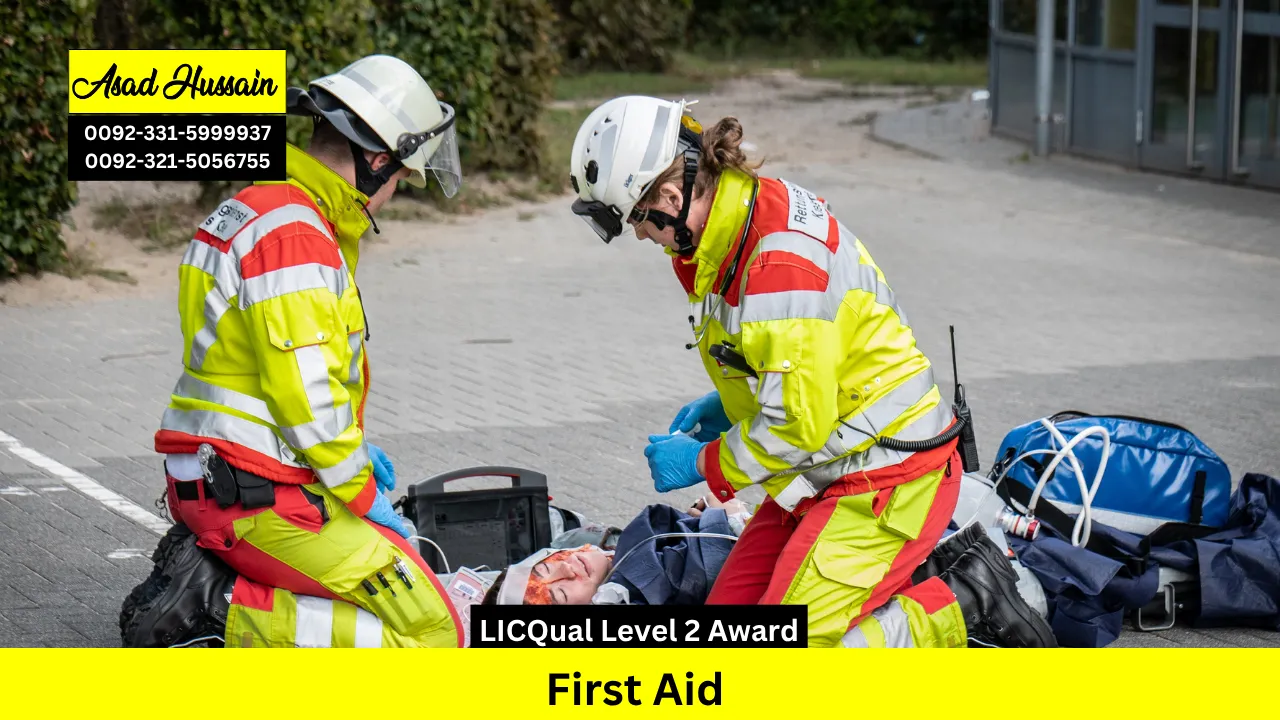
The LICQual Level 2 Award in First Aid is a foundational qualification designed to equip learners with essential life-saving skills and knowledge required to respond effectively in emergency situations. This course is ideal for individuals who want to gain practical first aid abilities applicable in workplaces, homes, and public environments, ensuring safety and immediate response during accidents or medical emergencies.
The program covers key areas such as basic life support, managing unconscious casualties, treating wounds and bleeding, dealing with burns and fractures, and responding to medical emergencies like choking and shock. Learners will also develop the confidence to assess situations quickly and provide appropriate first aid care until professional medical help arrives.
This Level 2 qualification is suitable for beginners, employees, workplace first aiders, teachers, childcare staff, and anyone interested in health and safety roles. It emphasizes hands-on learning and practical application of first aid techniques in real-life scenarios.
Upon successful completion, learners will be able to respond effectively to emergencies and contribute to safer environments in workplaces and communities. Career opportunities may include roles requiring basic health and safety awareness or designated first aid responsibilities. This qualification also serves as a stepping stone to advanced first aid and health and safety certifications, supporting long-term professional development in the healthcare and safety sector.
Program Highlights
Study Units
To achieve,LICQual Level 2 Award in First Aid; Candidates must Complete the 6 Manadatory Units.
- Understanding the Role of the First Aider and Health & Safety
- Managing an Unresponsive Casualty
- Cardiac Arrest, CPR, and Use of an AED
- Managing Bleeding, Wounds, and Shock
- Treating Burns, Scalds, and Environmental Injuries
- Managing Fractures, Sprains, Strains, and Medical Emergencies
Entry Requirements
- Age Requirements:Learners must be at least 16 years old at the time of enrollment.
- Educational Background: No formal qualifications are required; however, basic secondary education and the ability to understand simple instructions are recommended.
- Language Proficiency:Basic English reading, writing, and speaking skills are required. An equivalent of IELTS 3.5–4.0 is recommended for non-native speakers.
- Work Experience: No prior work experience is needed. The course is open to beginners, though workplace first aid or safety experience can be an advantage.
Please ensure all criteria are met to facilitate a smooth admission process into this professional program.
Learning Outcomes
By the end of this course, learners will be able to:
- Understanding the Role of the First Aider and Health & Safety
- Understand the responsibilities and duties of a first aider in emergency situations.
- Demonstrate knowledge of health and safety principles, including risk assessment and safe practices.
- Explain the importance of maintaining confidentiality and professionalism when providing first aid.
- Recognize the need for personal protective equipment (PPE) and infection control during first aid interventions.
- Managing an Unresponsive Casualty
- Identify signs of unresponsiveness and perform a thorough primary survey of a casualty.
- Demonstrate the correct procedure for placing an unresponsive casualty in the recovery position.
- Perform airway, breathing, and circulation (ABC) checks and assess the need for further medical assistance.
- Understand how to act quickly and effectively to stabilize an unresponsive casualty until professional help arrives.
- Cardiac Arrest, CPR, and Use of an AED
- Recognize the signs and symptoms of cardiac arrest and understand when CPR is required.
- Perform effective chest compressions and rescue breaths during CPR on an adult casualty.
- Understand how to use an Automated External Defibrillator (AED) to deliver a shock and restore heart function.
- Understand the importance of early defibrillation and high-quality CPR in increasing survival rates.
- Managing Bleeding, Wounds, and Shock
- Identify different types of bleeding (e.g., arterial, venous, and capillary) and apply appropriate control measures.
- Use dressings, bandages, and pressure techniques to manage and control severe bleeding.
- Recognize the signs of shock and provide effective first aid interventions to stabilize the casualty.
- Understand the importance of preventing infection in wounds and applying appropriate wound care.
- Treating Burns, Scalds, and Environmental Injuries
- Recognize and assess the severity of different types of burns and scalds, and provide appropriate first aid treatment.
- Demonstrate the correct procedure for cooling and dressing burns and scalds to minimize damage.
- Manage environmental injuries, including heatstroke, hypothermia, frostbite, and dehydration.
- Recognize signs of poisoning and provide immediate care until professional medical help arrives.
- Managing Fractures, Sprains, Strains, and Medical Emergencies
- Identify and assess different types of fractures, sprains, and strains, and understand their severity.
- Apply effective first aid techniques to immobilize fractures and support injured limbs using splints or bandages.
- Use the R.I.C.E. method (Rest, Ice, Compression, Elevation) to treat sprains and strains.
- Recognize and provide first aid for various medical emergencies, such as seizures, strokes, and asthma attacks.
Target Audience
This diploma is ideal for:
- Individuals seeking to gain comprehensive first aid skills to respond confidently in various emergency situations.
- Employees or employers looking to meet workplace health and safety regulations and ensure a safe working environment.
- Healthcare professionals, community volunteers, or event organizers who need to enhance their first aid knowledge and certification.
- Teachers, coaches, or caregivers who are responsible for the safety and well-being of children or vulnerable individuals.
- Individuals interested in gaining an in-depth understanding of first aid techniques, including CPR, managing severe bleeding, fractures, and environmental injuries.
- Anyone who wants to feel more confident in their ability to handle emergencies and provide immediate care to others in both professional and personal settings.