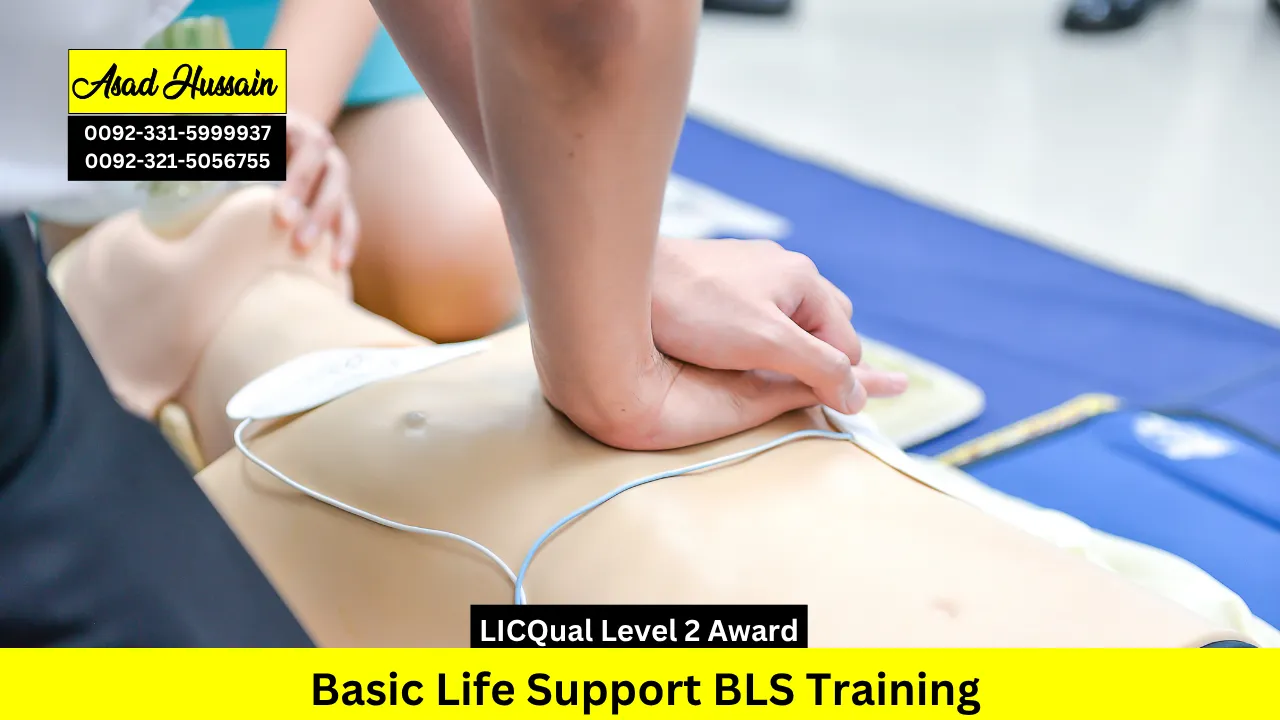
The LICQual Level 2 Award in Basic Life Support (BLS) Training is a professionally designed qualification that equips learners with essential life-saving skills to respond effectively in emergency situations. This course is ideal for individuals who want to gain practical knowledge in providing immediate care to patients experiencing medical emergencies such as cardiac arrest, choking, or respiratory failure.
This comprehensive training covers key areas including the principles of basic life support, cardiopulmonary resuscitation (CPR), use of automated external defibrillators (AED), recovery position techniques, and emergency response procedures. Learners develop the confidence and competence needed to act quickly and effectively in critical situations, potentially saving lives.
The LICQual Level 2 BLS course is suitable for healthcare assistants, caregivers, workplace first aiders, and individuals with no prior medical experience who wish to enhance their emergency response skills. It combines theoretical knowledge with practical application to ensure learners are fully prepared for real-life emergencies.
Upon completion, learners can apply their skills in healthcare settings, workplaces, schools, and community environments. This qualification also provides a strong foundation for further studies in first aid, emergency care, or healthcare-related fields.
Program Highlights
Study Units
To achieve,LICQual Level 2 Award in Basic Life Support BLS Training; Candidates must Complete the 6 Manadatory Units.
- Principles of Basic Life Support (BLS)
- Performing CPR on Adults and Children
- Recognizing and Managing Choking in Adults and Children
- Using an Automated External Defibrillator (AED)
- Managing Unconscious Casualties
- Basic First Aid and Scene Safety
Entry Requirements
- Age Requirements:Applicants must be at least 16 years old.
- Educational Background:A basic secondary school qualification (such as GCSEs, Matriculation, or equivalent) is recommended.
- Language Proficiency:Learners must have a basic understanding of English, including reading, writing, speaking, and comprehension skills to follow instructions and complete assessments.
- Work Experience: No formal work experience is required. However, individuals working in healthcare, education, community services, or safety-related roles will have an advantage.
Please ensure all criteria are met to facilitate a smooth admission process into this professional program.
Learning Outcomes
By the end of this course, learners will be able to:
- Principles of Basic Life Support (BLS)
- Understand the key principles and importance of Basic Life Support (BLS) in emergency situations.
- Demonstrate knowledge of the chain of survival and how it relates to BLS practices.
- Identify the critical steps involved in performing BLS effectively in various emergency scenarios.
- Recognize the role of bystanders, medical professionals, and emergency services in providing BLS care.
- Performing CPR on Adults and Children
- Demonstrate the correct technique for performing Cardiopulmonary Resuscitation (CPR) on both adults and children.
- Understand the differences in CPR techniques and protocols between adults, children, and infants.
- Assess when to begin CPR and how to perform it effectively until professional help arrives.
- Understand the importance of high-quality chest compressions and appropriate ventilation in CPR.
- Recognizing and Managing Choking in Adults and Children
- Identify the signs and symptoms of choking in both adults and children.
- Understand the correct procedures for performing abdominal thrusts (Heimlich maneuver) on choking adults.
- Demonstrate the appropriate steps for managing choking in children and infants.
- Recognize when to seek emergency medical assistance during a choking incident.
- Using an Automated External Defibrillator (AED)
- Understand the purpose and function of an Automated External Defibrillator (AED) in emergency situations.
- Demonstrate the correct procedure for using an AED to deliver a shock to a victim of cardiac arrest.
- Recognize when it is appropriate to use an AED and how to assess the victim’s condition.
- Understand how to safely apply AED pads and operate the device in a variety of emergency situations.
- Managing Unconscious Casualties
- Recognize the signs and symptoms of unconsciousness and understand the importance of maintaining airway patency.
- Demonstrate the correct technique for placing an unconscious casualty in the recovery position.
- Understand how to assess an unconscious casualty for signs of life and provide appropriate care until help arrives.
- Recognize the importance of monitoring the casualty’s breathing, pulse, and airway while awaiting emergency services.
- Basic First Aid and Scene Safety
- Understand basic first aid principles and the importance of providing immediate care in emergencies.
- Demonstrate how to assess a casualty’s condition and provide appropriate first aid for common injuries and illnesses.
- Recognize the importance of scene safety and how to ensure that both the rescuer and casualty are safe before performing any life-saving procedures.
- Understand the role of personal protective equipment (PPE) and infection control when providing first aid.
Target Audience
This diploma is ideal for:
- Healthcare professionals such as nurses, doctors, and paramedics who need to enhance their emergency life-saving skills.
- Caregivers and childcare workers who are responsible for the safety and well-being of others.
- Teachers, sports coaches, and instructors who work with children and adults in potentially high-risk environments.
- Individuals working in public sectors like hospitality, retail, and transport who may encounter medical emergencies.
- Those seeking a recognized qualification in Basic Life Support to meet workplace health and safety regulations.
- People interested in gaining or refreshing their CPR and first aid knowledge to confidently handle emergency situations.
- Employees in high-risk industries, including construction or manufacturing, who require basic life support training as part of their health and safety protocol.
- Anyone who wants to improve their ability to respond to life-threatening emergencies and make a difference in critical situations.