Achieve Excellence in Healthcare with Professional Diploma
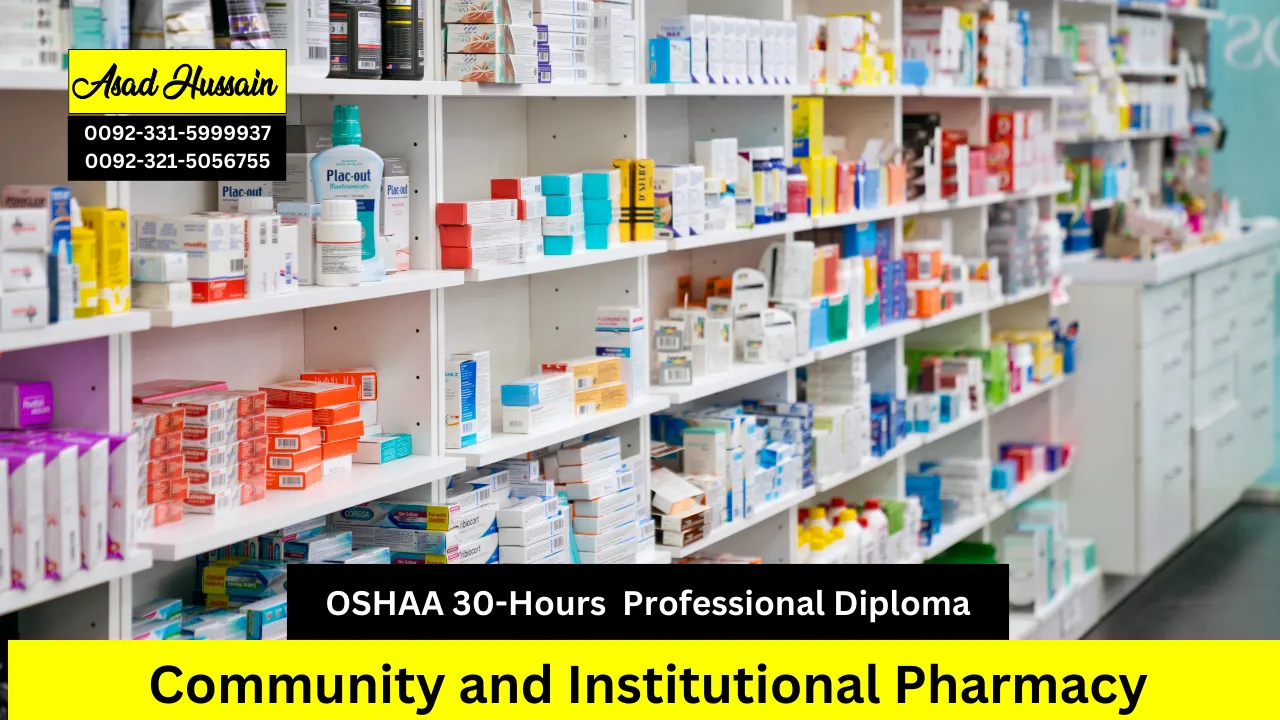
The OSHAA 30-Hours Professional Diploma in Community and Institutional Pharmacy is a specialized program designed to provide learners with essential knowledge and skills in pharmaceutical practices across both community and institutional settings. This course introduces participants to the fundamentals of pharmacy operations, patient care, and safe medication handling. With a structured curriculum, it ensures learners gain a balance of theoretical understanding and practical application, making it suitable for those passionate about healthcare and pharmacy services.
This diploma emphasizes practical training, covering topics such as drug dispensing, pharmaceutical ethics, patient counseling, inventory management, and safety protocols. Learners will also explore the role of pharmacists in institutional environments, including hospitals and clinics, while gaining recognition through certifications and diplomas that highlight professional development. The program is designed to strengthen confidence and competence in delivering safe and effective pharmaceutical services.
The OSHAA 30-Hours Professional Diploma in Community and Institutional Pharmacy serves as a valuable credential for individuals aiming to enhance their career in healthcare and pharmacy. Although not Ofqual regulated, it offers respected certifications and diplomas that demonstrate competence in pharmaceutical practices. With industry-relevant content and a practical approach, this program equips learners with the skills to provide professional pharmacy services in diverse settings, making it an excellent choice for those committed to excellence in healthcare.
Program Highlights
Study Units
- Introduction to Community and Institutional Pharmacy Practice (3 Hours)
- Drug Classifications, Dosage Forms, and Therapeutic Use (4 Hours)
- Prescription Processing and Dispensing Techniques (4 Hours)
- Pharmaceutical Calculations and Accuracy in Dosage (3 Hours)
- Medication Safety, Errors, and Risk Management (5 Hours)
- Inventory Control and Storage Management (5 Hours)
- Legal, Ethical, and Regulatory Considerations in Pharmacy (3 Hours)
- Patient Counselling and Communication Skills (3 Hours)
Entry Requirements
- Age Requirement: Applicants must be at least 18 years old to enroll in the OSHAA 30-Hours Professional Diploma in Community and Institutional Pharmacy. This ensures learners have the maturity and responsibility to engage with both theoretical and practical aspects of the program.
- Educational Background: A minimum of a high school level education or equivalent is preferred. Related diplomas or certificates such as Diploma in Health and Safety, Certificate in Medical Sciences, or Diploma in Pharmacy Assistance can provide a stronger foundation, though they are not mandatory.
- Language Proficiency: Learners should have a good command of English, as all course materials, instructions, and assessments are delivered in this language.
- Work Experience: Previous experience in healthcare, pharmacy, or customer service is beneficial but not required. It can help learners better understand patient care, pharmaceutical ethics, and professional standards in pharmacy practice.
This diploma is designed to be accessible and inclusive, ensuring that motivated learners with diverse backgrounds can successfully participate and gain valuable certifications and diplomas in community and institutional pharmacy.
Learning Outcomes
Introduction to Community and Institutional Pharmacy Practice (3 Hours)
- Understand the structure and functions of community and institutional pharmacy settings
- Recognise the roles and responsibilities of pharmacy professionals in various healthcare environments
- Identify key differences in workflow, procedures, and patient interactions between pharmacy types
Drug Classifications, Dosage Forms, and Therapeutic Use (4 Hours)
- Categorise medications by therapeutic class and mode of action
- Understand various dosage forms and routes of administration
- Match drug classifications to common conditions and patient needs
Prescription Processing and Dispensing Techniques (4 Hours)
- Interpret and process prescriptions accurately and efficiently
- Apply best practices in labelling, packaging, and dispensing medications
- Ensure compliance with legal and safety standards during dispensing
Pharmaceutical Calculations and Accuracy in Dosage (3 Hours)
- Perform precise pharmaceutical calculations for dosage, compounding, and conversions
- Apply mathematical principles to real-life pharmacy scenarios
- Minimise risk of dosage errors through accurate computation
Medication Safety, Errors, and Risk Management (5 Hours)
- Identify common causes of medication errors and how to prevent them
- Apply protocols for safe medication handling and administration
- Implement risk management strategies to enhance patient safety
Inventory Control and Storage Management (5 Hours)
- Understand inventory systems and stock rotation methods
- Apply procedures for safe storage, expiry tracking, and handling of pharmaceuticals
- Maintain efficient supply levels while ensuring regulatory compliance
Legal, Ethical, and Regulatory Considerations in Pharmacy (3 Hours)
- Understand pharmacy laws, ethical standards, and professional codes of conduct
- Recognise the importance of confidentiality and informed consent
- Ensure practice aligns with national and institutional regulatory frameworks
Patient Counselling and Communication Skills (3 Hours)
- Communicate effectively with patients regarding medication use and safety
- Demonstrate counselling techniques that support adherence and health literacy
- Handle sensitive conversations professionally within a healthcare context
Target Audience
The OSHAA 30-Hours Professional Diploma in Community and Institutional Pharmacy is designed for individuals who want to strengthen their knowledge and skills in pharmacy practice across diverse healthcare settings. It provides structured training for learners at different stages, equipping them with practical expertise, certifications, and diplomas that enhance both professional credibility and career opportunities.
Aspiring Pharmacy Assistants
- Individuals eager to begin a career in pharmacy services
- Learners seeking structured training in dispensing and patient care
- Those motivated to gain recognized certifications and diplomas
- Beginners interested in healthcare and pharmaceutical practices
- People passionate about contributing to community health
Healthcare and Pharmacy Professionals
- Practicing pharmacists aiming to expand their knowledge base
- Pharmacy technicians looking to refine dispensing techniques
- Professionals seeking certifications to strengthen their portfolio
- Staff wanting to improve patient counselling and communication skills
- Specialists interested in institutional pharmacy operations
Hospital and Clinical Staff
- Employees working in hospital pharmacies or clinical settings
- Staff responsible for medication safety and risk management
- Individuals managing inventory and storage of pharmaceuticals
- Professionals ensuring compliance with healthcare regulations
- Team members supporting patient care through pharmacy services
Students with Related Backgrounds
- Learners holding diplomas in Medical Sciences or Health and Safety
- Certificate holders in Pharmacy Assistance or Healthcare Support
- Students interested in combining prior knowledge with practical training
- Individuals motivated to broaden their expertise in pharmacy practice
- Those seeking certifications and diplomas to enhance employability
Managers and Supervisors in Healthcare
- Leaders overseeing pharmacy operations in institutions
- Supervisors ensuring adherence to legal and ethical standards
- Managers responsible for staff training in pharmaceutical practices
- Coordinators aiming to improve workflow and patient interactions
- Professionals promoting safe and efficient pharmacy environments
Personal Development Seekers
- Enthusiasts eager to gain certifications and diplomas in healthcare
- Individuals passionate about learning pharmacy practices for self-growth
- Learners motivated to adopt safe medication handling techniques
- People interested in understanding drug classifications and dosage forms
- Those wanting to improve knowledge of patient counselling