OSHAA Certified Professional Diploma in Emergency Paediatric First Aid and EFAW
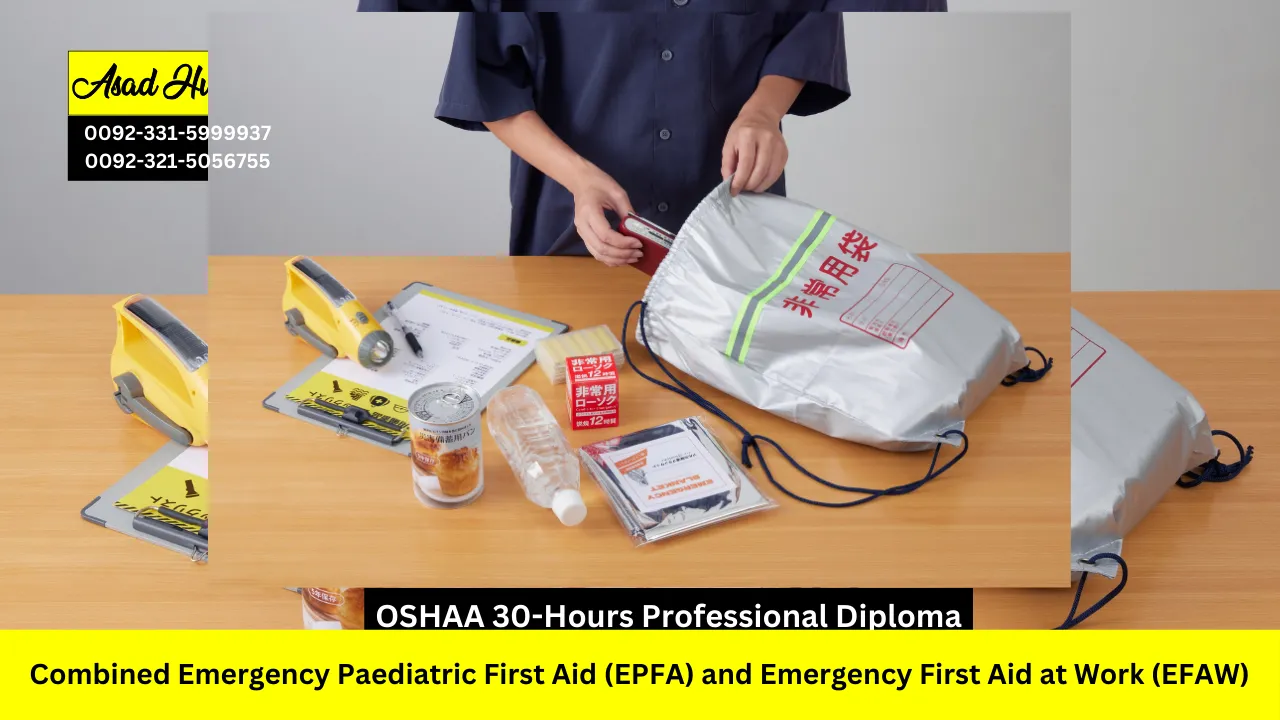
The OSHAA 30-Hours Professional Diploma in Combined Emergency Paediatric First Aid (EPFA) and Emergency First Aid at Work (EFAW) is a comprehensive programme designed to develop essential emergency response skills for both workplace and child-focused environments. This course equips learners with the confidence to manage urgent first aid situations involving adults, children, and infants. It emphasizes rapid assessment, immediate care, and safe decision-making during critical incidents. The programme is not Ofqual regulated and focuses on practical, real-world application to help learners respond calmly and effectively when emergencies occur.
This diploma provides balanced coverage of emergency first aid principles suitable for a wide range of professional and community settings. Learners gain insight into managing injuries, sudden illnesses, and high-risk situations while maintaining safety and control. The training aligns well with individuals who hold or work toward safety-related certifications and professional diplomas in areas such as workplace safety, childcare safety, emergency response, and health protection. Strong emphasis is placed on awareness, responsibility, and effective action during time-sensitive emergencies.
OSHAA 30-Hours Professional Diploma in Combined Emergency Paediatric First Aid (EPFA) and Emergency First Aid at Work (EFAW) offers a valuable professional foundation for those responsible for safeguarding people in dynamic environments. The course enhances professional credibility and complements a wide range of certifications and diplomas by strengthening emergency first aid competence. Learners benefit from structured content, scenario-based understanding, and clear guidance on handling emergencies until further assistance arrives. This diploma is ideal for individuals seeking to improve readiness, confidence, and practical emergency response skills in both paediatric and workplace settings.
Program Highlights
Mandatory Unit
- Introduction to First Aid Principles and Legal Responsibilities (2 Hours)
- Incident Management and Casualty Assessment for Adults and Children (3 Hours)
- Primary Survey and Recovery Position Techniques for All Age Groups (3 Hours)
- Cardiopulmonary Resuscitation (CPR) and AED Use for Adults, Children, and Infants (5 Hours)
- Management of Unconscious Casualties Across Different Age Groups (4 Hours)
- Control of Bleeding, Wound Care, and Shock Management (5 Hours)
- First Aid for Burns, Scalds, and Thermal Injuries in Workplace and Paediatric Settings (3 Hours)
- Managing Fractures, Sprains, and Soft Tissue Injuries in Adults and Children (3 Hours)
- Response to Common Medical Emergencies: Asthma, Seizures, and Severe Allergic Reactions (2 Hours)
The OSHAA 30-Hours Professional Diploma in Combined Emergency Paediatric First Aid (EPFA) and Emergency First Aid at Work (EFAW) is designed to be accessible while ensuring learners are prepared to engage effectively with emergency first aid training.
Age Requirements
- Learners should be at least 18 years of age, ensuring maturity and responsibility when responding to emergency situations involving adults, children, and infants.
Educational Requirements
- Basic secondary education or equivalent is recommended. Learners with related diplomas or certificates in first aid, occupational health and safety, childcare safety, emergency response, or workplace safety may find the course particularly beneficial, although these are not mandatory.
Language Proficiency
- Basic proficiency in the English language is required. Participants should be able to read, understand, and communicate effectively in English to follow course materials and emergency instructions.
Work Experience
- Previous experience in childcare, education, healthcare support, security, construction, or safety-related roles is an advantage but not essential.
Learning Outcomes
Introduction to First Aid Principles and Legal Responsibilities (2 Hours)
- Understand the fundamental aims and objectives of first aid
- Recognise the legal and ethical responsibilities of a first aider
- Identify workplace and paediatric first aid regulations and compliance requirements
Incident Management and Casualty Assessment for Adults and Children (3 Hours)
- Apply safe and systematic approaches to managing first aid incidents
- Conduct initial casualty assessments to determine the severity of injuries or illnesses
- Prioritise actions based on the condition of the casualty and situation
Primary Survey and Recovery Position Techniques for All Age Groups (3 Hours)
- Perform an effective primary survey on adults, children, and infants
- Safely place a casualty into the recovery position to maintain airway patency
- Adapt recovery position techniques to different age groups and physical conditions
Cardiopulmonary Resuscitation (CPR) and AED Use for Adults, Children, and Infants (5 Hours)
- Perform CPR according to current international guidelines for different age groups
- Safely operate an Automated External Defibrillator (AED) in emergency situations
- Integrate CPR and AED use in a coordinated life-saving response
Management of Unconscious Casualties Across Different Age Groups (4 Hours)
- Identify causes and signs of unconsciousness in adults, children, and infants
- Apply appropriate management techniques to maintain breathing and circulation
- Monitor and provide ongoing care until professional help arrives
Control of Bleeding, Wound Care, and Shock Management (5 Hours)
- Apply various bleeding control techniques, including direct pressure and dressings
- Recognise and treat different types of wounds effectively
- Identify signs of shock and administer appropriate first aid interventions
First Aid for Burns, Scalds, and Thermal Injuries in Workplace and Paediatric Settings (3 Hours)
- Distinguish between different types and severities of burns
- Apply correct cooling and treatment techniques for burns and scalds
- Provide aftercare and monitor for potential complications
Managing Fractures, Sprains, and Soft Tissue Injuries in Adults and Children (3 Hours)
- Recognise the signs and symptoms of fractures, sprains, and strains
- Apply immobilisation techniques to prevent further injury
- Provide effective pain relief measures and comfort to the casualty
Response to Common Medical Emergencies: Asthma, Seizures, and Severe Allergic Reactions (2 Hours)
- Recognise the signs and symptoms of asthma attacks, seizures, and anaphylaxis
- Provide appropriate first aid interventions for each condition
- Support and monitor the casualty until professional medical help is available
Target Audience
The OSHAA 30-Hours Professional Diploma in Combined Emergency Paediatric First Aid (EPFA) and Emergency First Aid at Work (EFAW) is designed for individuals who need the confidence and skills to respond quickly and effectively to emergency situations involving both adults and children.
Childcare and Early Years Professionals
- Nursery and preschool staff
- Childminders and daycare providers
- Teaching assistants and school support staff
- After-school and activity club workers
- Early years care supervisors
Workplace First Aiders and Safety Staff
- Appointed emergency first aiders
- Health and safety representatives
- Supervisors and team leaders
- Office and site-based employees
- Staff with emergency response duties
Healthcare and Care Support Workers
- Care assistants and support workers
- Community health support staff
- Residential and home care personnel
- Volunteers in care environments
- Staff supporting vulnerable individuals
Parents, Guardians, and Care Providers
- Parents responsible for child safety
- Guardians and foster carers
- Family support carers
- Individuals caring for infants and children
- Home-based caregivers
Sports, Leisure, and Community Workers
- Sports coaches and instructors
- Leisure centre and gym staff
- Youth group leaders
- Community event supervisors
- Recreational activity coordinators
Organizations Focused on Emergency Preparedness
- Employers strengthening emergency readiness
- Childcare organizations improving safety standards
- Schools and educational centres
- Community and voluntary groups
- Businesses prioritizing emergency response skills