
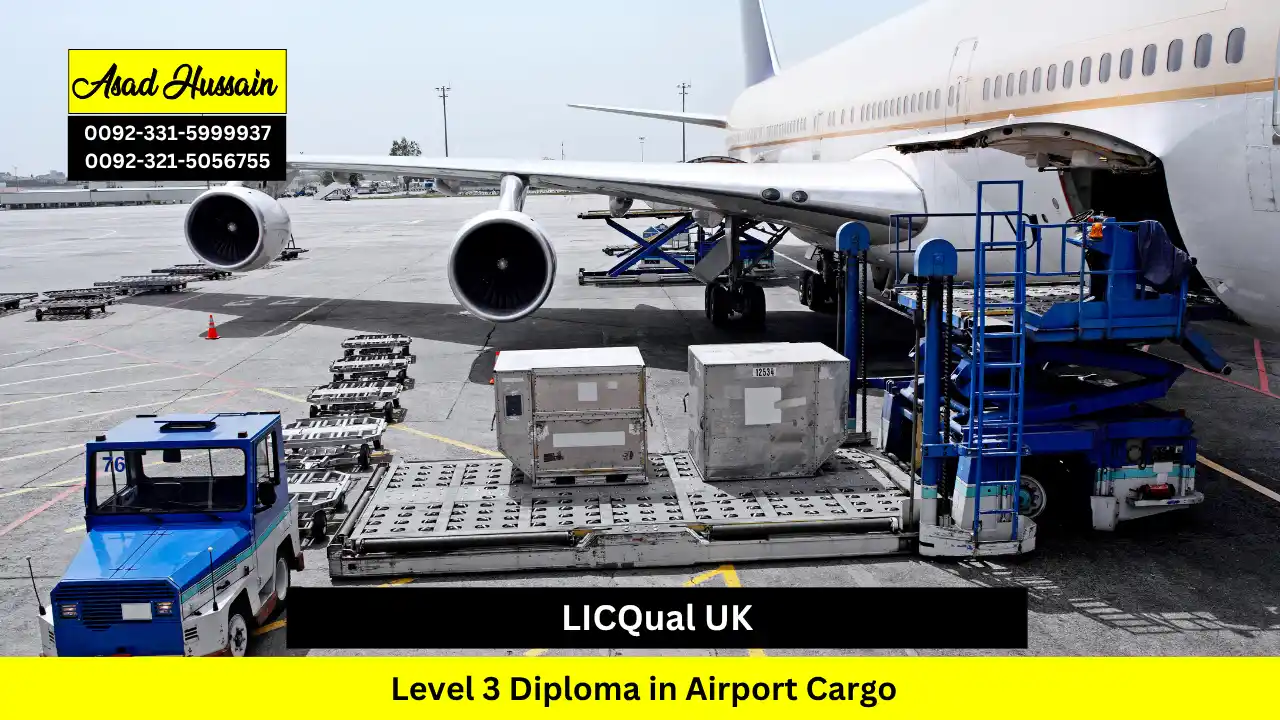
The LICQual UK Level 3 Diploma in Airport Cargo is a comprehensive qualification designed to provide learners with the essential knowledge and practical skills required for a successful career in airport cargo operations and air freight logistics. As global trade continues to depend on efficient air cargo services, the demand for qualified professionals in cargo handling, freight management, and airport logistics is steadily increasing.
This diploma introduces learners to the fundamental principles of airport cargo operations, cargo documentation, freight handling procedures, aviation regulations, cargo security, and supply chain processes. It helps learners understand how cargo is managed, transported, and monitored within modern airport environments while ensuring compliance with industry standards and safety requirements.
Ideal for beginners and aspiring aviation professionals, this qualification provides a strong foundation for career development within the air cargo and logistics sector. Whether you are looking to enter the aviation industry, enhance your operational knowledge, or progress towards higher-level qualifications, the LICQual UK Level 3 Diploma in Airport Cargo offers a valuable pathway to professional growth and long-term career success.
Program Highlights
Study Units
- Introduction to Air Cargo Operations
- Cargo Handling & Storage Procedures
- Aviation Safety, Security & Dangerous Goods Awareness
- Documentation & Customs Procedures
- Customer Service in Cargo Operations
- ICT & Tracking Systems in Cargo
Entry Requirements
The following entry requirements are recommended to ensure learners can successfully complete the program:
- Age Requirement: Learners should be at least 16 years of age.
- Educational Background: A secondary school qualification or equivalent is recommended. However, learners with relevant knowledge or experience may also be considered.
- Professional Experience: This qualification is suitable for both beginners and individuals seeking to start a career in the airport cargo and aviation logistics industry.
- English Proficiency: Learners should have a good understanding of English and strong communication skills.
Course Learning Outcome
By the end of this course, learners will be able to:
1. Introduction to Air Cargo Operations
By the end of this unit, learners will be able to:
- Explain the structure of the global air cargo industry, including the roles of airlines, freight forwarders, and ground handling agents.
- Identify different types of cargo and their specific handling requirements.
- Describe the end‑to‑end process of airport cargo operations from acceptance to delivery.
- Apply international standards (ICAO/IATA) to basic cargo operations.
- Evaluate the importance of air cargo in global trade and supply chain management.
- Demonstrate awareness of career pathways and professional roles in airport cargo logistics.
2. Cargo Handling & Storage Procedures
By the end of this unit, learners will be able to:
- Apply safe handling techniques for general, perishable, and special cargo.
- Demonstrate correct loading, unloading, and storage procedures in compliance with IATA Cargo Handling Manual (ICHM).
- Inspect cargo for damage, irregularities, and compliance with safety standards.
- Implement correct stowage and securing methods to maintain cargo integrity.
- Evaluate warehouse layout and storage systems for efficiency and safety.
- Use best practices to minimize risks of cargo damage and operational delays.
3. Aviation Safety, Security and Dangerous Goods Awareness
By the end of this unit, learners will be able to:
- Identify categories of dangerous goods and restricted items in line with ICAO/IATA regulations.
- Apply correct labeling, packaging, and documentation procedures for dangerous goods.
- Demonstrate awareness of aviation security protocols, including screening and access control.
- Explain the impact of non‑compliance on safety, security, and legal liability.
- Apply risk management principles to prevent incidents in cargo operations.
- Promote a safety and security culture within airport cargo environments.
4. Documentation and Customs Procedures
By the end of this unit, learners will be able to:
- Prepare and interpret key cargo documents such as Air Waybills, manifests, and consignment notes.
- Explain customs clearance processes for imports, exports, and transshipments.
- Apply international trade compliance standards, including WTO and WCO guidelines.
- Identify common errors in documentation and their impact on cargo movement.
- Demonstrate the ability to complete customs declarations accurately and efficiently.
- Evaluate the role of digitalization in modern customs and documentation systems.
5. Customer Service in Cargo Operations
By the end of this unit, learners will be able to:
- Demonstrate effective communication skills with shippers, freight forwarders, and regulatory authorities.
- Apply customer service principles to resolve complaints and claims in cargo operations.
- Evaluate customer expectations in the context of airport cargo logistics.
- Implement service quality standards to enhance customer satisfaction and retention.
- Use problem‑solving techniques to manage service disruptions and delays.
- Promote a customer‑centric culture within airport cargo operations.
6. ICT and Tracking Systems in Cargo
By the end of this unit, learners will be able to:
- Operate cargo management systems, barcoding, and RFID technologies for cargo tracking.
- Apply digital tools to monitor cargo movement in real time.
- Evaluate the role of ICT in enhancing transparency, efficiency, and security in cargo logistics.
- Demonstrate knowledge of emerging technologies such as blockchain and IoT in cargo tracking.
- Analyze data from ICT systems to improve decision‑making and operational performance.
- Ensure compliance with data security and confidentiality standards in cargo ICT systems.
Target Audience
The LICQual UK Level 3 Diploma in Airport Cargo is ideal for learners who want to start or develop a career in airport cargo operations, air freight services, and aviation logistics. It provides the foundational knowledge and practical understanding required to work in the fast-growing global cargo and transportation sector.
This qualification is suitable for:
- Learners seeking an entry-level qualification in airport cargo and aviation logistics.
- Individuals interested in pursuing a career in air freight, cargo handling, or airport operations.
- Airport employees looking to enhance their knowledge of cargo procedures and logistics processes.
- Cargo handling staff wishing to gain a recognised professional qualification.
- Freight forwarding and logistics personnel seeking to specialise in airport cargo operations.
- School leavers and graduates exploring opportunities within the aviation industry.
- Professionals planning to transition into air cargo, transportation, or supply chain management roles.
- Learners who wish to progress to higher-level qualifications in airport operations, aviation management, or logistics.
This course is particularly valuable for those who want to build a strong foundation in airport cargo operations and develop the skills needed for future career advancement within the aviation and logistics sectors.o want to gain strategic, operational, and leadership skills required to manage complex airport cargo operations in an increasingly global and technology-driven aviation industry.