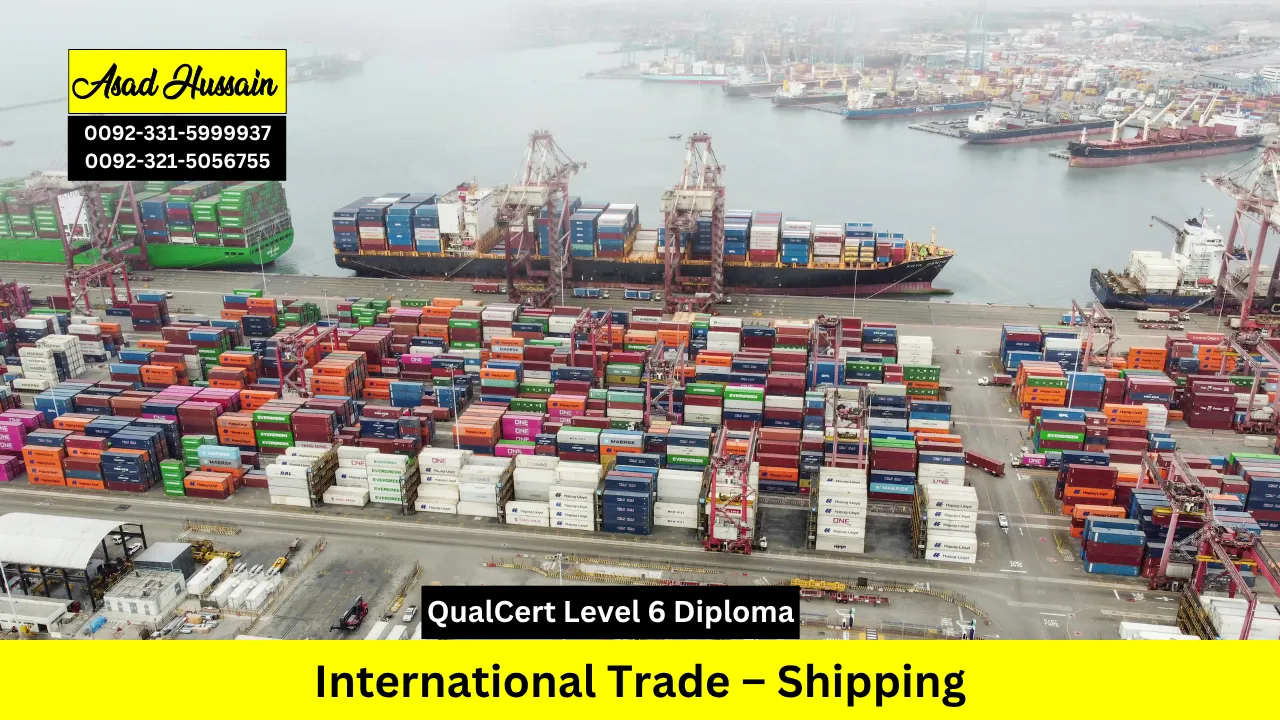
The QualCert Level 6 Diploma in International Trade – Shipping is an advanced qualification designed for professionals seeking expertise in global trade, maritime logistics, and international shipping operations. This comprehensive program equips learners with the knowledge and skills required to manage complex international supply chains, navigate trade regulations, and optimize shipping operations for efficiency and compliance. By combining strategic frameworks with practical applications, participants gain the tools needed to oversee import/export procedures, freight management, customs compliance, and risk mitigation in global trade environments.
Ideal for logistics managers, shipping coordinators, import/export specialists, and supply chain professionals, this diploma enhances both operational and leadership capabilities. Graduates will be able to plan and manage international shipping routes, negotiate contracts, ensure regulatory compliance, and improve overall supply chain performance.
The QualCert Level 6 Diploma in International Trade – Shipping is internationally recognized, opening doors to senior roles in shipping companies, freight forwarding firms, ports, and multinational corporations. With a focus on practical expertise, strategic decision-making, and global trade knowledge, this program empowers professionals to advance their careers, strengthen organizational operations, and stay competitive in the dynamic world of international shipping and trade.
Program Highlights
Study Units
To achieve,QualCert Level 6 Diploma in International Trade – Shipping; Candidates must Complete the 6 Manadatory Units.
- Strategic Management of International Trade and Shipping
- Global Trade Frameworks, Policy and Governance
- Advanced Shipping Logistics and Supply Chain Integration
- International Trade Finance, Risk and Compliance
- Innovation, Technology and Sustainability in Shipping
- Research Project in International Trade and Shipping
Entry Requirements
- Age Requirements: Candidates must be 18 years or older at the time of registration.
- Educational Background: A minimum of a Level 2 qualification (or equivalent) in business, logistics, supply chain, or a related discipline is recommended.
- Language Proficiency:As the course involves technical terminology, written assessments, and communication skills, learners must demonstrate competence in English (reading, writing, and speaking).
- Work Experience:Applicants should ideally have some prior experience in shipping, logistics, or international trade operations, such as roles in warehouse management, freight forwarding, or import/export activities.
Please ensure all criteria are met to facilitate a smooth admission process into this professional program.
Learning Outcomes
- Strategic Management of International Trade and Shipping
- Analyse the strategic role of shipping in global trade networks.
- Evaluate management approaches for international trade operations.
- Apply leadership principles to shipping and trade scenarios.
- Assess the impact of competition on trade and shipping performance.
- Develop strategies for improving efficiency and profitability.
- Demonstrate knowledge of long-term planning in trade and shipping.
- Critically evaluate case studies of successful trade management.
- Global Trade Frameworks, Policy and Governance
- Demonstrate advanced knowledge of international trade frameworks.
- Evaluate the role of WTO, UNCTAD, and other governing bodies.
- Apply governance frameworks to shipping and trade operations.
- Assess compliance requirements for international trade agreements.
- Analyse the impact of trade policies on shipping markets.
- Critically evaluate the effectiveness of global trade governance.
- Develop strategies for ensuring compliance in complex trade environments.
- Advanced Shipping Logistics and Supply Chain Integration
- Analyse the role of shipping within global supply chains.
- Evaluate the relationship between shipping lines, ports, and inland logistics.
- Apply advanced knowledge of multimodal transport systems.
- Assess the impact of globalisation on shipping operations.
- Demonstrate understanding of trade facilitation measures.
- Critically evaluate supply chain risks and resilience strategies.
- Develop solutions for integrating shipping into global logistics networks.
- International Trade Finance, Risk and Compliance
- Demonstrate advanced knowledge of trade finance instruments.
- Evaluate the role of banks and financial institutions in trade.
- Apply compliance requirements to international trade finance.
- Assess the impact of financial risks on trade operations.
- Analyse the role of anti-money laundering and sanctions frameworks.
- Critically evaluate case studies of trade finance disputes.
- Develop strategies for managing financial risks in trade.
- Innovation, Technology and Sustainability in Shipping
- Analyse the role of digitalisation in modern shipping operations.
- Evaluate the impact of automation and smart technologies.
- Apply knowledge of IT systems for cargo tracking and trade efficiency.
- Assess the benefits and challenges of digital transformation.
- Demonstrate understanding of sustainability in shipping and trade.
- Develop strategies for adopting innovative technologies in ports and shipping.
- Critically evaluate global trends in sustainable trade practices.
- Research Project in International Trade and Shipping
- Identify a relevant research topic within international trade and shipping.
- Formulate clear research objectives and methodology.
- Conduct independent research using appropriate sources.
- Analyse and interpret trade and shipping data to support findings.
- Apply critical thinking to evaluate research outcomes.
- Present research in a structured and professional format.
- Demonstrate the ability to link research to industry practice.
Target Audience
The QualCert Level 6 Diploma in International Trade – Shipping is aimed at professionals and advanced learners who wish to progress into senior roles within the global trade and maritime sectors.
- Senior Trade and Shipping Managers
- Designed for professionals managing trade or shipping operations.
- Provides advanced knowledge of strategic planning and leadership.
- Equips learners to improve efficiency and competitiveness.
- Supports career progression into executive-level roles.
- Logistics and Supply Chain Leaders
- Suitable for managers in logistics, shipping, and freight forwarding.
- Enhances understanding of global supply chain integration.
- Provides tools to manage risks and improve resilience.
- Prepares learners for senior decision-making roles.
- Trade Finance and Compliance Professionals
- Ideal for individuals working in trade finance or compliance.
- Provides in-depth knowledge of international financial frameworks.
- Equips learners to ensure compliance with trade regulations.
- Supports roles in banking, auditing, and policy-making.
- Risk and Crisis Management Specialists
- Suitable for those responsible for risk management in trade and shipping.
- Provides advanced training in crisis response and sustainability.
- Equips learners to develop resilient trade operations.
- Prepares professionals for leadership in risk management.
- Technology and Innovation Managers
- Designed for professionals driving digital transformation in trade.
- Provides knowledge of automation, smart technologies, and digitalisation.
- Equips learners to lead innovation projects in shipping and logistics.
- Prepares managers to adapt to global trends in trade technology.
- International Trade Policy and Governance Experts
- Suitable for individuals working in trade policy or governance.
- Provides advanced knowledge of global trade frameworks.
- Equips learners to influence policy and regulatory decisions.
- Supports roles in international organisations and government agencies.
- Academics and Researchers in Trade and Shipping
- Ideal for those pursuing academic or research careers in trade.
- Provides a strong foundation for postgraduate study or research projects.
- Equips learners with analytical and critical thinking skills.
- Supports contributions to academic discourse and industry innovation.