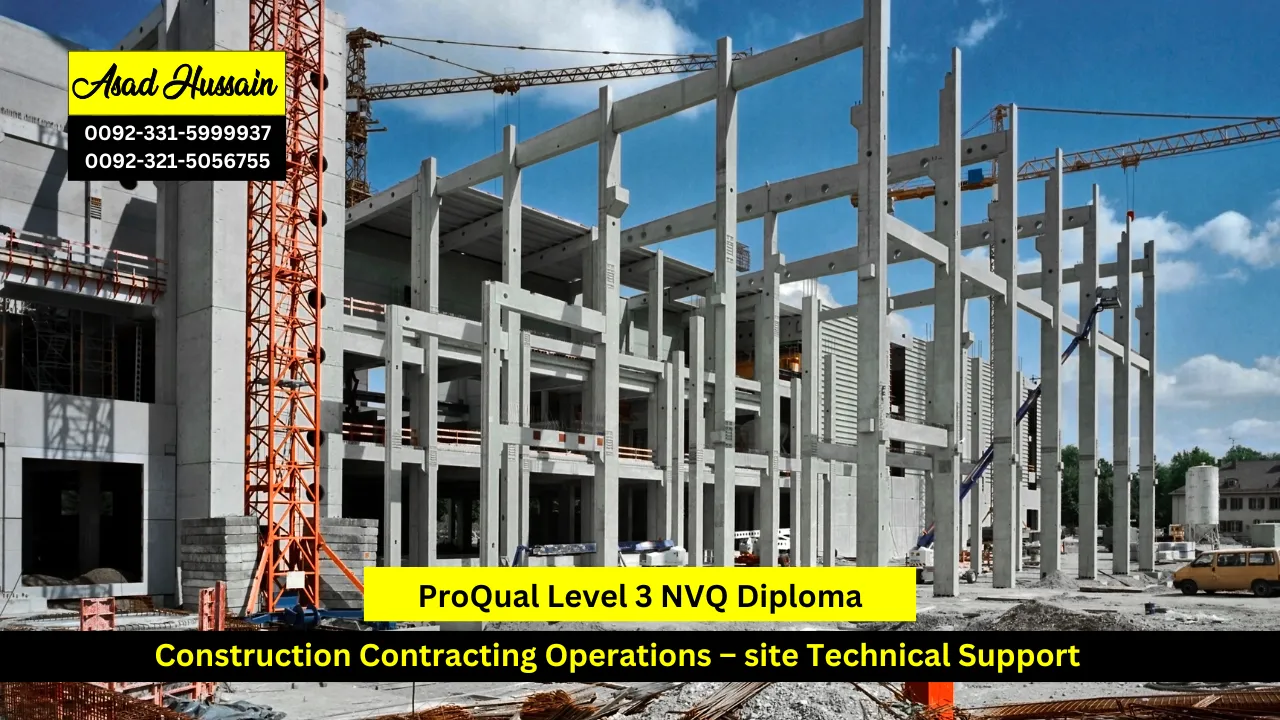
The ProQual Level 3 NVQ Diploma in Construction Contracting Operations – Site Technical Support is designed for individuals working within construction environments who provide essential technical assistance on site. This course focuses on developing practical, work-based skills that support daily construction operations, including interpreting technical information, assisting with site coordination, and maintaining accurate records. Although it is not Ofqual regulated, the diploma is structured to reflect current industry practices and employer expectations. Learners demonstrate competence through real workplace activities, ensuring skills are relevant, practical, and aligned with operational site requirements.
The programme emphasises hands-on involvement in site technical processes, supporting communication between site teams, supervisors, and management. Learners build confidence in handling technical documentation, monitoring site activities, and assisting with quality and compliance procedures. Assessment is evidence-based, allowing learners to showcase their abilities through observations, work products, and professional discussions. The course also complements a range of industry-recognised certifications and vocational diplomas related to construction operations, technical support, and site coordination, helping learners strengthen their professional profile without focusing on academic theory.
ProQual Level 3 NVQ Diploma in Construction Contracting Operations – Site Technical Support supports the development of reliable, competent site support professionals who play a key role in successful project delivery. The course reinforces accuracy, accountability, and effective teamwork within construction settings. By aligning with practical workplace standards and supporting existing construction certifications and diplomas, it enhances operational performance and consistency. This focus on real-world competence makes the diploma a valuable option for employers and individuals seeking to maintain efficiency, technical accuracy, and strong support functions within construction contracting operations.
Program Highlights
Mandatory Units
- Operate health, safety and welfare systems in construction
- Prepare programmes and schedules of work in construction
- Operate project information systems in construction
- Develop and maintain working relationships and personal development in construction
- Implement contract work in construction
- Establish and maintain the dimensional control of construction works
Optional Units – ONE unit
- Prepare for, collect, analyse and present survey data in construction
- Record the condition of property in construction
- Integrate and control project design information in construction
- Prepare for work operations in construction
- Prepare for and carry out physical testing in construction
- Prepare proposals and obtain feedback for the provision of products and services in construction
- Prepare and process invitations to tender in construction
- Prepare estimates, bids and tenders in construction
- Monitor, maintain and improve supplies of materials in construction
- Recommend and monitor supplies of plant and equipment in construction
- Prepare drawings and schedules in construction
- Assess, plan and monitor project methods and progress in construction
- Prepare and monitor costs and accounts in construction
Learning Outcomes
To ensure learners are suitably prepared to complete the ProQual Level 3 NVQ Diploma in Construction Contracting Operations – Site Technical Support, applicants should meet the following entry requirements, which focus on practical readiness and workplace involvement:
- Age Requirement: Learners are generally expected to be 18 years of age or above, as the qualification is designed for individuals working within active construction site environments.
- Educational Background: There are no formal academic entry barriers; however, prior learning such as construction-related diplomas, technical support certificates, site administration awards, or vocational qualifications in construction operations, civil engineering support, or the built environment can be beneficial.
- Language Proficiency: Learners should have an appropriate level of English language proficiency to understand technical drawings, follow site instructions, complete documentation, and communicate effectively with site teams and assessors
In addition, relevant work experience is essential, as this is a competence-based qualification. Learners should be employed in, or have access to, a construction role that involves site technical support duties, documentation handling, or coordination activities to allow the collection of valid workplace evidence.
Learning Outcomes
Operate health, safety and welfare systems in construction
- Apply legal and industry standards for health, safety, and welfare.
- Implement and maintain effective safety procedures on construction sites.
- Conduct risk assessments and monitor safety compliance.
- Promote safe working practices and ensure workforce wellbeing.
Prepare programmes and schedules of work in construction
- Develop structured work schedules aligned with project requirements.
- Use project planning tools to define sequences and durations.
- Identify and manage critical paths and resource allocation.
- Monitor progress and update schedules to reflect changes.
Operate project information systems in construction
- Use digital platforms to manage and share construction data.
- Maintain accurate records of project documents and communication.
- Facilitate real-time information flow among project stakeholders.
- Ensure data security, accessibility, and compliance with documentation standards.
Develop and maintain working relationships and personal development in construction
- Build effective working relationships with colleagues and stakeholders.
- Apply communication and collaboration strategies in team settings.
- Identify personal strengths and development needs.
- Create and follow a continuous professional development (CPD) plan.
Implement contract work in construction
- Interpret and apply contract terms to project activities.
- Ensure construction work is performed in compliance with contractual obligations.
- Resolve contract-related disputes and maintain documentation.
- Monitor delivery standards and report contract performance.
Establish and maintain the dimensional control of construction works
- Set out and verify dimensions on site according to design requirements.
- Use surveying and measuring equipment accurately.
- Identify and correct dimensional discrepancies.
- Maintain precise records of all measurements and adjustments.
Prepare for, collect, analyse and present survey data in construction
- Plan and carry out site surveys using standard methods.
- Analyse and interpret survey data to support project decisions.
- Present findings using appropriate visual and technical formats.
- Ensure accuracy and reliability of collected data.
Record the condition of property in construction
- Conduct thorough inspections to evaluate property condition.
- Identify defects and document physical state using appropriate tools.
- Prepare reports supported by visual and technical evidence.
- Recommend maintenance or repair solutions based on findings.
Integrate and control project design information in construction
- Coordinate input from design teams and ensure documentation consistency.
- Maintain up-to-date records and control document versions.
- Resolve conflicts in design information across disciplines.
- Support seamless communication between design and construction teams.
Prepare for work operations in construction
- Organise site logistics, workforce, and resources in advance of work.
- Identify potential obstacles and implement readiness strategies.
- Allocate roles and responsibilities to team members.
- Ensure compliance with work specifications and standards.
Prepare for and carry out physical testing in construction
- Select relevant tests for construction materials and components.
- Perform tests following standard procedures and safety protocols.
- Record, evaluate, and interpret results accurately.
- Use test data to support quality assurance in construction.
Prepare proposals and obtain feedback for the provision of products and services in construction
- Create detailed proposals outlining construction products or services.
- Engage stakeholders for evaluation and feedback.
- Revise proposals to reflect input and align with client needs.
- Present final proposals professionally and persuasively.
Prepare and process invitations to tender in construction
- Draft tender documentation in accordance with project requirements.
- Manage the invitation and submission process effectively.
- Ensure fairness, compliance, and transparency during tendering.
- Evaluate responses and recommend selections based on criteria.
Prepare estimates, bids and tenders in construction
- Develop detailed cost breakdowns for construction work.
- Create competitive and compliant bids and tender documents.
- Align pricing strategies with client specifications and market trends.
- Ensure accuracy and completeness of all bid submissions.
Monitor, maintain and improve supplies of materials in construction
- Track inventory levels and forecast material needs.
- Coordinate timely procurement to avoid shortages.
- Identify inefficiencies and implement supply improvements.
- Ensure quality and suitability of supplied materials.
Recommend and monitor supplies of plant and equipment in construction
- Assess equipment needs based on project scope.
- Recommend cost-effective and suitable plant resources.
- Monitor usage, condition, and maintenance schedules.
- Ensure efficient deployment and compliance with safety standards.
Prepare drawings and schedules in construction
- Create technical drawings using CAD and other tools.
- Develop construction schedules linked to design documentation.
- Coordinate drawings with project specifications and updates.
- Ensure clarity, accuracy, and compliance in visual materials.
Assess, plan and monitor project methods and progress in construction
- Evaluate construction methodologies for efficiency and safety.
- Develop work plans and method statements.
- Monitor project progress against benchmarks.
- Adjust plans based on performance analysis and site conditions.
Prepare and monitor costs and accounts in construction
- Create cost estimates and manage project budgets.
- Monitor actual expenditures and track financial performance.
- Identify and report on cost variances.
- Prepare financial records and ensure contract compliance.
Target Audience
This qualification is designed for experienced construction professionals working in a technical support capacity on-site. It is ideally suited for individuals who are responsible for the technical and supervisory aspects of construction projects and are looking to have their skills formally certified. Specifically, it is for:
- Site Supervisors and Assistant Site Managers who oversee daily operations.
- Site Engineers and Engineering Technicians providing technical layout, setting out, and surveying support.
- General Foremen and Section Foremen coordinating trades and work sections.
- Construction Controllers and Planners involved in the technical planning and progress monitoring of works.
- Quality Control and Compliance Officers ensuring work meets specifications and standards.
- Experienced Tradespersons transitioning into a technical supervisory role.
- Individuals seeking to obtain the Black CSCS Card (Advanced Craft/Supervisory), as this NVQ is a recognised route to achieving it.
In essence, this diploma validates the competency of those who apply technical knowledge to solve on-site problems, ensure accurate implementation of designs, and support the site management team in delivering construction projects safely, on time, and to quality.