Master Viral Pathogens with the Professional Diploma in Virology
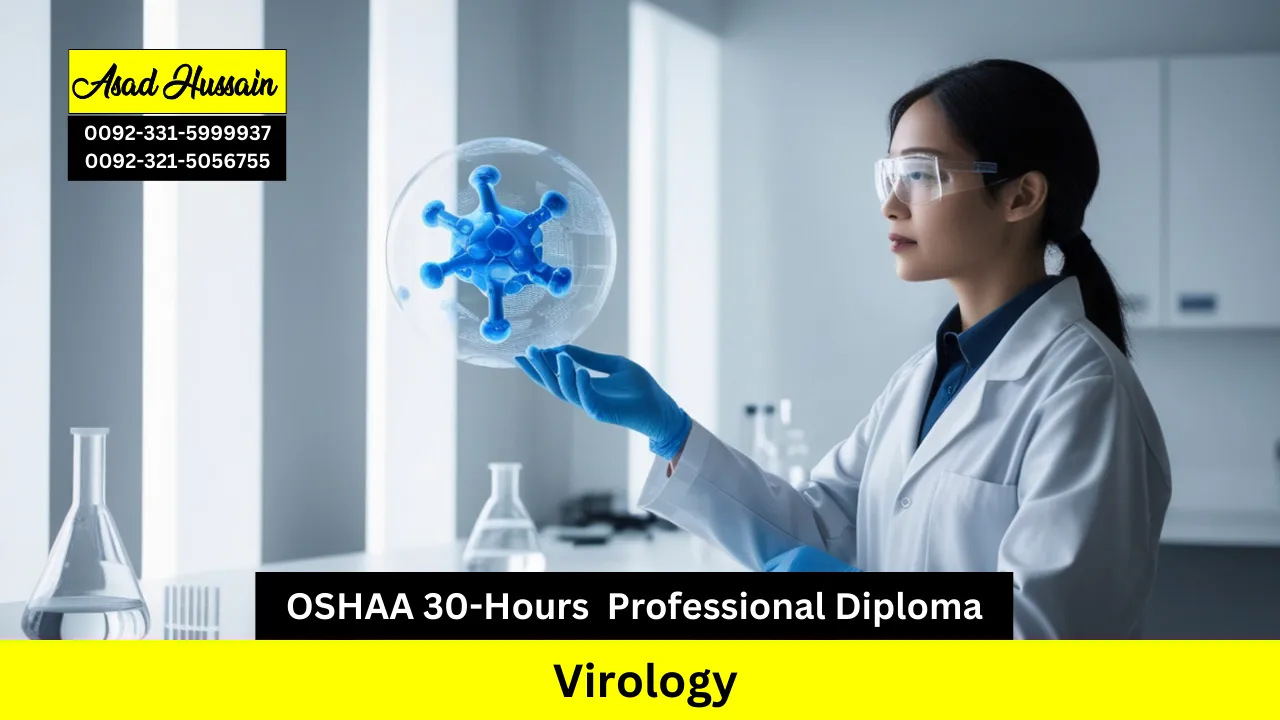
The OSHAA 30-Hours Professional Diploma in Virology provides a comprehensive exploration into the microscopic world of infectious agents and their impact on global occupational health. This curriculum is meticulously crafted to bridge the gap between basic biological understanding and advanced biosafety management within laboratory and clinical environments. Students will examine the structural classification of viruses, their varied modes of transmission, and the sophisticated immune responses they trigger in human hosts. By focusing on evidence-based containment strategies, the course empowers professionals to implement robust defense mechanisms and maintain stringent safety compliance within high-risk biological research and public health settings.
Participants will engage with advanced modules covering site-specific biohazard risk assessments, the selection of specialized personal protective equipment, and the international frameworks governing the handling of viral specimens. While this program is an independent professional development offering and does not fall under Ofqual regulation, it remains a vital asset for those dedicated to maintaining sterile and secure workplace cultures. The training emphasizes practical application, ensuring that safety officers and laboratory managers can identify potential contamination points before they escalate into outbreaks. Through technical analysis, the course fosters a proactive mindset essential for managing the modern challenges of emerging pathogens.
The OSHAA 30-Hours Professional Diploma in Virology serves as a significant milestone for safety practitioners looking to validate their expertise in biological hazard management. Upon successful completion, individuals may find this foundational knowledge serves as a robust pillar when pursuing additional specialized certifications or advanced diplomas in epidemiology and infection control. These further credentials can enhance a professional’s portfolio, offering a broader scope of authority in healthcare and safety leadership roles. By mastering the complexities of viral behavior today, graduates position themselves as indispensable experts capable of safeguarding public health and navigating the intricate demands of modern safety governance and technical certification standards.
Program Highlights
Study Units
- Introduction to Virology and Viral Structures (3 Hours)
- Viral Classification and Taxonomy (3 Hours)
- Viral Replication Cycles and Mechanisms (3 Hours)
- Host-Virus Interactions and Immune Response (5 Hours)
- Pathogenesis of Viral Infections (4 Hours)
- Diagnostic Techniques in Virology (3 Hours)
- Antiviral Therapies and Resistance (3 Hours)
- Vaccine Development and Immunisation Strategies (3 Hours)
- Emerging and Re-Emerging Viral Threats (3 Hours)
Entry Requirements
To enroll in the OSHAA 30-Hours Professional Diploma in Virology, applicants must meet the following baseline criteria:
- Age and ID: Applicants must be at least 18 years old and provide a valid government-issued photo ID.
- Education and Language: A High School Diploma or equivalent is required. Candidates should have a strong command of English and ideally hold a basic Certificate in Laboratory Safety or a Diploma in Biomedical Sciences.
- Experience: At least 1 to 2 years of work experience in healthcare, laboratory research, or clinical safety management is highly recommended.
These requirements ensure that all participants possess the foundational knowledge and professional maturity needed to master complex viral containment protocols.
Learning Outcomes
Introduction to Virology and Viral Structures (3 Hours)
- Define virology and its importance in biomedical science
- Identify the structural components of viruses
- Distinguish DNA and RNA viruses based on genetic material
- Explain principles of viral morphology and symmetry
Viral Classification and Taxonomy (3 Hours)
- Describe major systems of viral classification
- Categorise viruses by genetic material, replication, and morphology
- Interpret the International Committee on Taxonomy of Viruses (ICTV) framework
- Recognise the clinical significance of key virus families
Viral Replication Cycles and Mechanisms (3 Hours)
- Outline general steps in viral replication
- Differentiate DNA and RNA virus replication mechanisms
- Analyse the role of host cell machinery in viral replication
- Evaluate how replication affects pathogenesis and transmission
Host-Virus Interactions and Immune Response (5 Hours)
- Explain virus interactions with host cells at molecular and cellular levels
- Discuss innate and adaptive immune responses
- Identify viral strategies for immune evasion and persistence
- Assess the role of immunopathology in viral diseases
Pathogenesis of Viral Infections (4 Hours)
- Define mechanisms of viral entry, spread, and host damage
- Distinguish acute, latent, chronic, and persistent infections
- Evaluate factors influencing disease severity and susceptibility
- Correlate clinical symptoms with viral pathogenesis
Diagnostic Techniques in Virology (3 Hours)
- Describe traditional and modern viral diagnostic methods
- Compare PCR, ELISA, culture, and rapid antigen testing
- Interpret diagnostic results for common viruses
- Understand the advantages and limitations of each method
Antiviral Therapies and Resistance (3 Hours)
- Identify common antiviral drug classes and mechanisms
- Discuss development of antiviral resistance
- Evaluate clinical application of therapies for viral diseases
- Understand emerging trends in antiviral drug discovery
Vaccine Development and Immunisation Strategies (3 Hours)
- Explain principles of vaccine design and development
- Differentiate live-attenuated, inactivated, and mRNA vaccines
- Discuss global vaccination strategies and challenges
- Understand the role of herd immunity in viral disease control
Emerging and Re-Emerging Viral Threats (3 Hours)
- Identify major emerging and re-emerging viral diseases
- Analyse drivers of viral emergence, including zoonosis and environmental change
- Evaluate the role of surveillance, preparedness, and public health response
- Understand the impact of globalisation and travel on viral spread
Target Audience
The OSHAA 30-Hours Professional Diploma in Virology is meticulously designed for professionals working at the intersection of biological science, public health, and occupational safety who require a sophisticated understanding of viral containment.
Healthcare and Clinical Professionals
- Infection Control Officers managing hospital-wide biohazard protocols.
- Clinical Laboratory Technicians handling patient viral samples daily.
- Nursing Supervisors responsible for ward-level sterilization and safety.
- Diagnostic Specialists utilizing PCR and ELISA testing methodologies.
- Public Health Nurses coordinating community-wide immunization drives.
Laboratory and Research Scientists
- Biosafety Officers ensuring compliance with BSL-2 and BSL-3 standards.
- Microbiologists investigating viral replication and genetic mutation.
- Research Assistants maintaining sterile cell cultures for viral studies.
- Laboratory Managers overseeing the procurement of specialized PPE.
- Quality Control Analysts in pharmaceutical manufacturing environments.
Occupational Health and Safety Specialists
- Biohazard Risk Auditors performing detailed workplace safety inspections.
- Environmental Health Officers monitoring viral spread in public spaces.
- Safety Consultants developing emergency response plans for outbreaks.
- Industrial Hygienists measuring the efficacy of air filtration systems.
- Corporate Compliance Managers aligning internal policies with safety standards.
Pharmaceutical and Biotech Industry Workers
- Vaccine Production Specialists focusing on mRNA and inactivated platforms.
- Clinical Trial Coordinators monitoring patient responses to antivirals.
- Bioprocess Engineers designing large-scale viral filtration systems.
- Regulatory Affairs Associates managing documentation for health authorities.
- Technical Sales Representatives for high-end virology diagnostic equipment.
Emergency Response and Public Policy Experts
- Disaster Management Leads planning for regional pandemic preparedness.
- Quarantine Officers managing border controls and biological screening.
- Policy Advisors drafting legislative frameworks for infectious diseases.
- Humanitarian Aid Workers operating in areas with endemic viral threats.
- Epidemiological Surveillance Officers tracking global viral transmission trends.
By integrating these diverse professional backgrounds, the program creates a collaborative environment where experts from various sectors can master the technical skills necessary to neutralize viral threats and safeguard global health.