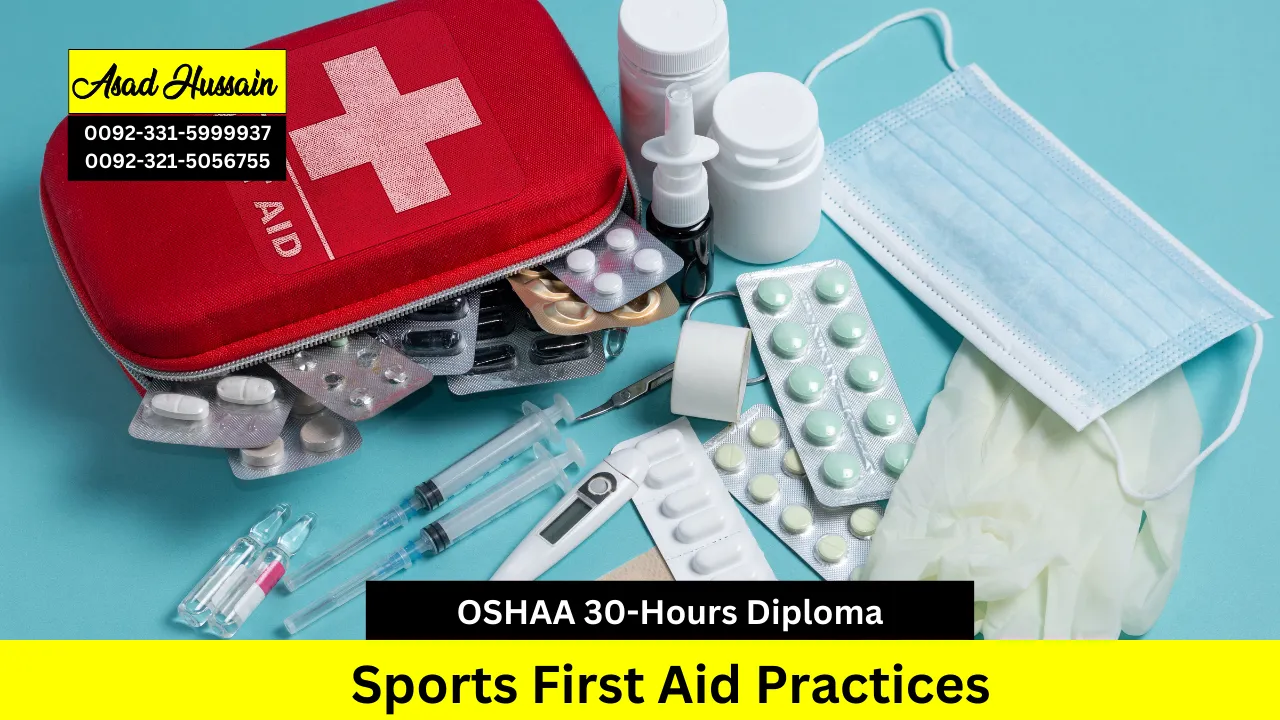
Develop Life-Saving Skills with OSHAA Sports First Aid Training
The OSHAA 30-Hours Professional Diploma in Sports First Aid Practices is a specialised programme designed to provide learners with practical knowledge and skills to manage injuries and medical emergencies in sports and athletic environments. Participants will gain insight into assessing injuries, performing first aid interventions, and implementing safety protocols to protect athletes. The course emphasises rapid response, effective communication, and professional conduct, ensuring learners can act confidently in high-pressure situations. It is not Ofqual regulated, but it meets professional standards for structured, career-focused learning in sports safety and emergency care.
This course is ideal for sports coaches, trainers, fitness instructors, physical education staff, and volunteers who support athletes in schools, clubs, or community programmes. Learners will explore common sports injuries, emergency response procedures, injury prevention strategies, and athlete rehabilitation basics. The programme combines theoretical understanding with practical exercises, case studies, and scenario-based training to build confidence, competence, and the ability to apply first aid techniques effectively in real-world situations. It also complements other certifications and diplomas in health, fitness, and safety training.
OSHAA 30-Hours Professional Diploma in Sports First Aid Practices provides a structured and professional pathway for developing applied skills in sports first aid and emergency response. The programme focuses on enhancing practical competence, ethical decision-making, and athlete safety awareness. It is suitable for individuals working in sports environments who wish to improve their ability to respond to injuries, support recovery, and maintain a safe and prepared environment for athletes. Completion of the course provides valuable expertise that can be applied immediately in professional, volunteer, or community sports settings.
Program Highlights
Study Units
- Introduction to Sports First Aid and the Role of the First Aider (3 hours)
- Primary Survey and Emergency Scene Management (3 hours)
- Musculoskeletal Injuries: Sprains, Strains, Fractures, and Dislocations (4 hours)
- Head, Neck, and Spinal Injuries in Sport (6 hours)
- Concussion Recognition and Return-to-Play Protocols (3 hours)
- Cardiopulmonary Resuscitation (CPR) and AED Use in Sports Settings (6 hours)
- Soft Tissue Injuries, Bleeding Control, and Wound Management (3 hours)
- Environmental Factors: Heat Illness, Hypothermia, and Dehydration (2 hours)
Entry Requirements
To ensure learners can fully benefit from the OSHAA 30-Hours Professional Diploma in Sports First Aid Practices, the following entry requirements are recommended:
- Age Requirement: Learners should be at least 18 years old at the time of enrolment to ensure appropriate maturity for practical first aid and emergency training.
- Educational Background: A basic educational qualification is preferred. Prior completion of related diplomas or certificates in first aid, sports coaching, fitness training, health and safety, or physical education can be beneficial but is not mandatory.
- Language Proficiency: Learners should have a good command of English to understand course materials, participate in practical exercises, and complete assessments effectively.
- Work Experience: Previous experience working in sports, fitness, or athletic environments is advantageous but not required.
Overall, this course is designed to be accessible to motivated learners from diverse backgrounds who wish to develop practical, professional, and life-saving skills in sports first aid and emergency response.
Learning Outcomes
Introduction to Sports First Aid and the Role of the First Aider (3 Hours)
- Define the responsibilities and limitations of a sports first aider
- Understand the importance of preparation and emergency planning
- Identify essential items in a sports first aid kit
- Recognise the legal and ethical considerations in delivering first aid
Primary Survey and Emergency Scene Management (3 Hours)
- Conduct a primary assessment using the DRABC approach
- Prioritise actions when faced with multiple injuries or casualties
- Ensure safety for self, casualty, and bystanders during an incident
- Communicate effectively with emergency services and team personnel
Musculoskeletal Injuries: Sprains, Strains, Fractures, and Dislocations (4 Hours)
- Differentiate between sprains, strains, fractures, and dislocations
- Apply appropriate first aid techniques for immobilisation and support
- Identify signs and symptoms that require urgent medical referral
- Understand the principles of the RICE method for initial care
Head, Neck, and Spinal Injuries in Sport (6 Hours)
- Recognise symptoms of potentially serious head and spinal injuries
- Implement safe management techniques to prevent further harm
- Support airway and breathing in athletes with suspected spinal trauma
- Understand when and how to stabilise the head and neck
- Coordinate emergency response until professional help arrives
- Record and report suspected spinal injuries in line with safeguarding practices
Concussion Recognition and Return-to-Play Protocols (3 Hours)
- Identify early and delayed signs of concussion
- Understand the importance of immediate removal from play
- Follow evidence-based return-to-play guidelines
- Educate others on the risks of premature return to sport
Cardiopulmonary Resuscitation (CPR) and AED Use in Sports Settings (6 Hours)
- Perform adult and child CPR to current UK Resuscitation Council standards
- Safely and effectively use an automated external defibrillator (AED)
- Recognise the signs of cardiac arrest during sporting activity
- Understand the chain of survival and the role of early defibrillation
- Adapt CPR procedures to sports-related environments and equipment
Soft Tissue Injuries, Bleeding Control, and Wound Management (3 Hours)
- Control external bleeding using pressure and dressings
- Manage common sports-related wounds and abrasions
- Apply bandages and support wraps appropriately
- Identify when to seek further medical attention for soft tissue damage
Environmental Factors: Heat Illness, Hypothermia, and Dehydration (2 Hours)
- Recognise signs of heat exhaustion, heatstroke, and hypothermia
- Provide immediate care to stabilise body temperature
- Advise on hydration strategies and monitoring fluid loss
- Prevent environment-related conditions through planning and risk assessment
Target Audience
This course is designed for individuals who want to develop professional skills in sports first aid and emergency response. It is suitable for coaches, trainers, educators, volunteers, and fitness professionals who work with athletes and sports teams in schools, clubs, or community settings.
Sports Coaches and Trainers
- Coaches managing teams at school or club level
- Trainers responsible for athlete safety during practice and competition
- Fitness instructors working with amateur or professional athletes
- Strength and conditioning coaches monitoring physical performance
- Personal trainers incorporating injury prevention strategies
- Team leaders ensuring proper first aid preparedness
Educators and Physical Education Staff
- School teachers delivering PE lessons
- Sports coordinators and programme managers
- Staff overseeing extracurricular athletic activities
- Educators responsible for student health and safety
- Trainers providing guidance in after-school sports clubs
- Teachers promoting awareness of injury prevention and care
Healthcare and Medical Professionals in Sports
- Physiotherapists supporting athletic rehabilitation
- Sports therapists working on injury management
- First aid responders in athletic settings
- Nurses and healthcare assistants involved in sports events
- Emergency medical technicians assisting in athletic injuries
- Professionals coordinating with coaches on athlete safety
Volunteers and Community Sports Leaders
- Volunteers assisting in sports clubs or recreational programs
- Event staff managing athletic competitions
- Mentors guiding young athletes
- Community leaders promoting safe sports participation
- Individuals providing first aid support during tournaments
- Volunteers engaged in outreach or school sports initiatives
Students and Learners in Health and Fitness Fields
- Students studying sports science or physical education
- Learners preparing for careers in coaching or fitness training
- Individuals gaining applied first aid knowledge for practical experience
- Interns seeking exposure to sports safety and emergency response
- Students developing complementary skills to certifications in health or fitness
- Learners interested in applied knowledge for future roles in sports safety
Individuals Seeking Professional Growth
- Professionals enhancing applied skills in sports first aid
- Staff aiming to improve emergency response in athletic settings
- Learners seeking confidence in managing injuries and medical incidents
- Individuals aiming to increase employability in sports and fitness roles
- Participants wanting structured training in injury prevention and care
- Professionals wishing to demonstrate competence in athlete safety
Overall, this course is ideal for anyone committed to developing practical, professional, and life-saving skills in sports first aid, enabling learners to protect athletes and respond effectively to emergencies in all sporting environments.