
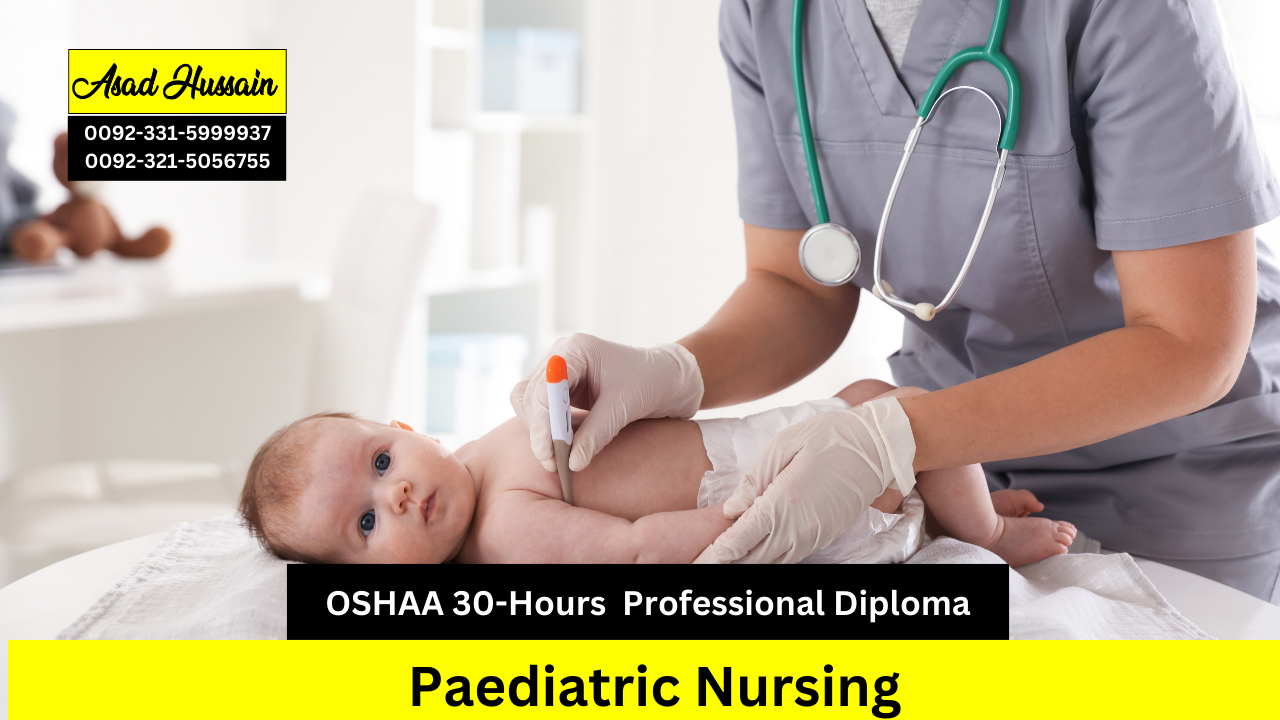
Elevate Your Nursing Skills with Paediatric Nursing Diploma
The OSHAA 30-Hours Professional Diploma in Paediatric Nursing is designed to provide learners with essential knowledge and practical understanding of child healthcare and clinical support. This comprehensive program focuses on the physical, emotional, and developmental needs of infants, children, and adolescents in various healthcare settings. Participants gain insight into paediatric patient care, growth monitoring, infection prevention, and effective communication with children and families. The course emphasizes compassionate, safe, and ethical practice, ensuring learners develop the confidence and competence required to deliver high-quality care in child-centered environments.
Throughout this 30-hour professional diploma, learners explore key aspects of paediatric nursing, including child health assessment, common childhood illnesses, medication safety, nutritional needs, and safeguarding principles. The course integrates theoretical foundations with practical guidance to strengthen clinical awareness and decision-making abilities. Emphasis is placed on teamwork, documentation standards, and maintaining a child-friendly approach within healthcare settings. By completing the program, participants enhance their professional capabilities and develop practical skills that support safe, responsive, and developmentally appropriate care for young patients.
OSHAA 30-Hours Professional Diploma in Paediatric Nursing provides a structured and industry-relevant foundation for individuals seeking to strengthen their expertise in child healthcare services. While this program is not Ofqual regulated, it is carefully designed to align with modern clinical practices and patient care standards. Upon completion, learners may progress toward further certifications and professional diplomas in areas such as neonatal care, child psychology support, infection control, and advanced paediatric care, enhancing their professional recognition and practical skill set within healthcare environments.
Program Highlights
Study Units
- Introduction to Paediatric Nursing and Child Development (3 hours)
- Growth and Developmental Milestones (3 hours)
- Common Paediatric Illnesses and Conditions (4 hours)
- Immunisation and Preventative Healthcare (6 hours)
- Communication with Children and Families (4 hours)
- Paediatric Medication Administration and Dosage Calculations (3 hours)
- Managing Paediatric Emergencies (4 hours)
- Family-Centred Care and Psychosocial Support (3 hours)
Entry Requirements
To ensure learners can effectively understand and apply the course content, applicants are expected to meet the following basic entry criteria:
- Age Requirement: Applicants must be at least 18 years of age at the time of enrollment.
- Educational Background: A minimum of secondary school education or equivalent is recommended. Candidates holding relevant qualifications such as a Certificate in Nursing Assistance, Diploma in Health and Social Care, First Aid and CPR Certification, Basic Life Support (BLS) Certificate, or a Diploma in General Nursing will have an added advantage.
- Language Proficiency: Learners should possess a good command of English to read study materials, understand clinical terminology, and complete written assessments successfully.
- Work Experience: Previous experience in healthcare settings, childcare environments, clinics, hospitals, or community health services is beneficial but not mandatory.
These entry requirements help ensure that participants are prepared to engage with the course content and successfully develop essential paediatric nursing knowledge and practical care skills.
Learning Outcomes
Introduction to Paediatric Nursing and Child Development (3 Hours)
- Understand the fundamental principles of paediatric nursing
- Recognise key stages of child development and their impact on nursing care
- Identify the role and responsibilities of a paediatric nurse
Growth and Developmental Milestones (3 Hours)
- Describe normal physical, cognitive, and emotional milestones in children
- Assess developmental progress and identify potential delays
- Apply knowledge of growth stages to tailor nursing interventions
Common Paediatric Illnesses and Conditions (4 Hours)
- Identify signs and symptoms of prevalent childhood illnesses
- Understand the pathophysiology and treatment approaches for common conditions
- Implement appropriate nursing care for affected children
Immunisation and Preventative Healthcare (6 Hours)
- Explain immunisation schedules and vaccine types for children
- Understand the importance of preventative health measures in paediatrics
- Educate families on immunisation benefits and safety
Communication with Children and Families (4 Hours)
- Develop effective communication strategies tailored to children of various ages
- Engage with families to support child health and wellbeing
- Manage sensitive conversations with empathy and professionalism
Paediatric Medication Administration and Dosage Calculations (3 Hours)
- Demonstrate accurate calculation of paediatric medication dosages
- Understand safe administration practices and potential medication risks
- Monitor and document medication effects appropriately
Managing Paediatric Emergencies (4 Hours)
- Recognise common paediatric emergencies and their presentations
- Apply emergency response protocols effectively
- Provide timely and safe interventions in critical situations
Family-Centred Care and Psychosocial Support (3 Hours)
- Understand the importance of involving families in the care process
- Provide psychosocial support to children and their caregivers
- Promote a holistic approach to paediatric nursing care
Target Audience
The OSHAA 30-Hours Professional Diploma in Paediatric Nursing is ideal for individuals seeking to enhance their skills in child healthcare, build professional competence, and deliver safe, effective, and compassionate care for children in clinical or community settings. This course is suitable for both newcomers to paediatric nursing and experienced healthcare professionals looking to expand their expertise.
Aspiring Paediatric Nurses
- Individuals aiming to pursue a career in child healthcare
- Learners interested in gaining structured paediatric nursing knowledge
- Candidates seeking practical skills in patient assessment and care
- Students preparing for entry-level roles in paediatric settings
- Individuals wanting to develop confidence in child-focused care
Healthcare Assistants and Support Staff
- Medical assistants working in hospitals or clinics
- Caregivers and nursing aides supporting child patients
- Staff in community health programs for children
- Individuals seeking to improve clinical support skills
- Professionals enhancing their ability to manage child health needs
Workplace Safety and First Aid Personnel
- Occupational first aiders in child-centered environments
- Health and safety officers in schools, daycare, or healthcare facilities
- Security personnel responsible for child welfare in public spaces
- Emergency response team members dealing with children
- Staff ensuring compliance with workplace child safety protocols
Community and Volunteer Healthcare Workers
- Volunteers in child-focused NGOs or community programs
- Workers in disaster relief or emergency child care operations
- Support staff at children’s events or recreational programs
- Individuals aiming to provide safe, professional care in outreach settings
- Participants enhancing knowledge for humanitarian child support initiatives
Students and Career Changers in Healthcare
- Students exploring careers in paediatric nursing
- Individuals transitioning from general healthcare roles to child care
- Professionals seeking practical child health knowledge
- Learners aiming to strengthen their healthcare credentials
- Candidates developing foundational skills for future paediatric roles
This course equips participants with practical, industry-relevant knowledge and skills, empowering them to deliver high-quality paediatric care while enhancing professional confidence and credibility in child healthcare settings.