Master Advanced Orthodontic Biomechanics with Professional Diploma
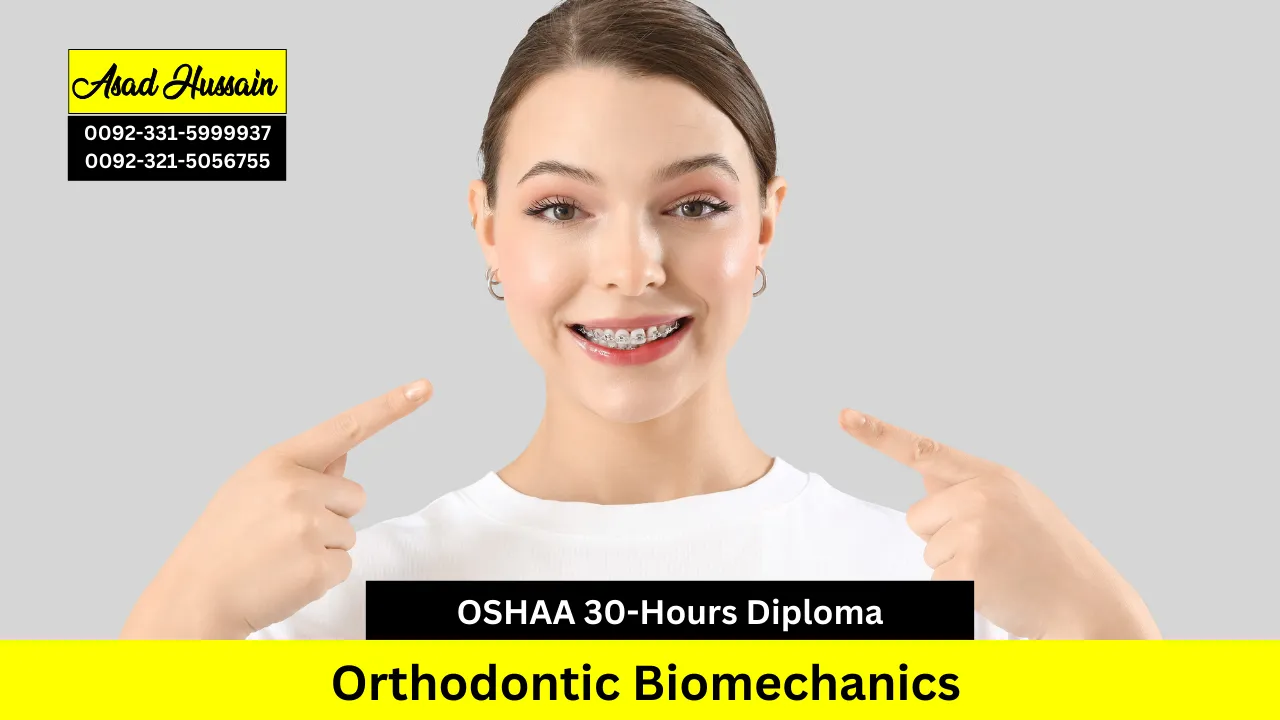
The OSHAA 30-Hours Professional Diploma in Orthodontic Biomechanics is designed for dental practitioners, orthodontic technicians, and clinicians aiming to deepen their expertise in tooth movement and appliance mechanics. The course equips participants with the ability to apply evidence-based biomechanical principles confidently in clinical practice. Graduates will gain skills to plan, implement, and evaluate treatment strategies effectively, improve patient outcomes, and elevate professional practice standards. This program also offers recognised certification and diplomas that validate expertise in orthodontic biomechanics.
Orthodontic biomechanics is a critical aspect of modern dental practice, focusing on the forces and movements that guide teeth into optimal alignment. Understanding these principles allows dental professionals to design and implement precise treatment plans while minimising patient discomfort and treatment time. This course provides a structured approach to the fundamentals of force systems, tooth movement, and appliance mechanics. Learners will gain insight into both theoretical concepts and practical applications, ensuring a strong foundation in orthodontic biomechanics that can be applied in everyday clinical settings.
Participants will explore the interaction between dental anatomy, material science, and biomechanical principles to achieve predictable orthodontic outcomes. The program emphasises safe and effective appliance use, treatment planning strategies, and understanding the biological responses to orthodontic forces. Through a combination of lectures, case studies, and hands-on exercises, learners will develop the skills necessary to analyse complex cases and make informed decisions. Advanced topics, such as force distribution, anchorage control, and wire mechanics, are also covered to enhance professional competence.
Program Highlights
Study Units
- Introduction to Orthodontic Biomechanics and Force Systems (3 hours)
- Biological Basis of Tooth Movement (3 hours)
- Anchorage Concepts: Types, Strategies, and Control (4 hours)
- Fixed Appliances: Brackets, Wires, and Force Application (6 hours)
- Mechanics of Sliding, Friction, and Loop Systems (5 hours)
- Space Closure Techniques and Midline Management (3 hours)
- Vertical Control: Managing Open Bites and Deep Bites (3 hours)
- Transverse and Rotational Tooth Movement Mechanics (3 hours)
Entry Requirements
To enroll in the OSHAA 30-Hours Professional Diploma in Orthodontic Biomechanics, participants are expected to meet the following entry requirements:
- Age Requirements: Applicants should be at least 18 years old to ensure readiness for professional-level study and practical application.
- Educational Requirements: A background in dentistry, dental hygiene, orthodontics, or related healthcare fields is recommended. Candidates with diplomas or certificates in dental assisting, oral health, or orthodontic technology are also encouraged to apply.
- Language Proficiency: Participants must have sufficient proficiency in English to understand course materials, participate in discussions, and complete assessments effectively.
- Work Experience: While prior clinical experience in orthodontics or general dentistry is advantageous, it is not mandatory. Candidates with practical exposure to dental treatments, lab work, or patient care will benefit from easier application of course concepts.
Meeting these requirements ensures that learners can fully engage with both the theoretical and practical aspects of orthodontic biomechanics. By fulfilling these criteria, participants are well-prepared to gain maximum benefit from the course and achieve professional recognition in the field.
Learning Outcomes
Introduction to Orthodontic Biomechanics and Force Systems (3 hours)
- Understand the fundamental principles of orthodontic biomechanics
- Identify different types of force systems used in clinical orthodontics
- Analyse how forces and moments influence tooth movement
- Apply basic mechanical principles to orthodontic treatment scenarios
Biological Basis of Tooth Movement (3 hours)
- Explain the cellular and tissue-level responses to orthodontic force
- Understand the phases of tooth movement and tissue remodelling
- Recognise factors affecting the rate and effectiveness of tooth movement
- Correlate biological responses with clinical timing and force selection
Anchorage Concepts: Types, Strategies, and Control (4 hours)
- Define various anchorage types and their clinical applications
- Evaluate the mechanics of direct, indirect, and skeletal anchorage
- Plan effective anchorage strategies for different orthodontic cases
- Minimise unwanted tooth movement through appropriate anchorage control
Fixed Appliances: Brackets, Wires, and Force Application (6 hours)
- Identify different types of brackets and their biomechanical roles
- Select archwires based on mechanical properties and treatment phase
- Apply appropriate force magnitudes through fixed appliance systems
- Understand how bracket positioning affects tooth movement
Mechanics of Sliding, Friction, and Loop Systems (5 hours)
- Differentiate between sliding and frictionless mechanics
- Evaluate the effect of friction on treatment efficiency
- Design and apply loop systems for controlled space closure
- Optimise biomechanics to minimise treatment time and side effects
Space Closure Techniques and Midline Management (3 hours)
- Understand the biomechanical principles behind space closure
- Select appropriate mechanics for anterior and posterior space closure
- Manage midline correction with symmetrical and asymmetrical forces
- Avoid anchorage loss and tipping during space closure
Vertical Control: Managing Open Bites and Deep Bites (3 hours)
- Identify the biomechanical challenges of vertical discrepancies
- Apply techniques for controlling vertical dimension during treatment
- Use intruding and extruding mechanics appropriately
- Address skeletal and dental components of open and deep bites
Transverse and Rotational Tooth Movement Mechanics (3 hours)
- Understand the mechanics behind transverse arch development
- Apply principles for correcting crossbites and arch coordination
- Recognise the factors influencing tooth rotation and derotation
- Select biomechanical strategies to achieve stable rotational corrections
Target Audience
This course is designed for dental professionals and orthodontic practitioners who wish to deepen their knowledge of biomechanics, enhance treatment outcomes, and deliver advanced orthodontic care with precision. It is suitable for both experienced clinicians and those seeking to build a strong foundation in the science and application of orthodontic mechanics.
Orthodontists and Dental Practitioners
- Enhance understanding of force systems and tooth movement
- Improve accuracy in treatment planning and appliance selection
- Gain advanced skills in managing complex orthodontic cases
- Apply biomechanical principles to optimize treatment efficiency
- Strengthen patient care with evidence-based approaches
Dental Students and Trainees
- Build practical knowledge of orthodontic mechanics
- Gain insights into clinical applications of biomechanics
- Understand anchorage, loop systems, and appliance design
- Prepare for advanced orthodontic coursework or internships
- Develop confidence in interpreting treatment options
Dental Technicians and Laboratory Specialists
- Understand the role of biomechanics in appliance fabrication
- Learn to support orthodontic treatment plans effectively
- Improve collaboration with clinicians for accurate outcomes
- Recognise the impact of wire selection and bracket positioning
- Apply knowledge to design functional orthodontic appliances
Healthcare Professionals in Orthodontic Teams
- Support clinical decision-making with biomechanical insights
- Improve communication with patients regarding treatment options
- Enhance understanding of dental movements and anchorage
- Assist in monitoring treatment progression safely
- Strengthen team efficiency and patient satisfaction
Educators and Trainers in Dentistry
- Develop skills to teach orthodontic biomechanics effectively
- Create structured lessons for students and dental staff
- Integrate practical demonstrations with theoretical principles
- Improve engagement and knowledge retention in trainees
- Position themselves as knowledgeable resources in orthodontics
This course empowers participants to confidently apply orthodontic biomechanics in clinical practice, improve patient outcomes, and take on leadership or teaching roles within the field.