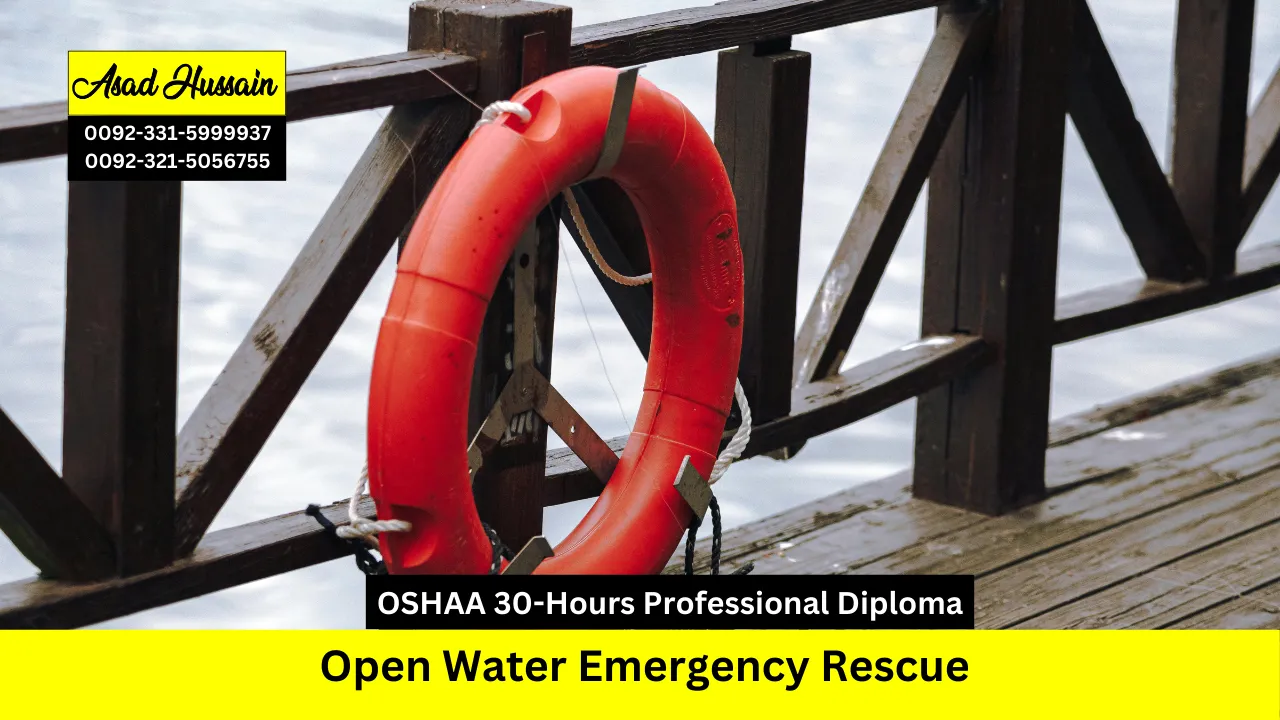
Master Life-Saving Skills with OSHAA Open Water Emergency Rescue Diploma
The OSHAA 30-Hours Professional Diploma in Open Water Emergency Rescue is a specialised programme designed to build essential rescue skills for open water environments such as lakes, rivers, and coastal areas. This course focuses on safety awareness, rescue planning, casualty management, and effective response during water-related emergencies. Learners develop a strong understanding of environmental risks, rescue priorities, and safe intervention techniques. The training is professionally structured and not OFQUAL regulated, making it suitable for practical skill development across a wide range of safety and rescue contexts where open water hazards are present.
The course blends theoretical knowledge with applied rescue principles to ensure learners can respond confidently in real-life situations. Key areas include hazard identification, rescue decision-making, use of rescue aids, teamwork, and emergency coordination. Emphasis is placed on maintaining rescuer safety while delivering effective assistance to casualties. This diploma also complements learners who may already hold certifications or diplomas in areas such as first aid, water safety, emergency response, outdoor activity leadership, or occupational safety, supporting a well-rounded and practical approach to open water emergency rescue responsibilities.
OSHAA 30-Hours Professional Diploma in Open Water Emergency Rescue equips learners with job-relevant skills that align with modern safety and rescue expectations. The course is ideal for individuals seeking to strengthen their confidence, competence, and situational awareness in open water settings. By focusing on practical rescue capability, risk control, and professional responsibility, this diploma supports effective performance in environments where timely and well-managed emergency response can make a critical difference to safety outcomes.
Program Highlights
Mandatory Units
- Introduction to Open Water Emergency Rescue and Roles (3 Hours)
- Environmental Factors and Hazards in Open Water (4 Hours)
- Principles of Risk Assessment and Safety Planning (3 Hours)
- Open Water Rescue Techniques and Approaches (5 Hours)
- Use and Maintenance of Rescue Equipment in Open Water (3 Hours)
- Emergency Communication and Coordination Strategies (3 Hours)
- Casualty Assessment and Safe Recovery Procedures (4 Hours)
- Legal, Ethical, and Professional Responsibilities in Rescue Operations (3 Hours)
- Post-Rescue Care and Incident Reporting (2 Hours)
Entry Requirements
To ensure learners can participate safely and gain maximum benefit from the OSHAA 30-Hours Professional Diploma in Open Water Emergency Rescue, the following entry requirements apply.
- Age Requirement: Learners should be at least 18 years of age to safely engage in open water rescue training and emergency response activities.
- Educational Requirement : A basic secondary education is recommended. Learners with related certificates or diplomas in first aid, water safety, lifesaving, emergency response, outdoor activity leadership, swimming instruction, or occupational safety may find the course content more accessible.
- Language Proficiency: Participants should have a basic level of English language proficiency to understand instructions, safety guidance, and course materials.
- Work Experience: No prior work experience is required; however, experience in water-based activities, outdoor work, safety roles, or emergency support environments is considered beneficial.
Learning Outcomes
Introduction to Open Water Emergency Rescue and Roles (3 Hours)
- Understand the scope and importance of open water emergency rescue
- Identify key roles and responsibilities within rescue teams
- Recognise the significance of teamwork and coordination in rescue operations
Environmental Factors and Hazards in Open Water (4 Hours)
- Identify common environmental hazards in open water settings
- Assess the impact of weather, currents, tides, and visibility on rescue operations
- Develop strategies to mitigate risks associated with natural water environments
Principles of Risk Assessment and Safety Planning (3 Hours)
- Conduct thorough risk assessments for open water rescue scenarios
- Create effective safety plans to minimise hazards during operations
- Apply risk management techniques to enhance rescuer and casualty safety
Open Water Rescue Techniques and Approaches (5 Hours)
- Demonstrate a variety of rescue techniques suitable for different open water conditions
- Execute safe and effective approaches to reach and assist casualties
- Adapt rescue methods based on situational variables and environmental factors
Use and Maintenance of Rescue Equipment in Open Water (3 Hours)
- Identify essential rescue equipment for open water environments
- Perform correct usage and handling of rescue tools during operations
- Carry out routine inspection and maintenance to ensure equipment readiness
Emergency Communication and Coordination Strategies (3 Hours)
- Apply effective communication techniques within rescue teams
- Coordinate multi-agency and team responses during emergencies
- Use communication tools to facilitate efficient rescue operations
Casualty Assessment and Safe Recovery Procedures (4 Hours)
- Conduct rapid and accurate assessment of casualties in open water
- Apply safe recovery techniques to minimise further injury
- Provide initial care and support during and after rescue
Legal, Ethical, and Professional Responsibilities in Rescue Operations (3 Hours)
- Understand the legal obligations relevant to open water rescue
- Recognise ethical considerations and professional conduct standards
- Ensure compliance with policies, regulations, and best practices
Post-Rescue Care and Incident Reporting (2 Hours)
- Evaluate rescue operations for continuous improvement and learning
- Deliver appropriate post-rescue care to support casualty recovery
- Complete detailed and accurate incident reports
Target Audience
The OSHAA 30-Hours Professional Diploma in Emergency Response Drone Pilot is designed for individuals who want to develop practical drone operation skills for emergency, safety, and high-risk response environments.
Emergency Response and Disaster Management Personnel
- Individuals involved in emergency planning and response operations
- Team members supporting search, rescue, and incident assessment
- Personnel assisting during natural or man-made disaster situations
- Responders seeking improved situational awareness tools
- Professionals aiming to enhance response efficiency using drone technology
Safety, Security, and Risk Management Professionals
- Safety officers responsible for monitoring hazardous locations
- Security personnel managing large sites or sensitive areas
- Risk management staff involved in incident prevention and control
- Professionals supporting emergency preparedness initiatives
- Individuals seeking advanced operational safety skills
Search and Rescue and Field Operations Teams
- Members of search and rescue support units
- Field operators working in challenging or remote environments
- Teams involved in locating missing persons or assessing terrain
- Personnel requiring aerial visibility during operations
- Individuals focused on rapid and accurate incident assessment
Technology and Drone Enthusiasts in Safety Roles
- Drone operators interested in emergency response applications
- Technology-focused individuals working in safety-critical sectors
- Operators aiming to apply drones in real-world scenarios
- Professionals seeking structured emergency drone training
- Individuals interested in responsible and ethical drone use
Infrastructure, Site, and Facility Safety Coordinators
- Personnel responsible for site inspections and monitoring
- Facility safety coordinators managing large or complex areas
- Individuals involved in damage assessment after incidents
- Staff supporting emergency access planning
- Professionals aiming to improve visual reporting and data collection
Career Starters and Skill Development Seekers
- Individuals exploring opportunities in emergency drone operations
- Learners seeking practical and transferable safety skills
- Professionals transitioning into drone-supported response roles
- Individuals aiming to strengthen operational confidence
- Learners interested in high-impact emergency support skills