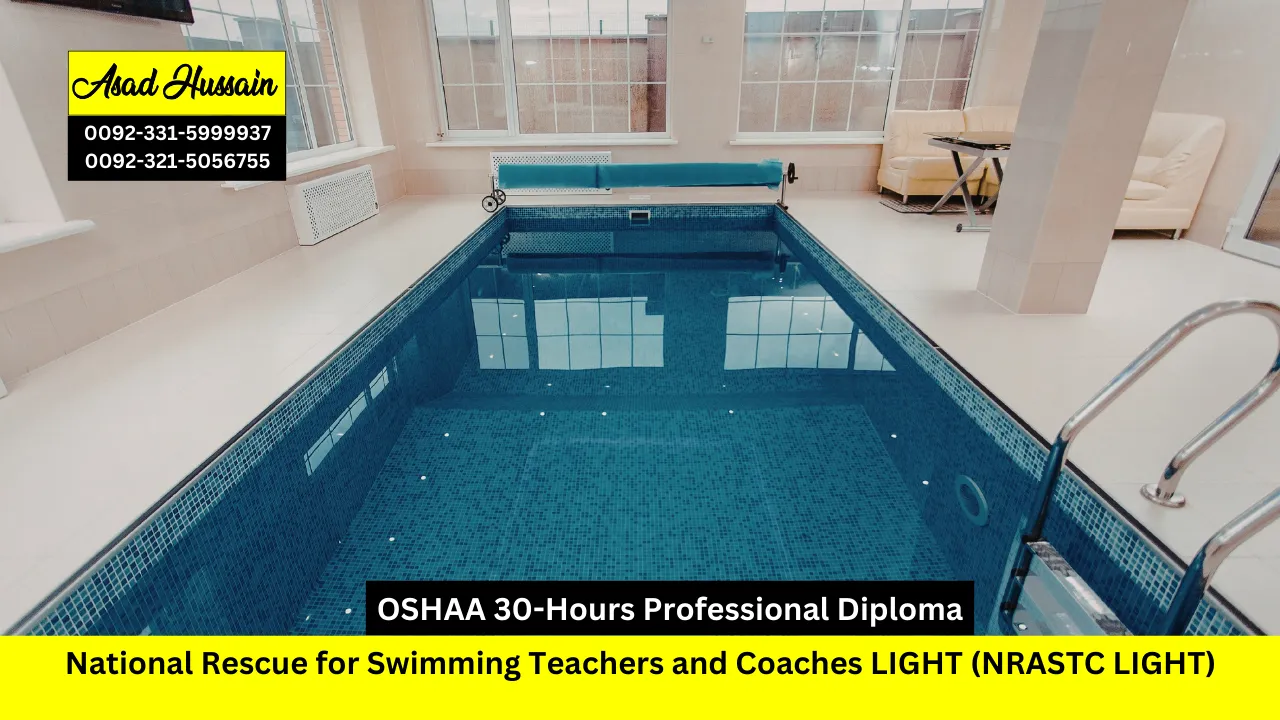
Master Aquatic Rescue Skills with Diploma in National Rescue for Swimming Teachers and Coaches LIGHT
The OSHAA 30-Hours Professional Diploma in National Rescue for Swimming Teachers and Coaches LIGHT (NRASTC LIGHT) is a focused and practical training programme designed to strengthen essential rescue and water safety competencies for aquatic professionals. This course emphasizes real-world rescue awareness, proactive risk management, and safe response techniques tailored for swimming teachers and coaches. Learners gain a solid foundation in identifying aquatic hazards, managing minor water-related incidents, and supporting safe swimming environments. With an applied and skill-based structure, the programme enhances confidence, responsibility, and professionalism in aquatic supervision roles.
This professional diploma delivers structured knowledge and hands-on insight into rescue principles, swimmer supervision strategies, and emergency readiness within controlled aquatic settings. Participants develop practical understanding of personal safety, casualty support, and effective communication during water-related incidents. The course supports professional growth by improving decision-making, situational awareness, and duty-of-care practices. Successful completion also supports progression toward a range of professional certifications and diplomas in aquatic safety, swimming instruction support, pool supervision, and water safety management, helping learners strengthen their professional profile.
OSHAA 30-Hours Professional Diploma in National Rescue for Swimming Teachers and Coaches LIGHT (NRASTC LIGHT) is ideal for individuals seeking a streamlined yet impactful approach to aquatic rescue competence. The programme balances theory with applied learning to ensure skills are relevant, current, and practical. It equips learners with knowledge that complements industry-recognised certifications and diplomas related to water safety leadership, aquatic risk awareness, and rescue preparedness. By focusing on competence, confidence, and safety culture, this course supports professionals in delivering safer swimming instruction and maintaining high standards of aquatic care.
Program Highlights
- Introduction to the Role of Swimming Teachers and Coaches in Light Aquatic Rescue (3 Hours)
- Basic Principles of Pool Safety and Risk Management (3 Hours)
- Identifying and Preventing Hazards in Controlled Aquatic Environments (4 Hours)
- Fundamental Rescue Techniques for Swimming Teachers and Coaches (5 Hours)
- Casualty Recognition and Immediate Response Procedures (3 Hours)
- Basic Spinal Injury Awareness and Management (4 Hours)
- Effective Communication and Teamwork in Pool Rescue Situations (3 Hours)
- Post-Rescue Care and Reporting Procedures (3 Hours)
- Legal and Ethical Considerations in Aquatic Rescue (2 Hours)
To ensure learners gain maximum benefit from the OSHAA 30-Hours Professional Diploma in National Rescue for Swimming Teachers and Coaches LIGHT (NRASTC LIGHT), applicants should meet the following entry requirements, which are designed to be accessible while supporting effective learning outcomes.
- Age Requirement: Learners should be at least 16 years of age at the time of enrolment to ensure suitable maturity and responsibility for aquatic safety concepts.
- Educational Background: A basic secondary-level education is recommended. Learners with prior learning such as swimming instructor certificates, aquatic safety certificates, lifeguard awareness awards, sports coaching diplomas, physical education certificates, or introductory water safety diplomas may find the course particularly beneficial.
- Language Proficiency: A reasonable level of English language proficiency is required to understand course materials, follow instructions, and participate effectively in learning activities.
- Work Experience: Previous experience in swimming instruction, coaching, pool supervision, sports training, or volunteer roles in aquatic environments is helpful but not mandatory..
Learning Outcomes
Introduction to the Role of Swimming Teachers and Coaches in Light Aquatic Rescue (3 Hours)
- Understand the specific responsibilities of swimming teachers and coaches in light rescue scenarios
- Recognise the importance of their role in maintaining aquatic safety
- Identify key rescue skills relevant to controlled pool environments
Basic Principles of Pool Safety and Risk Management (3 Hours)
- Apply fundamental safety concepts to pool environments
- Conduct basic risk assessments to identify potential hazards
- Implement effective strategies to minimise risks during aquatic activities
Identifying and Preventing Hazards in Controlled Aquatic Environments (4 Hours)
- Identify common hazards specific to controlled pool settings
- Develop and apply preventive measures to ensure participant safety
- Maintain a safe aquatic environment through proactive hazard management
Fundamental Rescue Techniques for Swimming Teachers and Coaches (5 Hours)
- Demonstrate essential rescue skills suitable for light aquatic rescue situations
- Execute safe and effective casualty extrication and water rescue techniques
- Adapt rescue methods based on situational needs and casualty condition
Casualty Recognition and Immediate Response Procedures (3 Hours)
- Identify signs of distress and injury in aquatic casualties
- Perform immediate response actions to stabilise casualties
- Prioritise interventions according to casualty severity and urgency
Basic Spinal Injury Awareness and Management (4 Hours)
- Recognise potential spinal injuries in pool-based emergencies
- Apply fundamental spinal injury management techniques
- Minimise risk of further harm during casualty handling and extraction
Effective Communication and Teamwork in Pool Rescue Situations (3 Hours)
- Communicate clearly and efficiently during rescue operations
- Collaborate effectively with team members for coordinated responses
- Engage emergency services appropriately during incidents
Post-Rescue Care and Reporting Procedures (3 Hours)
- Provide appropriate aftercare to rescued individuals
- Complete accurate and timely incident reports
- Reflect on rescue incidents to support ongoing safety improvements
Legal and Ethical Considerations in Aquatic Rescue (2 Hours)
- Understand relevant legal requirements and ethical principles in aquatic rescue
- Apply professional standards and maintain confidentiality during rescue situations
- Make informed decisions aligned with legal and ethical frameworks
The OSHAA 30-Hours Professional Diploma in National Rescue for Swimming Teachers and Coaches LIGHT (NRASTC LIGHT) is designed for individuals involved in aquatic instruction and supervision who want to strengthen rescue awareness, safety competence, and professional confidence within swimming environments.
Swimming Teachers and Instructors
- Actively teaching swimming in pools or controlled aquatic settings
- Supporting learners of different age groups and ability levels
- Enhancing awareness of rescue responsibilities during lessons
- Improving safety-focused teaching practices
- Strengthening confidence in managing minor water incidents
Swimming Coaches
- Coaching competitive or recreational swimmers
- Supervising training sessions in aquatic facilities
- Improving risk recognition during high-activity sessions
- Supporting swimmer safety alongside performance goals
- Reinforcing professional duty of care
Aquatic Facility Support Staff
- Assisting in swimming pools or aquatic centres
- Supporting instructors and coaches during sessions
- Improving understanding of rescue roles and response awareness
- Enhancing communication during aquatic incidents
- Contributing to safer poolside operations
Entry-Level Aquatic Professionals
- Starting a career in swimming instruction or coaching
- Building a foundation in water rescue awareness
- Gaining practical insight into aquatic safety responsibilities
- Strengthening professional readiness for aquatic roles
- Developing confidence in supervised environments
Sports and Physical Education Professionals
- Working with swimming as part of broader physical programmes
- Supervising aquatic activities in schools or clubs
- Enhancing safety knowledge linked to swimming sessions
- Supporting structured and controlled aquatic learning
- Promoting responsible and safe participation
Water Safety Enthusiasts and Volunteers
- Volunteering in swimming programmes or clubs
- Supporting community-based aquatic activities
- Improving awareness of rescue principles
- Strengthening confidence around water supervision
- Promoting a positive safety culture