Empower Your Medical Knowledge with Professional Diploma in Immunology
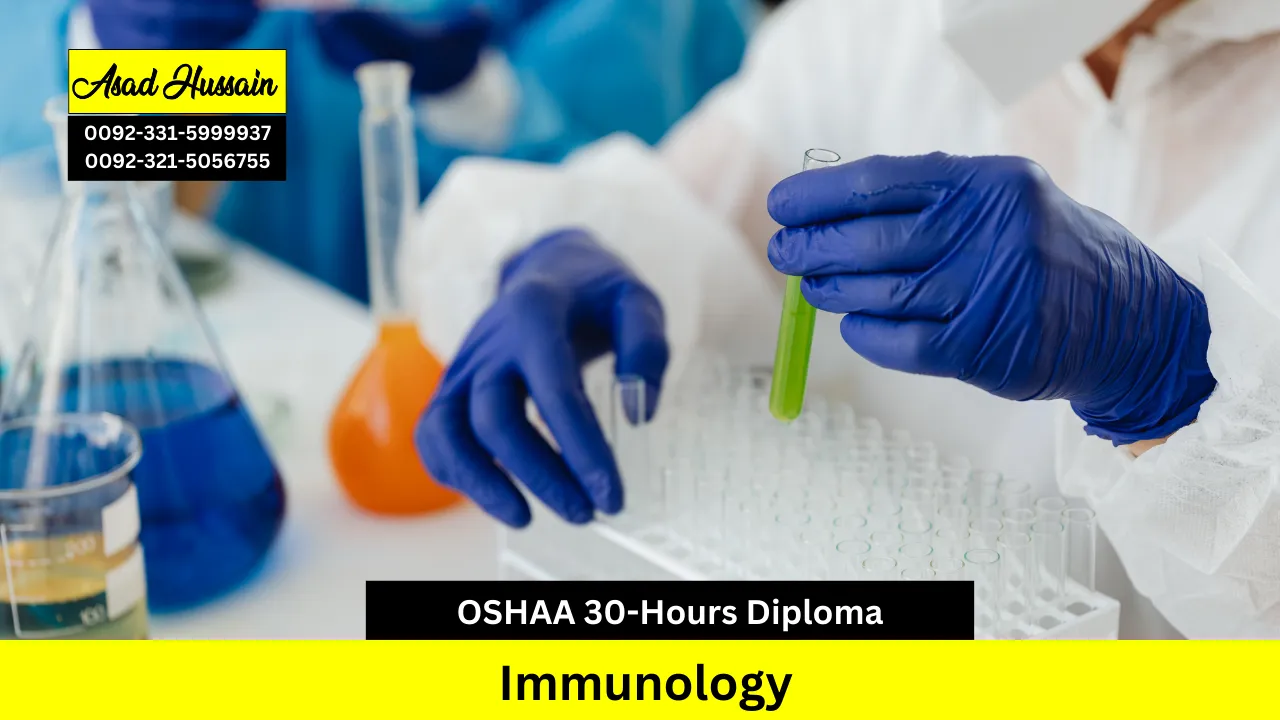
The OSHAA 30-Hours Professional Diploma in Immunology is designed to provide learners with a comprehensive understanding of the human immune system and its critical role in maintaining health and combating disease. The course explores the basic principles of immunology, including the structure and function of immune cells, organs, and molecules. Learners will gain insight into how the immune system responds to infections, vaccinations, and other medical interventions. The program is structured to make complex immunological concepts accessible and practical for individuals from diverse backgrounds, enhancing their awareness and knowledge of immune health.
The diploma covers a wide range of topics, including innate and adaptive immunity, immune response mechanisms, antibody formation, and the body’s defense against pathogens. Learners will also explore immune system dysfunctions, autoimmune conditions, and hypersensitivity reactions. Emphasis is placed on practical understanding and application, allowing learners to relate immunological concepts to everyday health, public wellbeing, and workplace safety. The structured modules ensure clarity, engagement, and flexibility, catering to learners who want to gain a professional understanding of immunology without needing prior clinical experience.
OSHAA 30-Hours Professional Diploma in Immunology equips learners with essential knowledge to understand immune system function and its impact on overall health. This course strengthens professional credibility and awareness in healthcare, biomedical, or wellness-related roles. Participants will gain confidence in recognising immune-related health concerns, supporting preventative strategies, and communicating effectively about immune health. The diploma also aligns with professional certifications and related diplomas in medical, healthcare, and biomedical fields, helping learners build a solid foundation for career development and applied immunology knowledge.
Program Highlights
Study Units
- Introduction to the Immune System and Basic Terminology (3 hours)
- Cells and Organs Involved in Immunity (3 hours)
- Innate Immune Responses and First-Line Defences (4 hours)
- Adaptive Immunity: T-Cells, B-Cells, and Antibodies (6 hours)
- Antigen Recognition, Processing, and Presentation (3 hours)
- Immunological Memory and the Principles of Vaccination (5 hours)
- Autoimmunity and Hypersensitivity Reactions (4 hours)
- Immunodeficiency Disorders and Clinical Implications (2 hours)
Entry Requirements
The OSHAA 30-Hours Professional Diploma in Immunology is designed to be accessible to learners from a variety of academic and professional backgrounds. The entry requirements ensure that participants are prepared to engage effectively with the course content.
- Age Requirement: Learners should be at least 18 years old at the time of enrolment to ensure maturity and readiness for professional-level learning.
- Educational Background: A basic secondary school education is recommended. Prior knowledge in science, biology, or healthcare, or possession of certificates or diplomas such as health sciences, biomedical awareness, healthcare support, microbiology, or first aid training, will be advantageous but is not mandatory.
- Language Proficiency: Learners should have a good command of the English language to understand course materials, terminology, and assessments effectively.
- Work Experience: Previous work experience is not required; however, individuals with exposure to healthcare, laboratory environments, community health, or biological sciences may find the course particularly relevant and easier to contextualise.
This course welcomes motivated learners who wish to develop professional knowledge and practical awareness of the immune system, providing a strong foundation for career-focused development in healthcare, biomedical, or wellness-related roles.
Learning Outcomes
Introduction to the Immune System and Basic Terminology (3 Hours)
- Define key immunological terms and fundamental concepts
- Understand the structure and primary purpose of the immune system
- Differentiate between innate and adaptive immunity
- Identify the major components involved in immune responses
- Explore the role of the immune system in maintaining overall health
Cells and Organs Involved in Immunity (3 Hours)
- Describe the roles of primary and secondary lymphoid organs
- Explain the function of immune cells, including macrophages, dendritic cells, lymphocytes, and natural killer cells
- Understand interactions between immune cells and tissues
- Recognise how the immune system is organised to maintain homeostasis
- Explore the coordination between organs and cells in defence mechanisms
Innate Immune Responses and First-Line Defences (4 Hours)
- Explain the components and mechanisms of the innate immune system
- Identify physical, chemical, and cellular barriers to infection
- Describe the role of pattern recognition receptors (PRRs) and cytokines
- Understand the process of inflammation and its relevance to immune responses
- Explore how innate immunity provides immediate protection against pathogens
Adaptive Immunity: T-Cells, B-Cells, and Antibodies (6 Hours)
- Understand the development, activation, and differentiation of T-cells and B-cells
- Describe clonal selection processes and cellular responses
- Explain antibody structure, types, and functions
- Explore interactions between cellular and humoral immune responses
- Identify mechanisms of immune regulation and tolerance
- Discuss adaptive immunity’s role in infection control and long-term protection
Antigen Recognition, Processing, and Presentation (3 Hours)
- Understand how immune cells recognise antigens
- Describe the role of Major Histocompatibility Complex (MHC) molecules
- Explain antigen processing pathways for MHC class I and II
- Analyse how antigen presentation triggers adaptive immune responses
- Explore the significance of antigen recognition in immunity
Immunological Memory and the Principles of Vaccination (5 Hours)
- Define immunological memory and its role in long-term immunity
- Differentiate between primary and secondary immune responses
- Explain how vaccines induce protective immunity
- Understand various types of vaccines and their mechanisms
- Evaluate the public health impact of vaccination programmes
Autoimmunity and Hypersensitivity Reactions (4 Hours)
- Describe mechanisms leading to autoimmune diseases
- Identify common autoimmune conditions and their immune basis
- Classify the four types of hypersensitivity reactions
- Understand immune system overreactions and their clinical consequences
- Explore the relevance of autoimmunity in medical practice
Immunodeficiency Disorders and Clinical Implications (2 Hours)
- Differentiate between primary and secondary immunodeficiencies
- Recognise clinical signs of immunodeficient states
- Understand diagnostic approaches and basic treatment strategies
- Explore the impact of immunodeficiency on infection risk and immune function
- Learn how immunodeficiency affects overall health and patient care
Target Audience
The OSHAA 30-Hours Professional Diploma in Immunology is ideal for individuals who want to gain a thorough understanding of the human immune system, improve health awareness, and enhance their professional skills in healthcare, biomedical, or wellness-related fields.
Aspiring Healthcare Professionals
- Individuals aiming to build a strong foundation in immunology
- Learners preparing for roles in healthcare support or clinical assistance
- Those interested in understanding immune system function and disorders
- People seeking to improve patient communication and health guidance
- Learners wanting to enhance their professional knowledge in medical science
Laboratory and Biomedical Staff
- Technicians working with biological samples and immune system testing
- Staff involved in diagnostic laboratories or medical research
- Individuals interested in laboratory techniques and immune response studies
- Those seeking awareness of immune system processes in practical applications
- Professionals aiming to strengthen analytical and observational skills
Workplace Safety and Health Officers
- Health and safety personnel responsible for employee wellbeing
- Individuals managing workplace health protocols and immunisation awareness
- Professionals ensuring safe environments in healthcare or laboratory settings
- Those aiming to improve early recognition of immune-related health concerns
- Staff promoting informed health practices within their organisation
Caregivers and Community Health Workers
- Family or professional caregivers supporting individuals with immune system conditions
- Community workers educating about vaccinations, immunity, and infection prevention
- Individuals seeking practical knowledge to improve patient or client care
- Those aiming to enhance observation and reporting of health changes
- Professionals promoting overall wellbeing and preventive health measures
Students and Science Enthusiasts
- Learners pursuing a strong theoretical understanding of immunology
- Individuals preparing for careers in biomedical sciences or public health
- Science enthusiasts interested in immune system function and disease prevention
- Those seeking structured knowledge to complement other health-related certifications
- Learners looking to strengthen academic and professional credibility
Career Changers and Lifelong Learners
- Professionals exploring new opportunities in healthcare or biomedical fields
- Individuals seeking flexible and accessible professional learning
- Learners aiming to gain a recognised diploma in immunology
- Those interested in developing transferable skills in health and medical awareness
- Individuals committed to continuous personal and professional growth
This course is suitable for a wide range of learners, offering practical and theoretical insights into immunology while supporting career development, professional credibility, and a deeper understanding of immune system health.