Empower Your Scientific Career with the Diploma in Biomedical Research
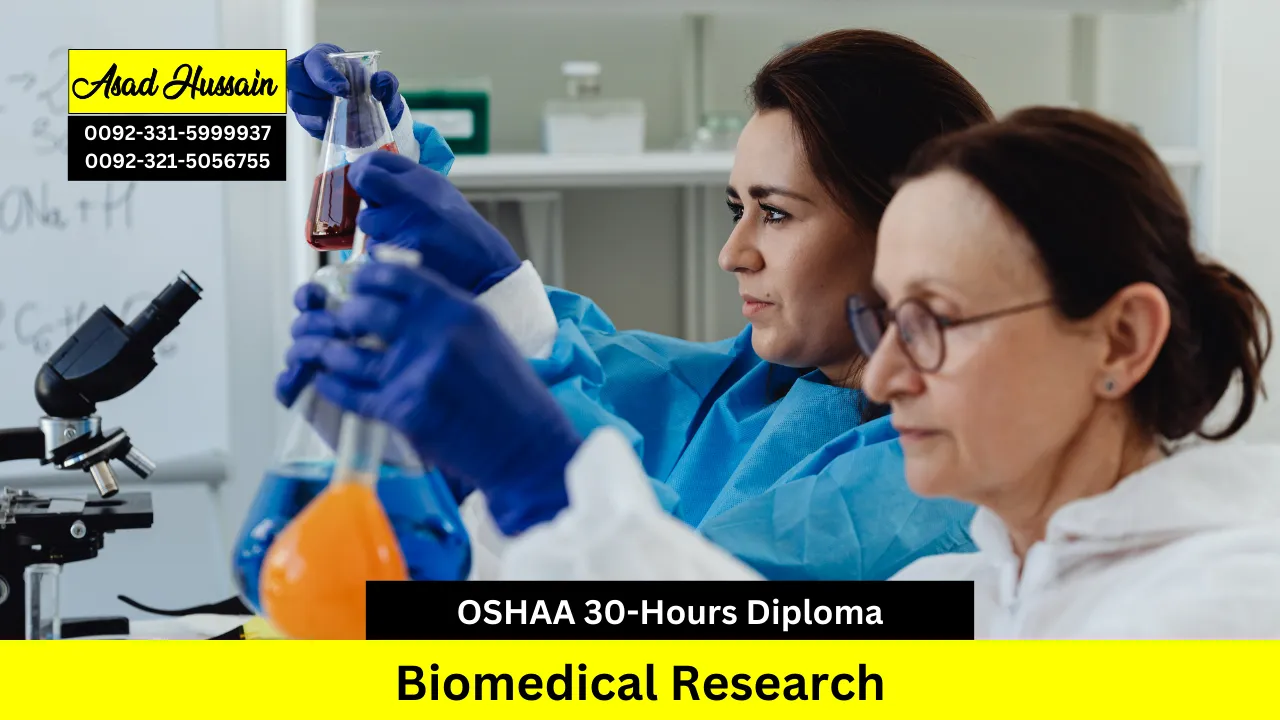
The OSHAA 30-Hours Professional Diploma in Biomedical Research provides learners with a comprehensive understanding of the fundamental principles and practices of biomedical research. Participants will explore experimental design, laboratory techniques, and ethical considerations essential for conducting high-quality research. The course highlights the importance of accuracy, reproducibility, and scientific integrity, enabling learners to understand the processes behind biomedical discoveries and innovations.
Learners will gain hands-on insight into data collection, analysis, and interpretation methods used in biomedical investigations. The programme also covers key topics such as research methodologies, statistical applications, and reporting standards. By examining real-world case studies, participants will learn to critically evaluate research outcomes, identify limitations, and apply evidence-based practices to improve experimental reliability and scientific contribution.
OSHAA 30-Hours Professional Diploma in Biomedical Research equips learners with recognised certifications and diplomas that validate practical skills and theoretical knowledge in the field. The course prepares participants to design and implement experiments, manage data effectively, and contribute to biomedical projects with confidence. It is ideal for aspiring researchers, laboratory staff, and healthcare professionals seeking to enhance their expertise in biomedical science and research methodologies.
Program Highlights
Study Units
- Introduction to Biomedical Research Principles (3 hours)
- Research Design and Hypothesis Development (4 hours)
- Literature Review and Source Evaluation Techniques (5 hours)
- Ethics, Consent, and Regulatory Compliance in Research (6 hours)
- Data Collection Methods and Sampling Strategies (3 hours)
- Basic Biostatistics and Statistical Analysis (4 hours)
- Laboratory Safety and Good Research Practices (2 hours)
- Clinical Trials and Translational Research Concepts (3 hours)
The entry requirements for the OSHAA 30-Hours Professional Diploma in Biomedical Research are designed to ensure learners can effectively engage with the course content and apply research principles in practical settings.
- Age Requirement: Learners should be at least 18 years old to enrol, ensuring sufficient maturity to understand scientific concepts and research ethics.
- Educational Background: A basic secondary education or equivalent is recommended. Individuals with prior exposure to related diplomas or certificates, such as biomedical science, laboratory techniques, clinical research, or health sciences, will benefit from enhanced understanding but it is not mandatory.
- Language Proficiency: Participants should have a functional level of English, as all learning materials, guidance, and assessments are delivered in English.
- Work Experience: While prior work experience is not required, laboratory staff, research assistants, healthcare professionals, and science students may gain practical insights and contextual understanding from the programme.
Overall, these entry requirements ensure that learners enrolling in the OSHAA 30-Hours Professional Diploma in Biomedical Research are well-prepared to develop practical skills, gain recognised certifications, and confidently contribute to biomedical research projects and laboratory environments
Learning Outcomes
Introduction to Biomedical Research Principles (3 hours)
- Understand the fundamental purpose and scope of biomedical research
- Identify different types of biomedical research including basic, applied, and clinical
- Recognise the importance of scientific inquiry and evidence-based investigation
Research Design and Hypothesis Development (4 hours)
- Formulate clear, testable research questions and hypotheses
- Distinguish between qualitative, quantitative, and mixed-methods research designs
- Select appropriate research methodologies based on study objectives
Literature Review and Source Evaluation Techniques (5 hours)
- Conduct structured literature searches using academic databases
- Evaluate the credibility and relevance of scientific sources
- Summarise existing research to identify gaps and inform study direction
Ethics, Consent, and Regulatory Compliance in Research (6 hours)
- Understand the principles of research ethics, including respect, beneficence, and justice
- Describe the informed consent process and its application in human research
- Comply with national and international research regulations and approval protocols
Data Collection Methods and Sampling Strategies (3 hours)
- Identify various data collection techniques such as surveys, interviews, and experiments
- Differentiate between probability and non-probability sampling methods
- Apply appropriate sampling strategies to enhance study validity
Basic Biostatistics and Statistical Analysis (4 hours)
- Understand key statistical concepts including mean, median, variance, and standard deviation
- Select and apply basic statistical tests for biomedical data
- Interpret statistical results in the context of research objectives
Laboratory Safety and Good Research Practices (2 hours)
- Recognise standard laboratory safety procedures and risk management protocols
- Apply good laboratory practices including accurate documentation and sample handling
- Understand the importance of reproducibility and data integrity in research
Clinical Trials and Translational Research Concepts (3 hours)
- Describe the phases and structure of clinical trials
- Understand the role of translational research in bridging laboratory and clinical application
- Identify challenges in moving scientific discoveries into clinical practice
Target Audience
This course is designed for individuals seeking to enhance their knowledge, skills, and practical expertise in biomedical research. It is ideal for those who want to contribute to scientific investigations, improve laboratory practices, and develop recognised competencies in biomedical science.
Aspiring Biomedical Researchers
- Gain a solid foundation in experimental design and methodology
- Learn to conduct reproducible and reliable research
- Understand ethical considerations in biomedical investigations
- Apply data analysis techniques to real-world experiments
- Develop skills in reporting and interpreting research outcomes
Laboratory Technicians and Assistants
- Learn proper laboratory procedures and safety protocols
- Understand equipment handling and sample preparation
- Apply standard operating procedures for accurate results
- Develop data recording and management practices
- Enhance competency in supporting scientific experiments
Healthcare and Clinical Professionals
- Understand biomedical research applications in clinical settings
- Explore the relationship between research findings and patient care
- Gain knowledge in data collection and analysis relevant to healthcare
- Apply evidence-based practices to support clinical decision-making
- Integrate research principles into routine healthcare workflows
Science Students and Graduates
- Build recognised certification to complement academic qualifications
- Enhance understanding of laboratory techniques and research methodology
- Develop skills in critical evaluation of scientific literature
- Apply theoretical knowledge to practical biomedical experiments
- Increase employability in research-focused roles
Academics and Educators in Biomedical Science
- Learn strategies for teaching biomedical research concepts
- Incorporate practical research skills into academic instruction
- Use case studies and examples to enhance learning outcomes
- Understand assessment and evaluation of student-led research
- Promote ethical research practices and scientific integrity
Professionals Seeking Career Advancement
- Acquire certifications to strengthen professional credentials
- Enhance ability to contribute to research projects and publications
- Develop skills to support project management in laboratory settings
- Apply research knowledge to improve operational and clinical outcomes
- Stay updated with current practices and innovations in biomedical science
Overall, this course equips learners with practical skills, recognised certifications, and the confidence to perform biomedical research effectively, making them valuable contributors to laboratory, clinical, and scientific environments.