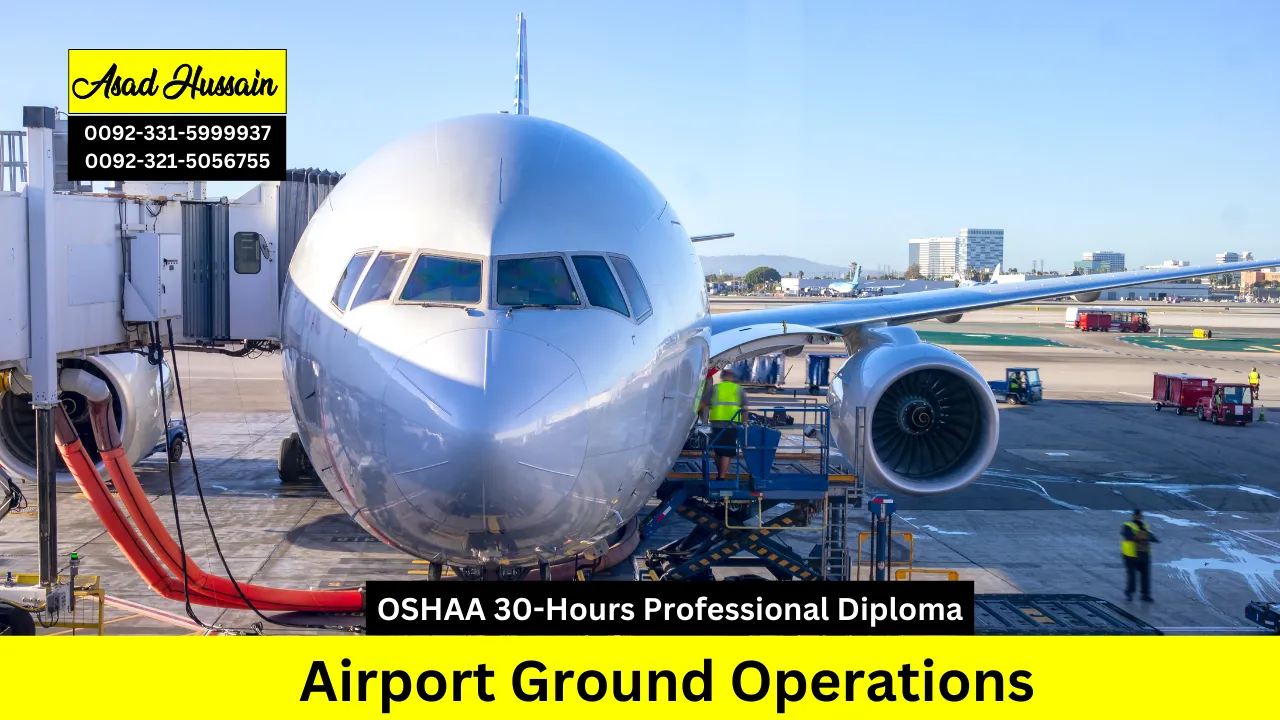
Advance Your Aviation Career with Professional Diploma in Airport Ground Operations
The OSHAA 30-Hours Professional Diploma in Airport Ground Operations is designed to provide a solid foundation in the essential functions that keep airport ground activities safe, efficient, and well-coordinated. This course delivers practical knowledge of airside operations, ground handling procedures, ramp safety, baggage operations, and coordination between airport stakeholders. Learners gain insight into real-world operational challenges faced at airports and how effective ground operations contribute to on-time performance and passenger safety. The programme focuses on industry-relevant practices and operational awareness, making it suitable for individuals seeking structured, skills-based learning in airport environments. This diploma is not Ofqual regulated and is developed for professional competency enhancement.
Through a balanced combination of theoretical understanding and practical perspectives, the course helps participants develop confidence in managing routine and non-routine ground operations. Key topics include aircraft turnaround processes, communication protocols, safety culture, emergency preparedness, and compliance with international aviation standards. Emphasis is placed on risk awareness, operational discipline, and teamwork within busy airport settings. The curriculum is aligned with global aviation practices and supports learners in understanding how ground operations integrate with overall airport management. Successful completion can support progression toward industry-recognised certifications and professional diplomas relevant to airport operations and aviation services.
OSHAA 30-Hours Professional Diploma in Airport Ground Operations equips learners with operational insight that supports professional credibility within the aviation sector. The course is structured to strengthen practical decision-making, situational awareness, and adherence to safety-driven procedures across airport ground activities. Participants benefit from knowledge that complements existing experience while opening opportunities to pursue additional certifications and diplomas aligned with aviation operations and safety management. This diploma focuses purely on applied learning and professional development, without reference to further study routes. It serves as a focused, career-oriented programme for those aiming to enhance their understanding and performance in modern airport ground operations.
Program Highlights
- Introduction to Airport Ground Operations and Global Aviation Standards (3 Hours)
- Fundamentals of OSHA Regulations and International Aviation Compliance (3 Hours)
- Ground Handling Procedures, Ramp Safety, and Aircraft Servicing (3 Hours)
- Passenger Handling, Baggage Management, and Customer Service Protocols (3 Hours)
- Workplace Safety, Hazard Identification, and Risk Control in Ground Operations (3 Hours)
- Human Factors, Teamwork, and Communication in Airport Operations (3 Hours)
- Emergency Preparedness, Crisis Response, and Incident Management (3 Hours)
- Security Protocols, Access Control, and Threat Prevention in Airports (3 Hours)
- Regulatory Audits, Compliance Monitoring, and Quality Assurance (3 Hours)
- Final Assessment, Case Studies, and Professional Applications (3 Hours)
The entry requirements for the OSHAA 30-Hours Professional Diploma in Airport Ground Operations are designed to ensure that participants can effectively engage with the course content and benefit from the practical and compliance-focused learning experience.
- Age Requirements: Applicants should generally be at least 18 years of age at the time of enrollment to ensure maturity and readiness for professional training in airport operational environments.
- Educational Background: A basic secondary education is recommended. Learners with prior education or training in aviation operations, airport management, occupational safety, logistics, or related diplomas and certificates such as airport ground handling, aviation safety, or workplace health and safety will find the course particularly beneficial.
- Language Proficiency: Participants should have a reasonable level of English language proficiency to understand course materials, follow instructions, and participate in discussions and assessments.
- Work Experience: Previous experience in airport operations, ground handling, aviation services, security, or safety-related roles is advantageous but not mandatory, as the course is structured to support both new and experienced professionals.
Learning Outcomes
The Learning Outcomes of the OSHAA 30-Hours Professional Diploma in Airport Ground Operations are carefully structured to develop strong operational capability, regulatory awareness, and safety-focused leadership required in modern airport environments. Upon completion, participants will be able to manage airport ground operations efficiently, apply OSHA and international aviation standards, and support safe, compliant, and performance-driven operations across airside and landside activities.
Introduction to Airport Ground Operations and Global Aviation Standards (3 Hours)
- Understand the scope, structure, and importance of airport ground operations within global aviation.
- Identify key international aviation standards influencing ground handling activities.
- Demonstrate awareness of how regulatory frameworks support daily operational control.
- Recognize the need to align airport ground operations with OSHA and ICAO requirements.
Fundamentals of OSHA Regulations and International Aviation Compliance (3 Hours)
- Gain a clear understanding of OSHA regulations relevant to airport ground operations.
- Interpret international compliance requirements including ICAO, IATA, and EASA guidance.
- Apply occupational health and safety principles to ramp and ground handling tasks.
- Develop awareness of employer duties, worker responsibilities, and enforcement systems.
Ground Handling Procedures, Ramp Safety, and Aircraft Servicing (3 Hours)
- Learn essential ground handling processes and ramp safety principles.
- Apply safe aircraft servicing, fueling, and turnaround procedures.
- Understand coordination between ground crews, flight teams, and airport authorities.
- Implement effective safety controls to minimize operational and compliance risks.
Passenger Handling, Baggage Management, and Customer Service Protocols (3 Hours)
- Master procedures for passenger check-in, boarding, and disembarkation.
- Apply effective baggage handling, loading, and tracking practices.
- Understand customer service standards that enhance passenger confidence and satisfaction.
- Integrate safety and compliance measures into passenger and baggage operations.
Workplace Safety, Hazard Identification, and Risk Control in Ground Operations (3 Hours)
- Conduct hazard identification within airport ground and ramp environments.
- Apply risk assessment techniques to evaluate operational threats.
- Develop control measures to reduce incidents and workplace injuries.
- Embed hazard prevention strategies into routine ground operations.
Human Factors, Teamwork, and Communication in Airport Operations (3 Hours)
- Recognize the influence of human factors on aviation safety and performance.
- Understand the effects of fatigue, stress, and communication failures.
- Apply teamwork and leadership strategies to promote safe work behaviors.
- Strengthen communication and coordination across ground operation teams.
Emergency Preparedness, Crisis Response, and Incident Management (3 Hours)
- Understand principles of emergency preparedness in airport settings.
- Develop response strategies for accidents, technical failures, and security events.
- Apply clear communication protocols during emergency situations.
- Analyze incident case studies to improve resilience and response readiness.
Security Protocols, Access Control, and Threat Prevention in Airports (3 Hours)
- Learn core airport security procedures and access control systems.
- Apply threat prevention measures to protect restricted and critical areas.
- Understand coordination between airlines, airports, and regulatory bodies.
- Implement best practices aligned with OSHA and international security expectations.
Regulatory Audits, Compliance Monitoring, and Quality Assurance (3 Hours)
- Interpret regulatory oversight systems and aviation compliance frameworks.
- Apply monitoring techniques to ensure operational and safety compliance.
- Understand the role of audits, inspections, and internal reviews.
- Develop continuous improvement strategies for quality and compliance performance.
Final Assessment, Case Studies, and Professional Applications (3 Hours)
- Showcase professional readiness for roles within airport ground operations.
- Demonstrate comprehensive understanding of airport ground operations principles.
- Apply learning to real-world operational and compliance case studies.
- Strengthen problem-solving skills for complex safety and operational challenges.
The OSHAA 30-Hours Professional Diploma in Airport Ground Operations is designed for individuals who want to develop practical knowledge, safety awareness, and operational competence within airport ground environments, supporting safe and efficient aviation operations.
Aspiring Airport Ground Operations Professionals
- Individuals seeking to begin a career in airport ground handling or airside operations
- Learners interested in understanding day-to-day airport ground activities
- Candidates aiming to build a strong foundation in aviation operational practices
- Those looking to gain structured knowledge of safety and compliance in airports
- New entrants who want industry-relevant skills for ground operations roles
Airport Ground Handling and Ramp Staff
- Existing ground handlers involved in aircraft servicing and turnaround activities
- Ramp agents seeking improved safety awareness and operational efficiency
- Personnel responsible for fueling, loading, and aircraft movement support
- Staff aiming to strengthen compliance with safety and operational procedures
- Team members looking to enhance coordination within ground operations
Airport Operations and Supervisory Personnel
- Supervisors overseeing airside and landside ground activities
- Operations staff responsible for managing daily airport workflows
- Individuals involved in monitoring safety performance and compliance
- Personnel seeking to improve leadership and communication skills
- Professionals aiming to support smooth and efficient airport operations
Aviation Safety and Compliance Professionals
- Safety officers working within airport or aviation service environments
- Individuals responsible for implementing safety policies and procedures
- Compliance personnel supporting regulatory adherence and audits
- Professionals aiming to enhance hazard identification and risk control skills
- Staff involved in promoting a strong safety culture within airports
Passenger Handling and Customer Service Teams
- Staff engaged in passenger check-in, boarding, and baggage handling
- Customer service personnel seeking to integrate safety into service delivery
- Individuals responsible for managing passenger flow and airport facilities
- Team members aiming to improve communication and coordination skills
- Professionals focused on enhancing passenger experience while maintaining safety
Aviation and Airport Support Service Providers
- Contractors supporting airport ground and operational services
- Logistics and service staff working in airport-controlled areas
- Individuals involved in coordination between airlines and airport authorities
- Personnel seeking broader understanding of airport operational systems
- Professionals aiming to align their roles with aviation safety requirements