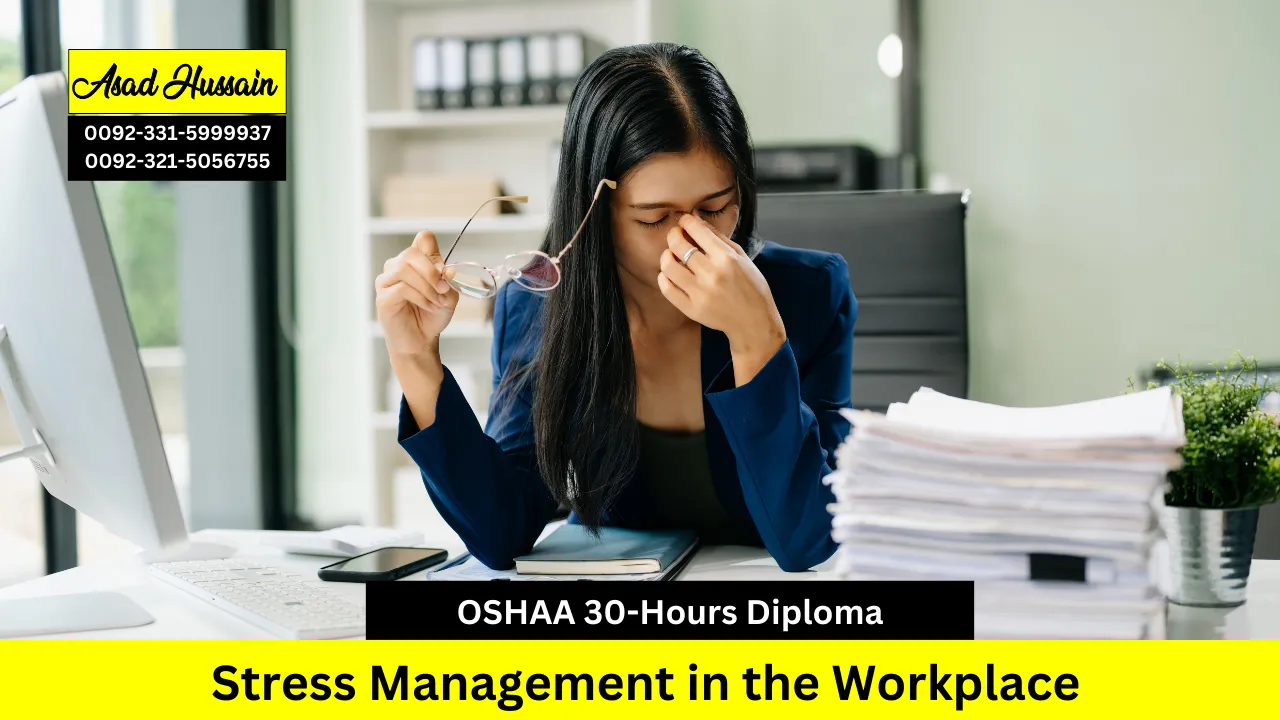
Master Stress Management in the Workplace with Diploma
OSHAA 30-Hours Diploma in Stress Management in the Workplace equips professionals with the skills and knowledge to manage stress proactively and support wellbeing initiatives in their organisations. Through interactive lessons, real-world examples, and practical exercises, learners develop the confidence to apply stress management frameworks effectively. The course also emphasises the role of leadership in fostering resilient teams and creating supportive work environments. By the end of the program, participants will be able to identify stressors, apply coping mechanisms, implement organisational interventions, and contribute to a healthier, more productive workplace, enhancing both individual and team performance across diverse professional settings.
Workplace stress is a growing concern that affects employee productivity, morale, and overall organisational performance. This course introduces participants to the underlying causes of workplace stress and the physiological, psychological, and social impacts it can have on employees. Learners will explore how organisational culture, workload, and interpersonal dynamics contribute to stress, while understanding the connection between stress, burnout, and reduced performance. The course provides practical insights into identifying stress triggers, recognising early warning signs, and implementing strategies that promote healthier work environments and enhance employee engagement and resilience.
Participants will gain a comprehensive understanding of stress management techniques, from cognitive-behavioural approaches to relaxation and mindfulness exercises. The curriculum covers both individual-focused strategies and organisational interventions to reduce workplace tension. Learners will explore tools for time management, prioritisation, and effective communication, enabling them to manage their own stress while supporting colleagues. Additionally, the course examines ways to cultivate a positive workplace culture that encourages open discussion of stress-related challenges. Participants will learn to measure stress levels, implement preventive measures, and evaluate the effectiveness of stress reduction strategies within professional environments.
Program Highlights
Study Units
- Introduction to Workplace Stress and Its Impact (3 hours)
- Psychological Theories of Stress and Coping Mechanisms (4 hours)
- Identifying Common Workplace Stressors and Risk Factors (3 hours)
- Physiological and Emotional Effects of Chronic Stress (5 hours)
- Resilience Building and Personal Wellbeing Strategies (5 hours)
- Communication Skills and Emotional Intelligence in Stress Management (4 hours)
- Mindfulness, Relaxation, and Cognitive Techniques (3 hours)
- Managing Burnout and Supporting Mental Health at Work (3 hours)
Entry Requirement
To enrol in the OSHAA 30-Hours Diploma in Stress Management in the Workplace, candidates should meet the following basic requirements:
- Age Requirement: Participants must be at least 18 years old to ensure maturity and readiness to engage in professional workplace scenarios.
- Educational Requirement: A minimum of secondary education (high school diploma or equivalent) is recommended. Backgrounds in business administration, human resources, healthcare, or management are advantageous. Relevant certifications or diplomas, such as Occupational Health & Safety certificates, Human Resource courses, or Workplace Wellbeing programs, will be beneficial.
- Language Proficiency: Participants should have a good command of English, both written and spoken, to fully comprehend course materials and actively participate in discussions and exercises.
- Work Experience: While prior work experience in supervisory, HR, or managerial roles is helpful, it is not mandatory. Individuals currently working in professional environments, team leaders, or staff involved in employee wellbeing initiatives will gain the most from this course.
This course is designed to be accessible to professionals from diverse industries who aim to understand, prevent, and manage workplace stress effectively while promoting a positive and productive organisational culture.
Learning Outcomes
Introduction to Workplace Stress and Its Impact (3 hours)
- Define workplace stress and understand its causes in various professional settings
- Examine the short- and long-term consequences of unmanaged stress on performance and wellbeing
- Recognise how workplace stress affects individual, team, and organisational outcomes
Psychological Theories of Stress and Coping Mechanisms (4 hours)
- Understand key psychological models including the Transactional Model of Stress and Lazarus’ Coping Theory
- Differentiate between problem-focused and emotion-focused coping strategies
- Apply theory to real-world workplace stress scenarios
Identifying Common Workplace Stressors and Risk Factors (3 hours)
- Identify physical, psychological, and organisational sources of stress in the workplace
- Assess high-risk roles, environments, and behaviours contributing to stress
- Learn to conduct basic stress audits and assessments
Physiological and Emotional Effects of Chronic Stress (5 hours)
- Understand the biological stress response and its impact on the nervous and endocrine systems
- Recognise symptoms of chronic stress including fatigue, anxiety, and reduced cognitive performance
- Evaluate the long-term health implications of prolonged stress
Resilience Building and Personal Wellbeing Strategies (5 hours)
- Develop skills to enhance psychological resilience and adaptive coping
- Explore lifestyle practices that support mental and physical wellbeing
- Learn how to apply resilience training techniques within a team or organisational context
Communication Skills and Emotional Intelligence in Stress Management (4 hours)
- Improve interpersonal communication in high-pressure situations
- Understand the role of emotional intelligence in preventing and resolving workplace conflict
- Practise techniques to foster empathy, active listening, and constructive feedback
Mindfulness, Relaxation, and Cognitive Techniques (3 hours)
- Learn the principles and benefits of mindfulness in reducing stress
- Practise evidence-based relaxation exercises such as deep breathing and guided imagery
- Apply basic cognitive-behavioural techniques to reframe stress-inducing thoughts
Managing Burnout and Supporting Mental Health at Work (3 hours)
- Identify signs and stages of burnout among individuals and teams
- Understand strategies for burnout prevention and recovery
- Learn ways to create supportive environments that prioritise mental health and reduce stigma
Target Audience
This course is designed for professionals and individuals who want to understand, manage, and reduce workplace stress effectively while fostering a healthier and more productive work environment. It is suitable for both employees and leaders across various industries who wish to develop resilience, enhance wellbeing, and create supportive work cultures.
HR Professionals and Workplace Managers
- Learn to identify stress triggers affecting employees
- Develop strategies to improve team wellbeing and morale
- Apply organisational stress management policies effectively
- Support staff through counselling and guidance initiatives
- Monitor workplace mental health trends and metrics
- Implement interventions to prevent burnout
Team Leaders and Supervisors
- Recognise early signs of stress in team members
- Improve communication and conflict resolution skills
- Foster a positive and empathetic team environment
- Promote work-life balance among employees
- Encourage adoption of personal resilience techniques
- Enhance overall team performance through wellbeing initiatives
Employees in High-Pressure Roles
- Understand personal stress triggers and coping strategies
- Apply mindfulness and relaxation techniques at work
- Develop resilience and adaptive thinking under pressure
- Reduce fatigue, anxiety, and emotional overload
- Improve focus, productivity, and decision-making
- Build awareness of organisational resources for support
Healthcare and Frontline Professionals
- Identify occupational stress specific to healthcare and service roles
- Manage emotional labour and compassion fatigue effectively
- Apply techniques to reduce burnout and improve patient care
- Support colleagues through empathetic communication
- Maintain professional performance under high-stress conditions
- Promote personal and team wellbeing strategies
Business Owners and Entrepreneurs
- Understand the impact of workplace stress on business performance
- Implement stress management programs for staff
- Enhance employee engagement and retention
- Recognise early indicators of burnout in teams
- Foster a culture of health, resilience, and productivity
- Use stress assessment data to drive organisational improvements
Education and Training Professionals
- Integrate stress management techniques in professional development
- Teach mindfulness, communication, and resilience strategies
- Support students or staff in managing academic or workplace stress
- Promote awareness of mental health and wellbeing practices
- Develop tailored interventions for different learning or work environments
- Encourage a proactive approach to stress reduction
This course is ideal for anyone seeking practical knowledge and tools to manage stress, enhance resilience, and create a healthier, more productive workplace for themselves and their teams.