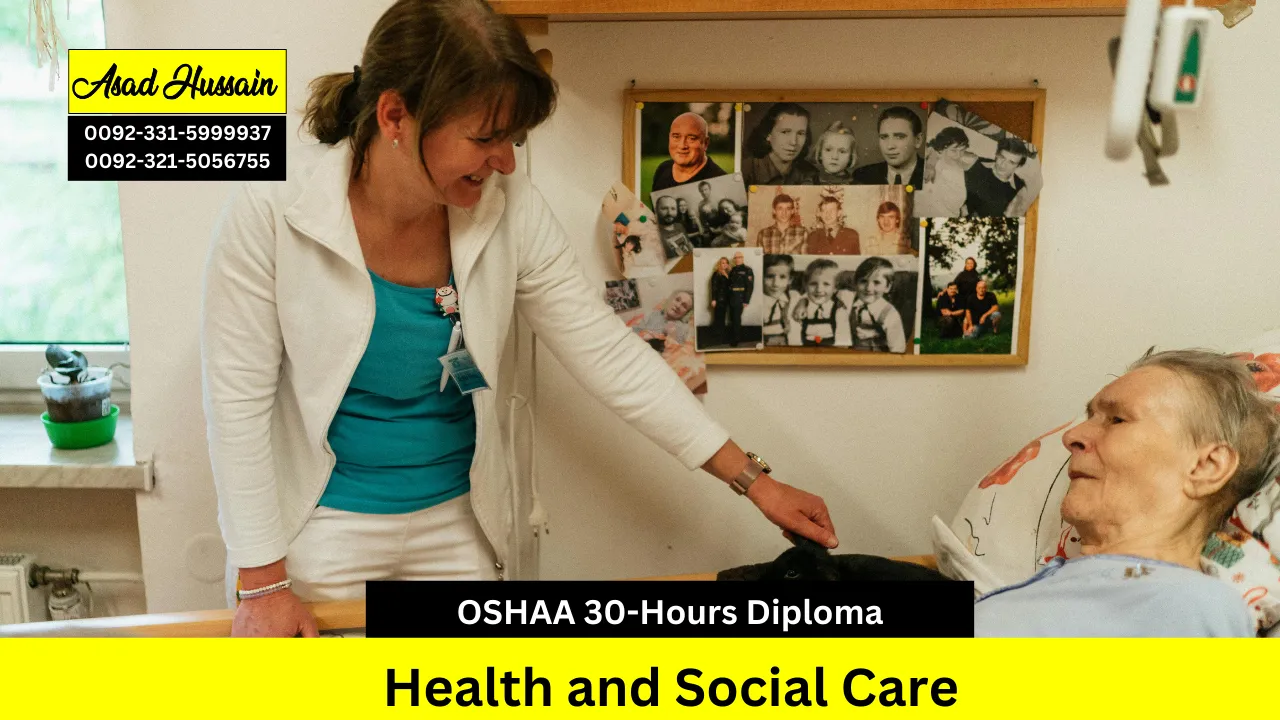
Diploma in Health and Social Care – Build Essential Care Skills with Confidence
The OSHAA 30-Hours Diploma in Health and Social Care is a professionally structured programme designed to provide a strong foundation in essential care principles, person-centred practice, and ethical responsibilities within health and social care environments. This course focuses on developing awareness of care standards, effective communication, safeguarding, and the promotion of dignity and wellbeing for individuals receiving care. Learners gain practical insight into the roles and responsibilities of care professionals while understanding the importance of compassion, respect, and equality in diverse care settings. The programme is suitable for those seeking to enhance practical knowledge relevant to everyday care practice.
This diploma places emphasis on real-world understanding of health and social care delivery, including safeguarding practices, health and safety awareness, and effective support strategies. Learners explore how care services operate, how individual needs are assessed, and how teamwork contributes to quality care outcomes. The course is not Ofqual regulated and is designed as a standalone professional learning programme. It aligns well with existing certifications and diplomas in health and wellbeing, social care support, mental health awareness, disability care, and community care, strengthening practical understanding without focusing on academic progression routes.
OSHAA 30-Hours Diploma in Health and Social Care supports learners in developing confidence, responsibility, and professional awareness when working with individuals across a range of care environments. The course encourages ethical practice, clear communication, and an understanding of policies that protect both service users and care providers. Learners completing this diploma can complement their knowledge alongside relevant certifications and diplomas in care support, safeguarding, first aid, mental wellbeing, or healthcare assistance, making it a valuable addition for those involved in supportive, care-focused, or community-based roles.
Program Highlights
Study Units
- Introduction to Health and Social Care Principles (3 Hours)
- Effective Communication in Care Settings (3 Hours)
- Health, Safety, and Risk Management in Care Environments (3 Hours)
- Safeguarding and Protecting Vulnerable Individuals (3 Hours)
- Understanding Equality, Diversity, and Inclusion in Care (3 Hours)
- Person-Centred Approaches to Care and Support (4 Hours)
- Legal, Ethical, and Regulatory Frameworks in Health and Social Care (3 Hours)
- Supporting Health and Well-being Through Nutrition and Lifestyle (3 Hours)
- Care Planning, Documentation, and Record-Keeping (2 Hours)
- Professional Development and Reflective Practice in Care Roles (3 Hours)
The OSHAA 30-Hours Diploma in Health and Social Care is designed to be accessible while ensuring learners are prepared to engage effectively with the course content. The following entry requirements outline the recommended criteria for enrolment.
- Age Requirements: Learners should normally be at least 18 years of age at the time of enrolment to ensure suitability for engaging with care-related responsibilities and ethical topics.
- Educational Requirements: A basic secondary level of education is recommended. Prior learning such as certificates or diplomas in health and social care, healthcare support, mental health awareness, safeguarding, disability care, first aid, or community care is beneficial but not mandatory.
- Language Proficiency: Learners should have a reasonable standard of written and spoken English to understand course materials, participate in learning activities, and complete assessments effectively.
- Work Experience: No formal work experience is required; however, experience in care, support, voluntary work, or community services can be advantageous.
This course welcomes motivated individuals who are committed to developing practical knowledge and ethical awareness within health and social care environments.
Learning Outcomes
Introduction to Health and Social Care Principles (3 Hours)
- Understand the core values and objectives of health and social care services
- Recognise the roles and responsibilities of care professionals in supporting individuals
- Apply foundational principles to promote dignity, respect, and independence in care
Effective Communication in Care Settings (3 Hours)
- Demonstrate clear and compassionate communication with individuals receiving care
- Apply active listening and empathy to build trust and understanding
- Adapt communication methods to meet the needs of individuals with varying abilities and backgrounds
Health, Safety, and Risk Management in Care Environments (3 Hours)
- Identify potential hazards in care settings and apply preventive measures
- Understand procedures for maintaining a safe environment for all parties
- Implement risk assessment techniques to minimise harm and ensure compliance
Safeguarding and Protecting Vulnerable Individuals (3 Hours)
- Recognise signs of abuse, neglect, or exploitation in vulnerable individuals
- Understand safeguarding policies, reporting protocols, and legal obligations
- Promote a safe and supportive environment that protects individuals from harm
Understanding Equality, Diversity, and Inclusion in Care (3 Hours)
- Explain the importance of promoting equality and respecting diversity in care delivery
- Identify and challenge discriminatory practices within care settings
- Apply inclusive approaches to meet the diverse needs of individuals
Person-Centred Approaches to Care and Support (4 Hours)
- Understand the principles of person-centred care and their practical application
- Involve individuals in decision-making about their care and support plans
- Tailor care approaches to respect personal preferences, needs, and values
Legal, Ethical, and Regulatory Frameworks in Health and Social Care (3 Hours)
- Understand the laws and regulations governing health and social care practice
- Apply ethical principles in care decision-making and interactions
- Maintain confidentiality, consent, and compliance with data protection requirements
Supporting Health and Well-being Through Nutrition and Lifestyle (3 Hours)
- Understand the role of nutrition and healthy living in promoting well-being
- Provide guidance on balanced diets, exercise, and preventive health measures
- Support individuals in adopting positive lifestyle habits for improved health outcomes
Care Planning, Documentation, and Record-Keeping (2 Hours)
- Develop accurate and person-centred care plans based on assessment findings
- Maintain clear, compliant, and detailed records of care provided
- Use documentation to monitor progress and ensure continuity of care
Professional Development and Reflective Practice in Care Roles (3 Hours)
- Recognise the importance of ongoing learning and skill development in care roles
- Apply reflective practice to evaluate and improve personal performance
- Set professional goals to enhance care quality and professional competence
Target Audience
This course is designed for individuals who want to build practical knowledge, professional awareness, and confidence in delivering high-quality care within health and social care environments.
Aspiring Health and Social Care Professionals
- Individuals planning to enter health or social care roles
- Learners seeking a strong foundation in care principles
- Those interested in person-centred and ethical care practices
- Individuals aiming to understand care responsibilities and standards
- Learners wanting practical insight into care environments
Current Care and Support Workers
- Care assistants working in residential or community settings
- Support workers assisting vulnerable individuals
- Healthcare assistants seeking structured care knowledge
- Workers aiming to strengthen communication and safeguarding skills
- Individuals wanting to enhance quality of care delivery
Healthcare and Community Support Staff
- Community health workers supporting daily wellbeing
- Staff involved in home care or outreach services
- Individuals working with elderly or disabled service users
- Professionals supporting physical and emotional wellbeing
- Workers focused on safe and respectful care practices
Individuals Supporting Family Members or Dependents
- Family caregivers providing informal care at home
- Individuals supporting elderly relatives or dependents
- Caregivers seeking better understanding of care needs
- Those wanting to improve communication and support strategies
- Individuals aiming to provide dignified and safe care
Learners Interested in Care Ethics and Safeguarding
- Individuals interested in safeguarding vulnerable people
- Learners seeking awareness of equality and inclusion
- Those wanting to understand ethical care responsibilities
- Individuals aiming to recognise and respond to care risks
- Learners focused on compassionate and respectful support
People Seeking Personal and Professional Development
- Individuals aiming to improve care-related knowledge
- Learners interested in wellbeing and support roles
- Those seeking confidence in care communication
- Individuals focused on reflective practice and growth
- Learners wanting to contribute positively to care settings
This course provides accessible, practical learning for a wide range of individuals, supporting competence, confidence, and ethical awareness in health and social care practice ccessible, practical learning for a wide audience, helping participants build confidence, understanding, and effective skills to manage anxiety and phobias in everyday personal and professional contexts.