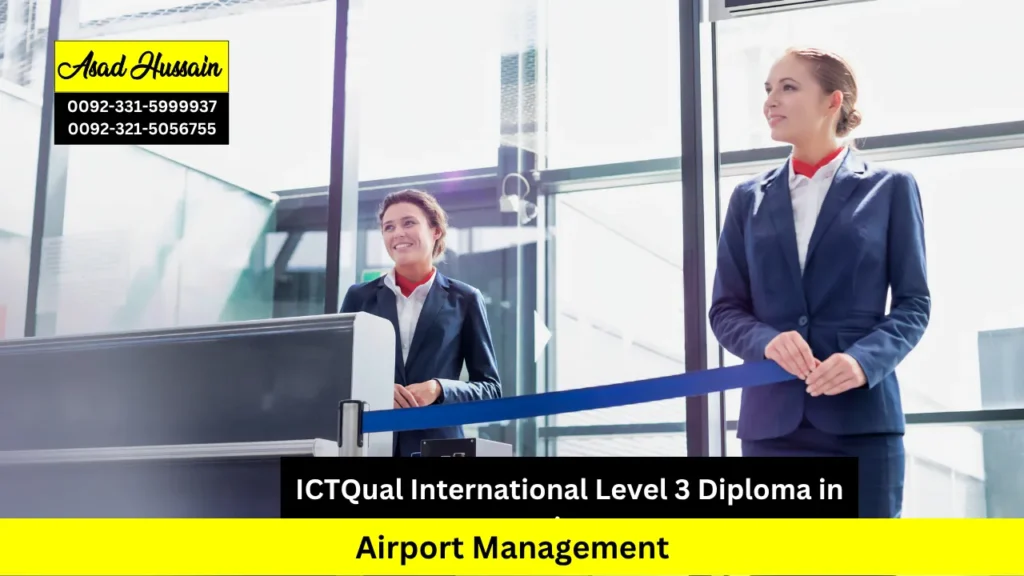
The ICTQual International Level 3 Diploma in Airport Management is an advanced qualification designed to prepare learners for leadership and operational roles within the global aviation industry. As airports continue to expand and passenger numbers grow worldwide, the demand for skilled professionals who can manage complex airport systems has never been higher. This diploma provides the knowledge, skills, and confidence needed to thrive in one of the most dynamic and fast‑paced sectors of the global economy.
The program offers a comprehensive curriculum that blends theoretical knowledge with practical applications. Learners gain a deep understanding of airport operations, safety management, regulatory frameworks, and the coordination of both airside and landside activities. The course also emphasizes critical skills such as strategic thinking, problem‑solving, and effective communication, ensuring graduates are well‑equipped to handle the challenges of modern airport environments.
This diploma is particularly valuable for individuals who want to progress from entry‑level aviation roles into supervisory or management positions. It is also suitable for graduates of travel, tourism, or hospitality programs who wish to specialize in aviation, as well as professionals from other industries seeking a career change. With its international recognition, the qualification opens doors to diverse career opportunities in airport operations, airline services, ground handling, and aviation administration.
Ultimately, the ICTQual International Level 3 Diploma in Airport Management is more than just a qualification—it is a career accelerator. By combining academic rigor with industry relevance, the program equips learners with the tools to succeed in a competitive global market. Whether your goal is to advance in your current role, transition into aviation, or prepare for higher studies, this diploma provides the foundation for long‑term success in airport management.
Program Highlights
Mandatory Units
This qualification, the ICTQual International Level 3 Diploma in Airport Management, consists of 6 mandatory units.
- Introduction to the Global Aviation and Airport Industry
- Fundamentals of Airport Operations and Ground Handling
- Aviation Safety, Security, and Emergency Procedures
- Customer Service and Passenger Experience in Airports
- Aviation Communication and Professional Skills
- Introduction to Airport Regulations and Compliance
The ICTQual International Level 3 Diploma in Airport Management is designed to be accessible while ensuring learners have the right foundation to succeed in this advanced qualification. Below are the typical entry requirements:
- Age Requirement: Learners should be 18 years of age or older at the time of enrollment.
- Educational Background: A secondary school qualification or equivalent (such as O‑Levels, GCSEs, or Matriculation) is generally expected.
- Language Proficiency: Since the course is delivered in English, learners should have a good command of English (reading, writing, and speaking) to understand aviation terminology and complete assessments effectively.
- Prior Knowledge: While no advanced aviation experience is mandatory, learners are expected to have a basic understanding of business, travel, or aviation concepts. Completion of a Level 2 qualification in aviation, travel, or a related field is recommended.
- Work Experience (Optional):Individuals already working in airports, airlines, or related industries may benefit from their practical experience, but the diploma is equally open to newcomers who want to enter the aviation sector.
Learning Outcomes for the ICTQual International Level 3 Diploma in Airport Management:
Introduction to the Global Aviation and Airport Industry
- Understand the structure and functions of the international aviation and airport industry.
- Explain the roles and responsibilities of different airport stakeholders and governing bodies.
- Identify key trends and developments shaping the global aviation sector.
- Analyse the economic and social impact of airports on regional and global development.
- Understand the basic concepts of airline operations and airport management systems.
- Recognise the importance of sustainability and innovation in modern aviation.
- Evaluate the challenges and opportunities in international air transport management.
- Demonstrate awareness of global aviation standards and operational frameworks.
Fundamentals of Airport Operations and Ground Handling
- Describe the core components of airport operations, including airside and landside functions.
- Explain the principles of ground handling and their impact on efficient airport performance.
- Understand the procedures for aircraft turnaround, baggage handling, and ramp safety.
- Apply operational knowledge to support smooth passenger and cargo processing.
- Identify key performance indicators (KPIs) in airport operations management.
- Evaluate the importance of teamwork and coordination in ground handling services.
- Develop strategies for improving operational efficiency and minimising delays.
- Understand the use of technology in managing modern airport operations.
Aviation Safety, Security, and Emergency Procedures
- Understand international safety and security regulations applicable to airport m
- Identify potential hazards and implement appropriate safety management practices.
- Explain the importance of security screening, surveillance, and access control systems.
- Apply standard emergency response procedures during incidents or crises.
- Coordinate with relevant agencies and departments during emergency operations.
- Evaluate risk management frameworks used in aviation safety.
- Promote a proactive safety culture through staff training and continuous monitoring.
- Understand the role of safety audits and inspections in maintaining compliance.
Customer Service and Passenger Experience in Airports
- Recognise the importance of customer service excellence in the aviation industry.
- Understand the factors that influence passenger satisfaction and loyalty.
- Apply effective communication and interpersonal skills in passenger interactions.
- Manage passenger issues, complaints, and special service requirements professionally.
- Identify methods to enhance the overall passenger journey from check-in to boarding.
- Evaluate passenger feedback and use it for continuous service improvement.
- Understand the importance of inclusivity and accessibility in airport services.
- Develop skills to create a welcoming, safe, and efficient passenger environment.
Aviation Communication and Professional Skills
- Demonstrate clear and professional communication in aviation-related contexts.
- Apply teamwork, leadership, and problem-solving skills in airport operations.
- Understand the importance of cultural awareness in a global aviation environment.
- Use appropriate communication tools and technologies to support airport coordination.
- Develop report writing and documentation skills for professional workplace communication.
- Apply time management and organisational skills in high-pressure situations.
- Build confidence in handling professional interactions and decision-making.
- Understand the role of ethics and professionalism in aviation workplaces.
Introduction to Airport Regulations and Compliance
- Understand the purpose and structure of aviation and airport regulations.
- Identify international organisations responsible for aviation governance and oversight.
- Explain the principles of regulatory compliance and airport certification.
- Understand how safety, security, and environmental standards influence airport operations.
- Apply knowledge of local and international regulations in operational procedures.
- Evaluate the importance of documentation and record-keeping in compliance processes.
- Recognise the consequences of non-compliance in aviation operations.
- Develop awareness of evolving global regulations and best practices in the industry.
The ICTQual International Level 3 Diploma in Airport Management is designed for learners who want to advance their careers in the aviation sector. It is suitable for students, professionals, and career changers who aspire to take on supervisory or management roles in airports and related aviation services.
1. Aspiring Aviation Professionals
- Individuals who want to build a career in airport and airline management.
- Learners seeking a globally recognized aviation qualification.
- Students aiming to gain advanced knowledge of airport operations.
- Those motivated to enter one of the world’s fastest‑growing industries.
- People looking for a structured pathway into aviation careers.
2. Current Airport and Airline Staff
- Employees working in airports or airlines who want career progression.
- Staff in ground handling, passenger services, or security roles.
- Professionals aiming to move into supervisory or leadership positions.
- Workers seeking to broaden their knowledge beyond their current tasks.
- Aviation staff who want international recognition of their skills.
3. Travel, Tourism, and Hospitality Graduates
- Graduates who want to specialize in aviation management.
- Learners looking to bridge tourism, hospitality, and aviation industries.
- Individuals seeking to diversify their career opportunities.
- Those who want to add a professional aviation qualification to their CV.
- Graduates aiming for roles in airports, airlines, or aviation services.
4. Career Changers and Professionals
- Professionals from other industries passionate about aviation.
- Individuals with backgrounds in business, logistics, or customer service.
- Career changers seeking a structured pathway into aviation.
- People looking for a qualification that supports international mobility.
- Professionals aiming to transition into a high‑demand global sector.
5. Ambitious Learners Seeking Growth
- Individuals motivated to develop leadership and management skills.
- Learners who want to strengthen communication and problem‑solving abilities.
- Those preparing for high‑responsibility roles in aviation operations.
- People who want to gain confidence in managing complex environments.
- Learners aiming to position themselves as valuable assets in aviation.
6. Students Progressing from Level 2 Qualifications
- Learners who have completed the ICTQual Level 2 Award or Certificate.
- Students ready to advance to a higher‑level aviation qualification.
- Individuals seeking deeper knowledge of airport systems and regulations.
- Those who want to build on their foundational aviation studies.
- Learners aiming for supervisory or mid‑level management roles.
7. International Learners and Global Professionals
- Students seeking a qualification recognized worldwide.
- Professionals aiming to work in airports across different countries.
- Learners interested in global aviation standards and regulations.
- Individuals who want to enhance employability in international markets.