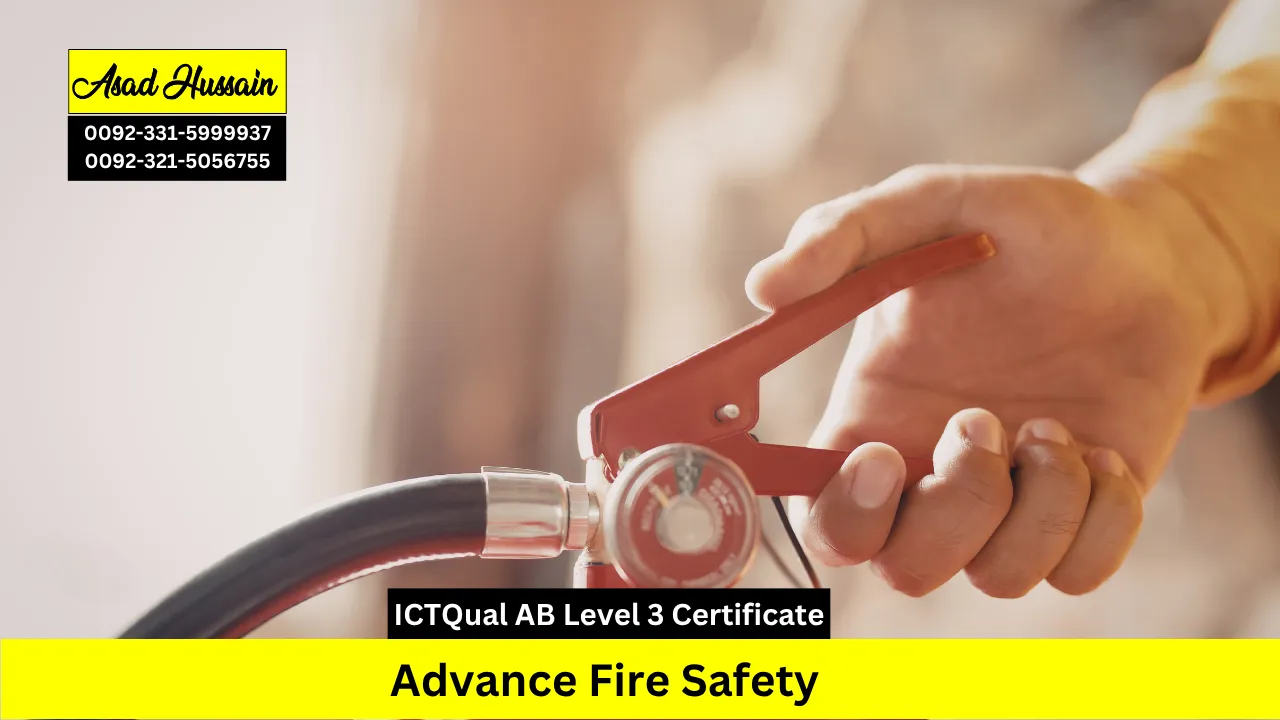
The ICTQual AB Level 3 Certificate in Advance Fire Safety is a specialized qualification designed to provide learners with in-depth knowledge and practical skills in fire prevention, protection, and emergency response. This course is tailored to meet the needs of individuals working in safety-critical environments, equipping them with the expertise required to manage fire risks effectively and ensure compliance with safety regulations.
The programme covers key areas such as fire risk assessment, fire prevention strategies, emergency evacuation procedures, fire protection systems, and workplace safety standards. Learners will gain a clear understanding of how fires start and spread, as well as how to implement effective control measures to minimize risks in different environments.
Aligned with international safety standards, this qualification combines theoretical learning with practical applications, enabling learners to apply fire safety principles in real-world situations. It is ideal for safety officers, supervisors, facility managers, and individuals responsible for workplace health and safety.
With increasing emphasis on fire safety compliance across industries, the ICTQual AB Level 3 Certificate in Advance Fire Safety enhances career prospects and professional credibility. It also provides a pathway to higher-level fire safety and health and safety qualifications, supporting long-term career development in safety management and risk control.
Program Highlights
Study Units
To achieve,ICTQual AB Level 3 Certificate in Advance Fire Safety; Candidates must Complete the 5 Manadatory Units.
- Principles of Fire Safety Management
- Fire Risk Assessment and Control Measures
- Emergency Procedures and Evacuation Planning
- Fire Prevention and Safety Compliance
- Firefighting Equipment and Techniques
Entry Requirements
- Age Requirements:Learners must be at least 18 years of age at the time of registration
- Educational Background:A minimum of secondary school education or equivalent is required.
- Language Proficiency: Learners must demonstrate basic to intermediate English proficiency to understand course materials, safety guidelines, and complete assessments.
- Work Experience:Prior experience is not mandatory; however, learners with experience in safety roles, construction, facilities management, or industrial environments will benefit from a better understanding of the course content.
Please ensure all criteria are met to facilitate a smooth admission process into this professional program.
Learning Outcomes
By the end of this course, learners will be able to:
- Principles of Fire Safety Management
- Understand the key principles of fire safety in workplace and public environments.
- Explain the legal framework, regulations, and standards governing fire safety.
- Identify the roles and responsibilities of personnel in fire safety management.
- Analyse fire hazards and the impact of fire incidents on organisations.
- Develop strategies to integrate fire safety into overall health and safety management.
- Evaluate fire safety policies and procedures for effectiveness.
- Demonstrate awareness of fire risk communication and training requirements.
- Fire Risk Assessment and Control Measures
- Conduct comprehensive fire risk assessments in various environments.
- Identify potential fire hazards and evaluate associated risks.
- Recommend appropriate control measures to mitigate fire risks.
- Apply methods to prioritise and manage risks based on severity.
- Monitor and review risk assessment processes for ongoing compliance.
- Record and report fire risk assessments accurately.
- Ensure risk mitigation aligns with UK fire safety regulations and international standards.
- Emergency Procedures and Evacuation Planning
- Develop effective emergency response and evacuation procedures.
- Identify the roles of staff during fire emergencies.
- Plan safe escape routes and assembly points in diverse environments.
- Coordinate drills and training exercises for staff preparedness.
- Evaluate the effectiveness of emergency procedures and identify improvements.
- Apply communication strategies during fire emergencies.
- Ensure compliance with regulatory requirements for emergency planning.
- Fire Prevention and Safety Compliance
- Understand fire prevention strategies and their implementation.
- Identify measures to reduce the risk of fire incidents in workplaces.
- Apply safety regulations and standards to maintain compliance.
- Monitor the implementation of fire prevention controls.
- Evaluate the effectiveness of fire prevention practices.
- Promote fire safety awareness among staff and stakeholders.
- Demonstrate proactive management to prevent fire hazards.
- Firefighting Equipment and Techniques
- Identify different types of firefighting equipment and their uses.
- Demonstrate safe handling and operation of extinguishers, hoses, and fire blankets.
- Understand the selection of equipment based on fire type and environment.
- Apply fire suppression techniques effectively in emergency scenarios.
- Maintain and inspect equipment to ensure operational readiness.
- Train staff on correct usage of firefighting tools.
- Evaluate the effectiveness of firefighting techniques in mitigating incidents.
Target Audience
Completing the Level 3 Advanced Fire Safety qualification opens a variety of career and educational progression opportunities for learners in the UK and internationally:
- Higher-Level Fire Safety Qualifications: Progress to Level 4 or Level 5 diplomas in fire safety, health and safety management, or risk management.
- Professional Health & Safety Roles: Move into roles such as Fire Safety Officer, Health and Safety Advisor, or Safety Compliance Officer.
- Emergency Management Careers: Pursue positions in emergency response, risk assessment, and crisis management within public or private sectors.
- Facilities and Building Management: Apply knowledge in facilities management or building services roles that require fire safety expertise.
- Construction and Industrial Sectors: Take on safety management positions within construction, manufacturing, or industrial sites.
- Consultancy and Training: Advance to roles as a fire safety consultant or trainer, delivering fire safety awareness programs and compliance audits.
- Pathway to Chartered or Accredited Status: Further progression could include IOSH, or other UK-recognised professional certifications for enhanced career recognition.