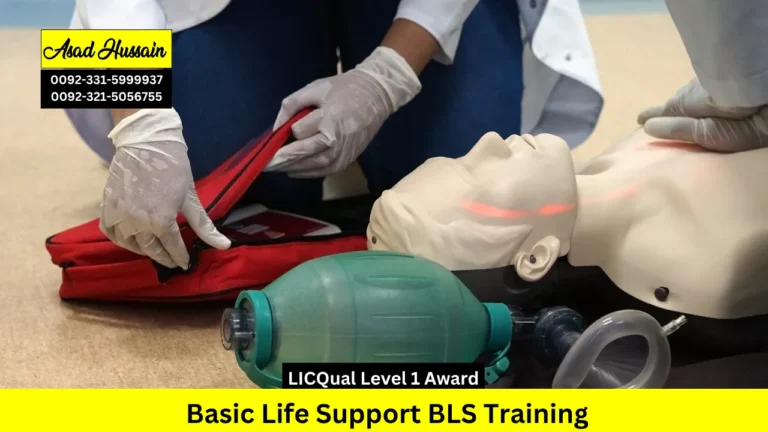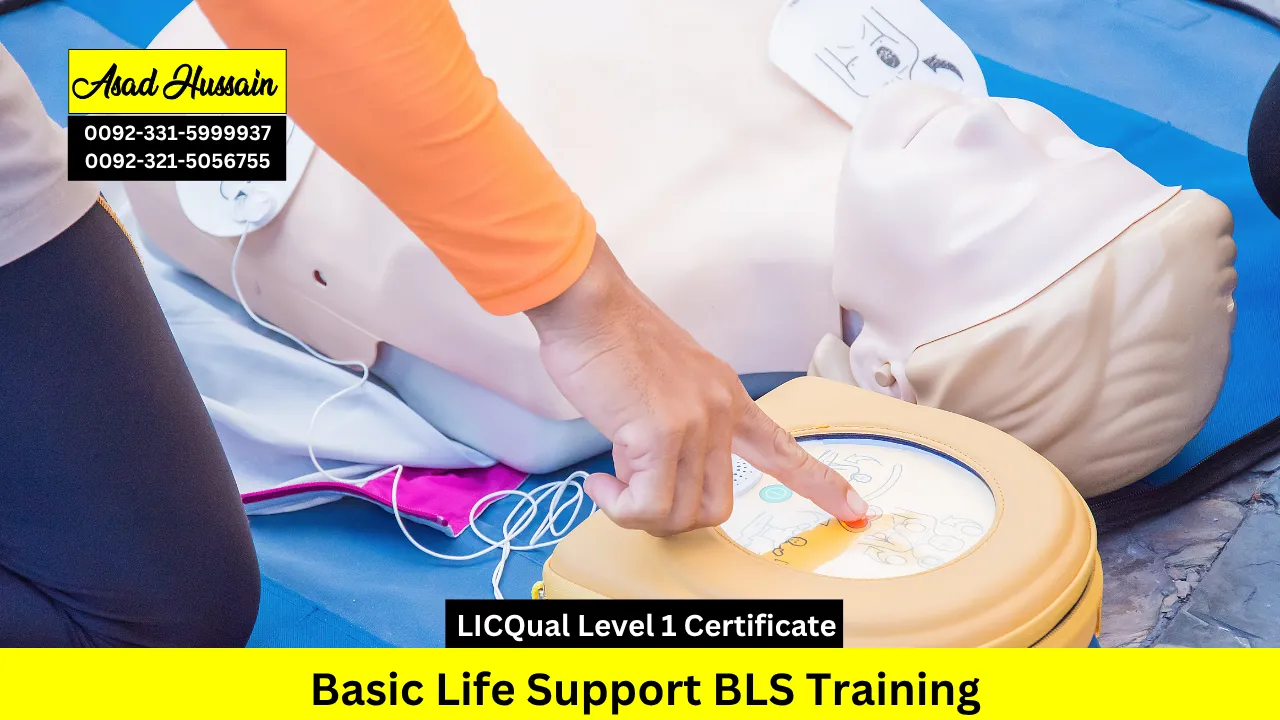
The LICQual Level 1 Certificate in Basic Life Support (BLS) Training is an entry-level qualification designed to introduce learners to essential life-saving skills and emergency response techniques. This course is ideal for individuals with little or no prior medical knowledge who want to gain the confidence to act effectively in emergency situations and provide immediate assistance when needed.
This training covers the fundamental principles of basic life support, including an introduction to cardiopulmonary resuscitation (CPR), awareness of automated external defibrillators (AED), recovery position techniques, and basic emergency response procedures. Learners also gain an understanding of how to recognise life-threatening conditions and respond appropriately until professional medical help arrives.
The LICQual Level 1 BLS course focuses on building awareness, confidence, and basic practical skills required to support individuals in emergencies such as cardiac arrest, choking, or unconsciousness. It is suitable for students, workplace staff, caregivers, and anyone interested in learning essential first aid skills for personal or professional use.
Upon completion, learners will have a strong foundation in basic life support and can progress to higher-level BLS or first aid qualifications. This certification also enhances personal safety awareness and contributes to safer homes, workplaces, and communities.
Program Highlights
Study Units
To achieve,LICQual Level 1 Certificate in Basic Life Support BLS Training; Candidates must Complete the 6 Manadatory Units.
- Introduction to Basic Life Support (BLS)
- Understanding Cardiac Arrest
- Performing CPR and Choking Management
- Legal and Ethical Considerations
- Managing Unconscious Casualties
- Using an Automated External Defibrillator (AED)
Entry Requirements
- Age Requirements:Applicants must be at least 16 years old.
- Educational Background:No formal academic qualifications are required. A basic understanding of health and safety concepts is helpful but not essential.
- Language Proficiency:Since the program is delivered and assessed in English, learners should have a basic level of English communication skills.
- Work Experience:No prior experience in healthcare, first aid, or emergency response is required.
Please ensure all criteria are met to facilitate a smooth admission process into this professional program.
Learning Outcomes
By the end of this course, learners will be able to:
- Introduction to Basic Life Support (BLS)
- Understand the key principles and significance of Basic Life Support (BLS) in emergency situations.
- Identify the steps involved in the chain of survival and their role in improving outcomes for casualties.
- Gain an understanding of the importance of immediate action and early intervention in life-threatening situations.
- Develop the confidence to apply life-saving techniques in real-life scenarios.
- Understanding Cardiac Arrest
- Recognize the signs and symptoms of cardiac arrest in both adults and children.
- Understand the physiological impact of cardiac arrest on the body and its critical nature.
- Identify the importance of early defibrillation and how it can enhance survival rates.
- Learn the difference between cardiac arrest and other medical emergencies, and the necessary responses for each.
- Performing CPR and Choking Management
- Demonstrate the correct technique for performing CPR on both adults and children, including chest compressions and rescue breaths.
- Understand the differences in CPR protocols for adults, children, and infants.
- Recognize the signs and symptoms of choking and apply appropriate management techniques such as abdominal thrusts and back blows.
- Demonstrate how to manage choking casualties, including how to perform procedures when the casualty becomes unconscious.
- Legal and Ethical Considerations
- Understand the legal responsibilities and duty of care when providing BLS in an emergency.
- Recognize the ethical implications of providing emergency care, including obtaining consent when applicable.
- Learn about Good Samaritan laws and the protection available to individuals performing life-saving actions.
- Understand the importance of following established protocols and maintaining the dignity and safety of the casualty.
- Managing Unconscious Casualties
- Identify the signs of unconsciousness and the importance of securing the airway to ensure proper breathing.
- Learn the procedure for placing an unconscious casualty in the recovery position to maintain an open airway and reduce the risk of choking.
- Understand the need for continuous monitoring of unconscious casualties until professional help arrives.
- Gain confidence in assessing unconscious casualties and making decisions about when to administer CPR or other emergency care.
- Using an Automated External Defibrillator (AED)
- Understand the role and function of an Automated External Defibrillator (AED) in cardiac emergencies.
- Learn the steps for correctly using an AED, including how to place the pads on the casualty and follow device instructions.
- Recognize when and how to use an AED during a cardiac arrest situation, including when to deliver a shock.
- Demonstrate the safe and effective use of an AED to enhance the chances of survival in cases of sudden cardiac arrest.
Target Audience
This diploma is ideal for:
- Individuals looking to gain essential life-saving skills, especially in emergency situations.
- Parents, caregivers, and childcare providers responsible for the well-being of children.
- Teachers and school staff who need to ensure the safety of students in a school environment.
- Office workers and employees in low-risk workplaces seeking to fulfill health and safety requirements.
- Fitness instructors and sports coaches working with both children and adults in potentially high-risk environments.
- People interested in gaining a recognized qualification in Basic Life Support to improve their confidence in handling emergencies.
- Individuals who want to refresh or update their first aid knowledge to stay current with life-saving techniques.
- Anyone looking to make a positive impact during emergencies and help save lives when every second counts.