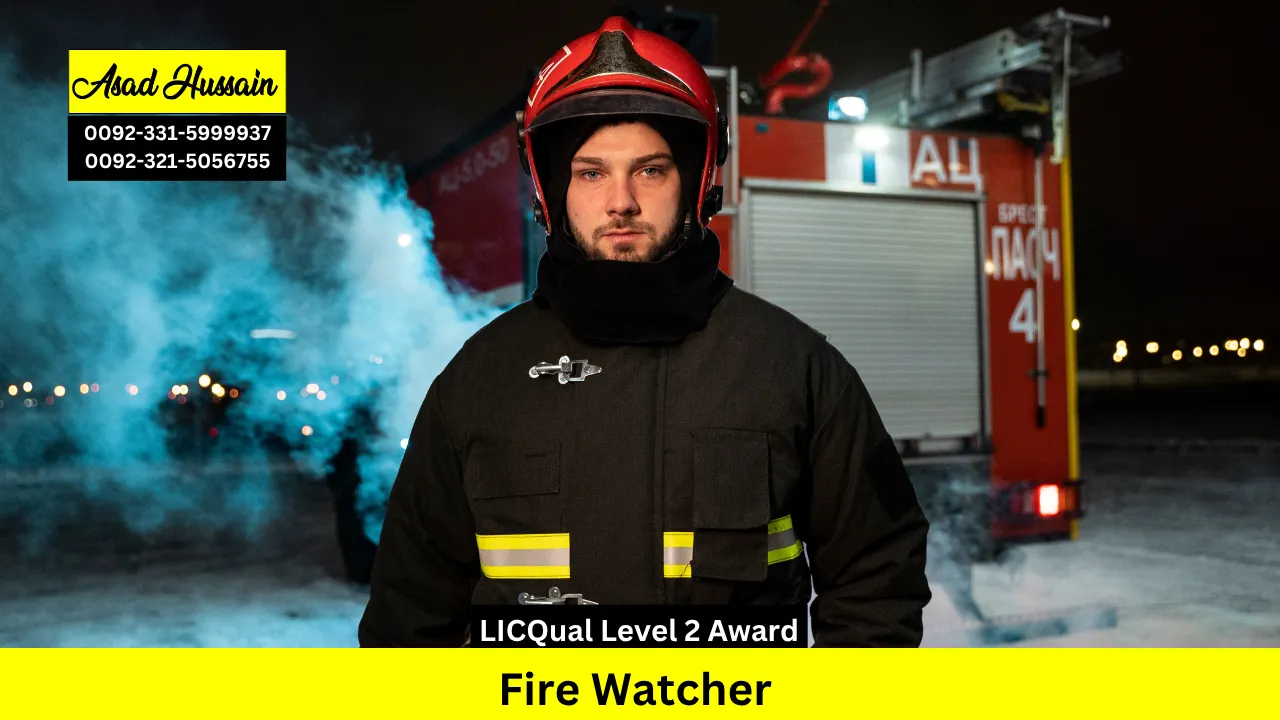
The LICQual Level 2 Award in Fire Watcher is a professional qualification designed for individuals responsible for monitoring fire hazards and maintaining fire safety in higher-risk workplaces. This course builds on foundational fire safety knowledge, equipping learners with practical skills to identify potential fire risks, respond effectively to emergencies, and ensure compliance with workplace fire safety regulations. It is ideal for staff in construction sites, industrial facilities, events management, and other environments where fire watch responsibilities are critical.
The programme covers essential topics such as fire hazard identification, risk assessment, fire prevention strategies, emergency response procedures, the safe use of firefighting equipment, and communication during fire incidents. Learners also gain knowledge of the roles and responsibilities of a fire watcher, legal compliance, and workplace policies to maintain a safe environment. The course emphasises practical application, situational awareness, and decision-making in high-risk scenarios, preparing learners to act responsibly and efficiently in case of fire emergencies.
Suitable for site supervisors, security personnel, contractors, and experienced employees tasked with fire watch duties, the LICQual Level 2 Award in Fire Watcher enhances career prospects by providing recognised fire safety credentials. This qualification is recognised nationally and internationally, providing learners with the expertise to prevent fire incidents, support emergency responses, and maintain workplace safety standards. It also serves as a stepping stone for higher-level fire safety training, including Level 3 fire safety and occupational health and safety qualifications.
Program Highlights
Study Units
To achieve LICQual Level 2 Award in Fire Watcher; Candidates must Complete the 6 Manadatory Units.
- Introduction to Fire Safety and Hazard Identification
- Roles and Responsibilities of a Fire Watcher
- Fire Risk Assessment and Prevention Measures
- Emergency Response and Fire Fighting Procedures
- Fire Safety Equipment and Usage
- Communication and Reporting in Fire Safety
Entry Requirements
- Age Requirements:Candidates must be 16 years of age or older at the time of registration.
- Educational Background: A basic level of education is required. Completion of the Level 1 Award in Fire Watcher or equivalent knowledge is recommended to ensure readiness for advanced topics.
- Language Proficiency:Learners should have a basic level of English reading, writing, and communication skills to understand course materials, safety instructions, and assessments effectively.
- Work Experience: Prior professional experience is not mandatory, but individuals with workplace exposure to fire safety practices or supervisory responsibilities will benefit most from this qualification.
Please ensure all criteria are met to facilitate a smooth admission process into this professional program.
Learning Outcomes
By the end of this course, learners will be able to:
- Understanding Fire Safety and Hazard Identification
- Upon completion, learners will be able to identify different types of fire hazards in various work environments.
- They will demonstrate a solid understanding of fire safety principles, including the importance of conducting fire risk assessments and implementing preventative measures to reduce fire risks.
- Demonstrating Knowledge of the Role and Responsibilities of a Fire Watcher
- Learners will be able to describe the key duties of a Fire Watcher, including monitoring work areas for potential fire hazards, maintaining fire safety standards, and ensuring continuous vigilance.
- They will also be able to explain how to report any identified risks and ensure the safety of the workplace.
- Conducting Fire Risk Assessments and Implementing Preventative Measures
- Learners will demonstrate the ability to assess fire risks within different work environments.
- They will be capable of implementing preventative measures such as fire safety barriers, safe work practices, and selecting appropriate fire safety equipment to minimize the risk of fire incidents.
- Responding Effectively to Emergencies and Fire Fighting Procedures
- After completing this unit, learners will be able to effectively respond to fire emergencies.
- They will demonstrate knowledge of fire fighting techniques, including the proper use of fire extinguishers and other fire-fighting equipment, as well as evacuation procedures and how to coordinate with emergency response teams.
- Using Fire Safety Equipment Correctly
- Learners will gain the ability to select, maintain, and use fire safety equipment, such as extinguishers, fire alarms, and fire blankets, appropriately.
- They will be able to confidently use these tools during a fire emergency to mitigate risk and protect personnel.
- Communicating and Reporting Fire Hazards and Emergencies
- Upon completion, learners will demonstrate effective communication skills for reporting fire hazards, emergencies, and safety issues.
- They will be able to use appropriate communication tools, such as radios and hand signals, to report issues clearly and follow reporting protocols to ensure a swift response.
Target Audience
This diploma is ideal for:
- Individuals working in industries where fire risks are prevalent, such as construction, oil and gas, and manufacturing.
- Safety professionals who want to enhance their qualifications and expertise in fire safety monitoring.
- Workers with basic safety knowledge looking to specialize in fire safety and fire prevention.
- Supervisors and managers who oversee teams in high-risk environments and need to ensure compliance with fire safety regulations.
- Those interested in taking on the role of a Fire Watcher and looking to obtain a formal, accredited qualification.
- People looking to pursue a career in fire safety, particularly in hazardous work environments.
- Employers who want to ensure their staff are fully trained to handle fire hazards and respond effectively in case of emergencies.