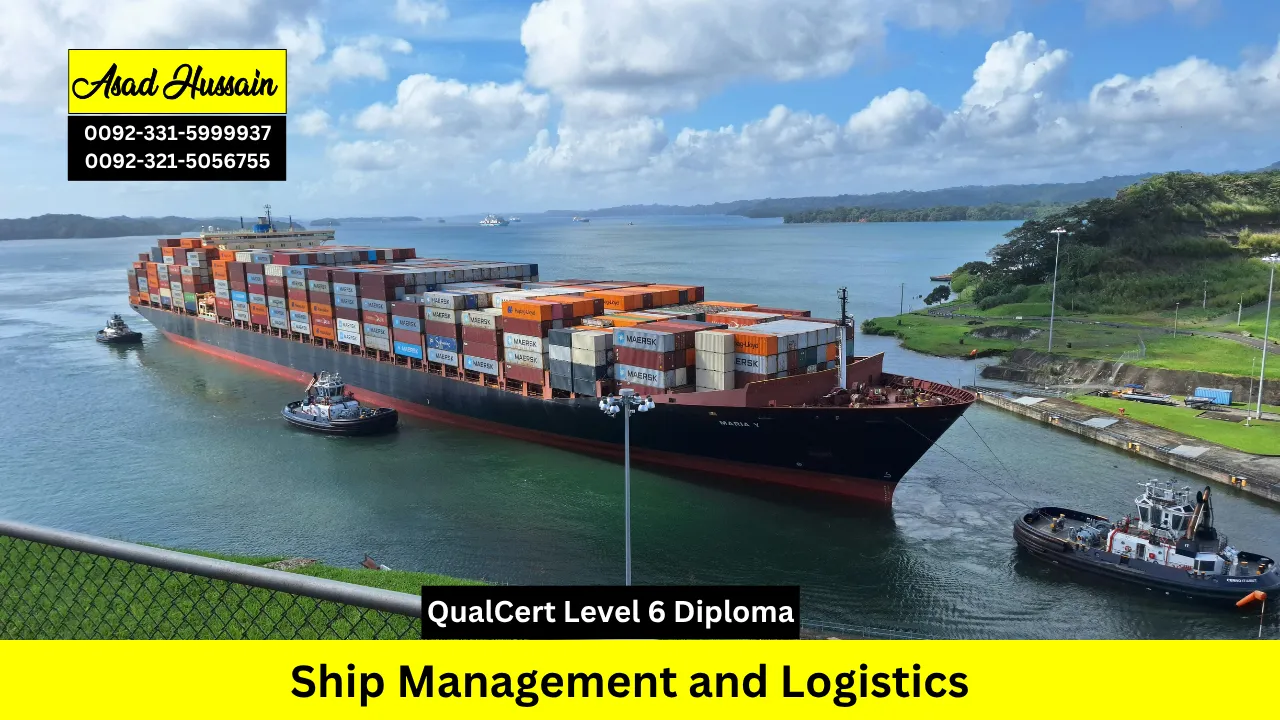
The QualCert Level 6 Diploma in Ship Management and Logistics is an advanced professional qualification designed to develop strategic knowledge and practical expertise in maritime operations, shipping management, and global logistics systems. This comprehensive programme equips learners with the skills required to manage vessel operations efficiently while understanding the complexities of international trade, port management, and supply chain coordination within the maritime industry.
The course covers essential areas such as ship operations management, maritime regulations, logistics planning, cargo handling, fleet administration, risk management, and international shipping documentation. Learners gain a strong understanding of how modern shipping organisations operate, including safety compliance, cost control, and operational efficiency in global maritime environments. The programme also emphasises leadership, decision-making, and problem-solving skills necessary for supervisory and managerial roles.
Ideal for maritime professionals, logistics coordinators, shipping executives, port operations staff, and individuals seeking career advancement in the shipping and logistics sector, this diploma bridges operational knowledge with management-level competencies. It prepares learners to meet the evolving demands of global maritime trade and transportation industries.
Completing the QualCert Level 6 Diploma in Ship Management and Logistics enhances professional credibility, expands international career opportunities, and provides a strong academic pathway toward higher-level maritime and logistics qualifications, supporting long-term career growth in ship management and global supply chain operations.
Program Highlights
Study Units
To achieve,QualCert Level 6 Diploma in Ship Management and Logistics; Candidates must Complete the 6 Manadatory Units.
- Advanced Ship Management and Operational Strategies
- Maritime Safety, Security and Environmental Compliance
- Global Supply Chain Management and Logistics Optimisation
- Shipping Economics, Finance and Strategic Planning
- Leadership, Negotiation and Client Relationship Management
- Research Project in Ship Management and Logistics
Entry Requirements
- Age Requirements: Applicants must be at least 18 years old to enroll in this diploma program.
- Educational Background: Applicants should possess a Level 5 qualification or equivalent, such as a diploma in shipping, logistics, business management, or maritime studies.
- Language Proficiency: Since the course is delivered in English, learners must demonstrate basic to intermediate proficiency in reading, writing, and communication.
- Work Experience:A minimum of 1–2 years’ professional experience in shipping, logistics, maritime operations, or supply chain management is recommended.
Please ensure all criteria are met to facilitate a smooth admission process into this professional program.
Learning Outcomes
- Advanced Ship Management and Operational Strategies
- Critically evaluate advanced principles of ship management and operations
- Analyse strategies for optimising vessel performance and efficiency
- Apply international regulations and standards to ship operations
- Assess the impact of technology and digitalisation on ship management
- Develop solutions for operational challenges in global shipping
- Integrate safety, cost, and performance considerations into decision-making
- Demonstrate the ability to manage complex ship operations strategically
- Maritime Safety, Security and Environmental Compliance
- Understand international frameworks governing maritime safety and security
- Evaluate the role of IMO conventions such as SOLAS, MARPOL, and ISM Code
- Apply knowledge of safety and environmental compliance to shipping operations
- Assess strategies for preventing accidents, pollution, and security breaches
- Analyse case studies of maritime safety and security incidents
- Develop risk management approaches for shipping companies
- Demonstrate the ability to implement effective compliance systems
- Global Supply Chain Management and Logistics Optimisation
- Critically analyse the role of shipping in global supply chains
- Evaluate strategies for optimising logistics and cargo flows
- Apply advanced knowledge of multimodal transport systems
- Assess the impact of globalisation and trade agreements on logistics
- Develop solutions for supply chain disruptions and bottlenecks
- Integrate sustainability and digitalisation into logistics strategies
- Demonstrate the ability to manage complex international logistics networks
- Shipping Economics, Finance and Strategic Planning
- Understand the economic principles underpinning global shipping markets
- Analyse the impact of supply and demand on freight rates and chartering
- Evaluate financial models for ship operations and investment decisions
- Apply knowledge of shipping finance, insurance, and risk management
- Assess the role of strategic planning in shipping company growth
- Interpret economic data to support decision-making in maritime business
- Demonstrate the ability to align financial planning with long-term strategy
- Leadership, Negotiation and Client Relationship Management
- Apply advanced leadership theories to maritime and logistics contexts
- Evaluate negotiation strategies for complex shipping contracts
- Develop effective communication skills for client relationship management
- Assess the role of ethics and professionalism in leadership decisions
- Demonstrate the ability to manage multicultural and international teams
- Apply conflict resolution techniques in maritime business environments
- Strengthen client trust and long-term partnerships through effective management
- Research Project in Ship Management and Logistics
- Formulate a research question relevant to ship management and logistics
- Apply appropriate research methodologies to investigate industry issues
- Critically analyse primary and secondary sources of maritime knowledge
- Evaluate the implications of research findings for professional practice
- Demonstrate advanced academic writing and referencing skills
- Present evidence-based conclusions in a structured research report
- Reflect on the research process and its contribution to professional development
Target Audience
The QualCert Level 6 Diploma in Ship Management and Logistics is designed for professionals who aspire to advance their careers in the maritime and logistics industries.
- Senior Ship Managers and Operations Leaders
- Strengthen expertise in advanced ship management strategies
- Gain confidence in overseeing complex vessel operations
- Apply international regulations to daily management practices
- Improve efficiency and cost-effectiveness in ship operations
- Develop leadership skills for managing large teams
- Enhance decision-making in safety and compliance matters
- Position themselves for executive-level roles in ship management
- Maritime Safety and Compliance Specialists
- Deepen knowledge of international safety and environmental conventions
- Apply IMO regulations such as SOLAS, MARPOL, and ISM Code
- Strengthen ability to manage compliance frameworks
- Analyse case studies of safety and security incidents
- Develop risk management strategies for maritime operations
- Enhance credibility as compliance and safety advisors
- Prepare for senior compliance and regulatory roles
- Global Supply Chain and Logistics Professionals
- Gain advanced insight into international supply chain systems
- Apply optimisation strategies to logistics and cargo flows
- Understand the impact of globalisation on maritime logistics
- Develop solutions for supply chain disruptions and bottlenecks
- Integrate sustainability and digitalisation into logistics strategies
- Strengthen ability to manage multimodal transport networks
- Position themselves as leaders in global logistics operations
- Shipping Economists and Strategic Planners
- Understand the economics of global shipping markets
- Analyse freight rates, chartering, and market cycles
- Apply financial models to shipping investment decisions
- Strengthen knowledge of shipping finance and insurance
- Develop long-term strategic plans for shipping companies
- Interpret economic data to support business growth
- Enhance decision-making in shipping economics and planning
- Business Development and Client Relationship Managers
- Strengthen negotiation skills for complex shipping contracts
- Build long-term trust with international clients
- Apply legal and ethical considerations to client management
- Improve communication in multicultural business environments
- Develop strategies for managing high-value client portfolios
- Enhance ability to resolve conflicts and maintain partnerships
- Support business growth through effective relationship management
- Career Changers with Maritime Experience
- Transition from technical maritime roles into management positions
- Gain structured knowledge of ship management and logistics
- Apply existing maritime experience to commercial contexts
- Build confidence for new career pathways in shipping leadership
- Strengthen employability in international trade and logistics
- Develop skills for consultancy or advisory roles
- Use the diploma as a stepping stone to postgraduate study
- International Learners Seeking Global Recognition
- Obtain a qualification aligned with UK and international standards
- Gain knowledge applicable to global shipping practices
- Strengthen career prospects in home and overseas markets
- Understand international conventions shaping maritime logistics
- Build a foundation for postgraduate or professional study
- Enhance employability in multinational organisations
- Position themselves as globally recognised maritime professionals