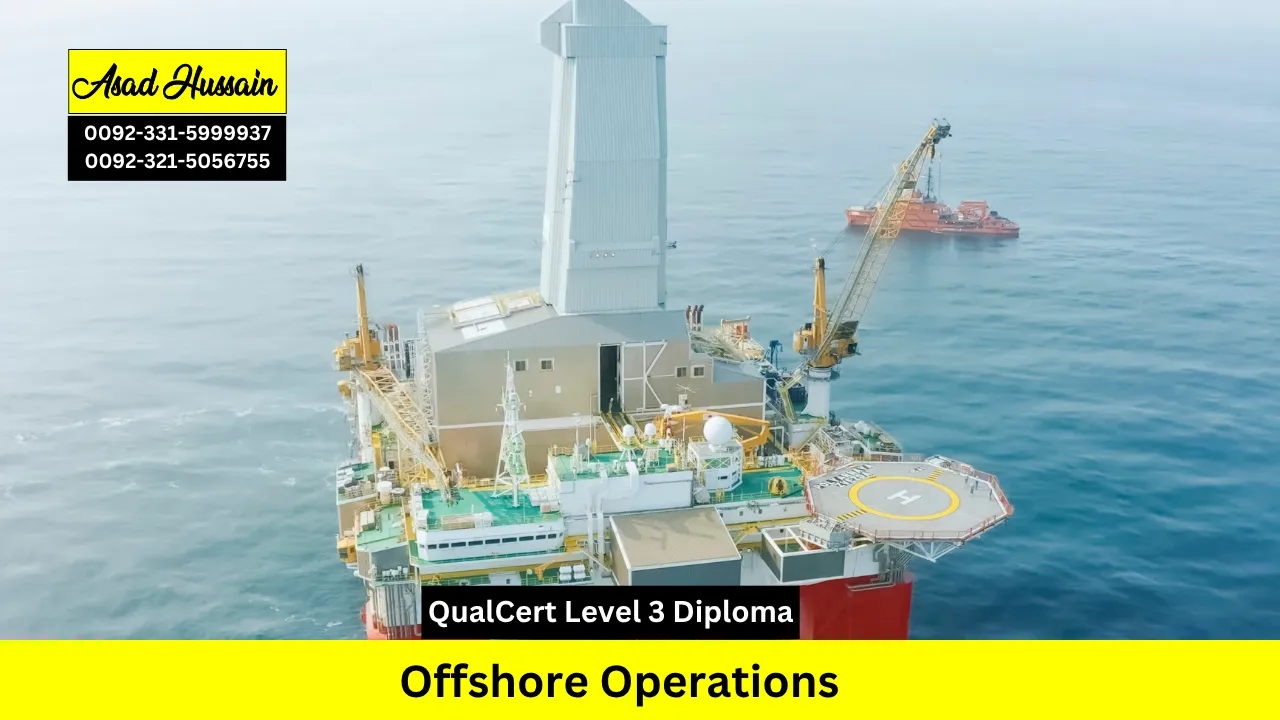
The QualCert Level 3 Diploma in Offshore Operations is a professional qualification designed to equip learners with foundational knowledge and practical skills required for safe and efficient offshore operations. This course focuses on essential principles of offshore work, including health, safety, and environmental (HSE) compliance, basic operational procedures, and emergency response, making it ideal for individuals starting their careers in offshore energy, maritime, or oil and gas industries.
Participants will gain a solid understanding of offshore workplace hazards, risk assessment, safety protocols, and the proper use of personal protective equipment (PPE). The program also covers communication, teamwork, and problem-solving skills necessary for effective collaboration in offshore environments. Through practical exercises, case studies, and scenario-based learning, learners develop the ability to handle routine offshore tasks safely and efficiently while minimizing operational risks.
This diploma is suitable for entry-level offshore workers, support staff, junior engineers, maritime crew, and individuals seeking to enter the offshore or oil and gas sectors. By completing this program, participants enhance their professional competence, workplace readiness, and understanding of international offshore safety standards. Graduates are prepared for operational roles onboard offshore platforms, vessels, or rigs, providing a solid foundation for further professional development and career progression in the global offshore industry.
Program Highlights
Study Units
To achieve,QualCert Level 3 Diploma in Offshore Operations; Candidates must Complete the 6 Manadatory Units.
- Introduction to Offshore Oil & Gas Industry
- Health, Safety and Environmental Protection in Offshore Operations
- Offshore Installation Systems and Equipment
- Marine Operations and Vessel Support
- Emergency Response and Risk Management
- Workplace Communication and Technical Reporting
Entry Requirements
- Age Requirements: Applicants must be at least 18 years old to enroll in this diploma program.
- Educational Background: A high school diploma or equivalent qualification is required.
- Language Proficiency: Learners should have basic to intermediate English skills to understand course materials, follow safety instructions, and complete assessments.
- Work Experience:No prior offshore or professional experience is strictly required, though individuals with experience in maritime, oil and gas, or industrial environments may benefit from practical exposure.
Please ensure all criteria are met to facilitate a smooth admission process into this professional program.
Learning Outcomes
- Introduction to Offshore Oil & Gas Industry
By the end of this unit, learners will be able to:
- Describe the history and global significance of the offshore oil and gas industry.
- Identify the main stages of offshore exploration, drilling, and production.
- Explain the roles of key stakeholders, including operators, contractors, and regulators.
- Recognize different types of offshore installations (fixed, floating, subsea).
- Outline the economic and environmental impact of offshore operations.
- Demonstrate awareness of current trends and future developments in offshore energy.
- Apply basic industry terminology in professional communication.
- Health, Safety and Environmental Protection in Offshore Operations
By the end of this unit, learners will be able to:
- Explain the importance of health, safety, and environmental (HSE) management offshore.
- Identify common offshore hazards and associated control measures.
- Apply safe working practices in line with international HSE standards.
- Demonstrate knowledge of personal protective equipment (PPE) requirements.
- Describe environmental protection measures for offshore operations.
- Recognize the role of regulatory frameworks and compliance in HSE.
- Contribute to a positive safety culture within offshore teams.
- Offshore Installation Systems and Equipment
By the end of this unit, learners will be able to:
- Identify the main structural components of offshore installations.
- Describe the function of drilling, production, and processing equipment.
- Explain the role of subsea systems in offshore operations.
- Demonstrate understanding of power generation and distribution offshore.
- Recognize maintenance requirements for offshore equipment.
- Apply basic fault-finding and reporting procedures.
- Relate equipment use to operational efficiency and safety.
- Marine Operations and Vessel Support
By the end of this unit, learners will be able to:
- Describe the role of support vessels in offshore operations.
- Explain the principles of offshore supply chain and logistics.
- Identify different types of offshore vessels and their functions.
- Demonstrate awareness of marine navigation and positioning systems.
- Recognize safe practices for vessel-to-platform operations.
- Explain the importance of weather forecasting in marine operations.
- Contribute to effective coordination between offshore installations and marine support.
- Emergency Response and Risk Management
By the end of this unit, learners will be able to:
- Identify potential emergency scenarios in offshore environments.
- Explain the principles of offshore emergency response planning.
- Demonstrate knowledge of evacuation and muster procedures.
- Recognize the role of firefighting, lifesaving, and survival equipment.
- Apply basic risk assessment techniques to offshore operations.
- Describe the responsibilities of emergency response teams.
- Contribute to drills and exercises designed to improve preparedness.
- Workplace Communication and Technical Reporting
By the end of this unit, learners will be able to:
- Demonstrate effective oral and written communication in offshore contexts.
- Use industry-specific terminology accurately in reports and discussions.
- Prepare clear and concise technical reports.
- Apply appropriate formats for incident and operational reporting.
- Recognize the importance of accurate record-keeping in compliance.
- Demonstrate teamwork and interpersonal communication skills.
- Use digital tools to support workplace communication and reporting.
Target Audience
The QualCert Level 6 Diploma in Offshore Operations is designed for professionals who are ready to take on advanced responsibilities in the offshore oil, gas, and energy sectors.
- School Leavers and Young Learners
- Individuals completing secondary education with an interest in technical careers.
- Learners seeking a vocational pathway instead of purely academic study.
- Students aiming to build employability skills in a global industry.
- Young people motivated by practical, hands-on learning.
- Those looking for a qualification that bridges into higher-level study.
- Learners interested in engineering, marine, or energy-related fields.
- Candidates who want to explore offshore careers early in their development.
- Aspiring Offshore Technicians
- Individuals aiming to work as entry-level offshore technicians.
- Learners who want to understand offshore installations and equipment.
- Candidates seeking technical knowledge before pursuing specialist training.
- Those interested in mechanical, electrical, or marine systems.
- Learners preparing for offshore apprenticeships or internships.
- Students who want to gain confidence in technical reporting and communication.
- Individuals motivated by structured, industry-relevant training.
- Career Changers and New Entrants
- Adults seeking a career transition into the offshore sector.
- Workers from related industries such as shipping, logistics, or construction.
- Individuals looking for a qualification that validates transferable skills.
- Candidates motivated by the global demand for offshore professionals.
- Learners seeking to improve employability in technical fields.
- Those wishing to gain a recognized qualification before applying offshore.
- Individuals eager to retrain in a high-growth, international industry.
- International Learners
- Learners outside the UK seeking globally recognized offshore qualifications.
- Candidates from regions with growing oil, gas, or renewable energy sectors.
- Students who want to meet international safety and operational standards.
- Individuals preparing for offshore work in multinational companies.
- Learners aiming to improve English and technical communication skills.
- Candidates seeking qualifications that support global mobility.
- Students motivated by international career opportunities.
- Safety and Compliance-Oriented Learners
- Individuals who want to understand offshore health and safety practices.
- Learners motivated by environmental protection and sustainability.
- Candidates preparing for roles where compliance is critical.
- Students aiming to contribute to a strong safety culture offshore.
- Individuals who value structured training in risk management.
- Learners seeking to meet employer or regulatory requirements.
- Candidates who want to demonstrate awareness of HSE standards.
- Technical and Vocational Learners
- Students with a background in vocational or technical education.
- Learners who prefer practical, applied learning approaches.
- Candidates interested in engineering, mechanics, or marine operations.
- Individuals preparing for higher-level technical qualifications.
- Learners motivated by structured, skills-based training.
- Students who want to strengthen their technical foundation.
- Candidates seeking to combine theory with workplace application.
- Employers and Workforce Development
- Employers seeking to upskill new offshore recruits.
- Companies aiming to standardize training across their workforce.
- Organizations preparing employees for international offshore projects.
- Employers who want staff trained in safety and compliance.
- Companies seeking a cost-effective entry-level qualification.
- Training providers delivering offshore-focused programmes.
- Workforce development teams supporting career progression.