Unlock New Opportunities with a Certified Level 3 Fire Risk Assessment Award
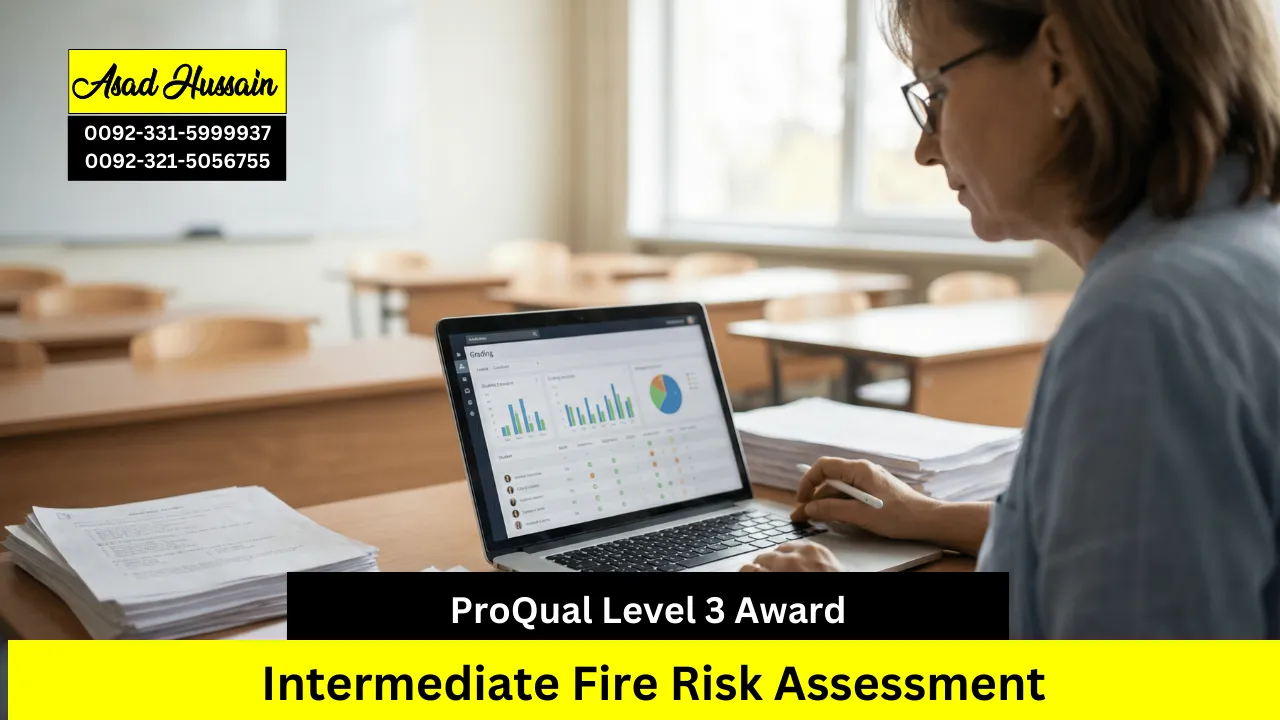
Fire risk assessment is a critical responsibility that ensures the safety of people, property, and communities by identifying and managing potential fire hazards before they escalate into emergencies . The ProQual Level 3 Award in Intermediate Fire Risk Assessment provides learners with the knowledge and practical skills to conduct competent fire risk assessments in medium-risk premises, bridging the gap between foundational awareness and advanced qualifications . This programme explores key legislation, fire safety principles, and structured risk evaluation techniques essential for professional practice.
Participants will examine key topics including the Regulatory Reform (Fire Safety) Order 2005, fire hazards and risk pathways, passive and active fire protection systems, and human behaviour in fire situations . The curriculum covers both the principles and practice of intermediate fire risk assessment through two mandatory units, enabling learners to identify hazards, evaluate risks, implement control measures, and produce clear, compliant reports aligned with PAS 79 and BS 8674 guidance .
Building upon this foundation, the ProQual Level 3 Award in Intermediate Fire Risk Assessment concludes with assessments that validate your competence through practical application, including conducting fire risk assessments in medium-risk buildings and communicating findings effectively with stakeholders . Upon successful completion, you will be prepared to pursue further certifications and diplomas to deepen your knowledge in advanced fire risk assessment or related fire safety disciplines . This qualification represents a significant step in your professional journey, positioning you as a competent practitioner capable of leading fire safety initiatives and contributing to safer workplaces
Program Highlights
Study Units
- Principles of the Intermediate Fire Risk Assessment
- Practice of the Intermediate Fire Risk Assessment
Entry Requirements
To enroll in the ProQual Level 3 Award in Intermediate Fire Risk Assessment, candidates should meet the following entry criteria:
- Experience: No prior fire risk assessment experience is required, but experience in health and safety, facilities management, construction, or related fields is beneficial
- Age: Learners must be at least 18 years old at the time of enrollment .
- Education: A basic secondary education (GCSE level or equivalent) is recommended . No prior fire risk assessment qualification is required, although an understanding of basic fire safety principles is beneficial . Related prior learning may include a Level 2 Award in Foundational Fire Risk Assessment, Level 2 Certificate in Health and Safety, or relevant workplace training in fire safety awareness .
- Language: Good command of English (written and spoken) is essential to understand course materials, complete assessments, and communicate effectively in workplace settings . Non-native speakers should have an IELTS 5.5 or equivalent.
Learning Outcomes
Principles of the Intermediate Fire Risk Assessment
- Understand legislation and guidance relevant to Intermediate Fire Risk Assessment
- Understand the principles of fire risk assessment for medium risk buildings
- Understand the control measured used to reduce the risk of and from fire
- Understand how to develop own and other’s knowledge of fire risk assessment
Practice of the Intermediate Fire Risk Assessment
- Prepare to carry out a fire risk assessment in a medium-risk building
- Conduct a fire risk assessment of a medium-risk building
- Communicate effectively with relevant stakeholders while carrying out a fire risk assessment of a medium-risk building
- Demonstrate appropriate and professional behaviour
Target Audience
The ProQual Level 3 Award in Intermediate Fire Risk Assessment is designed for professionals seeking to develop the competence required to conduct fire risk assessments in medium-risk premises independently.
Fire Safety Officers and Advisors
- Progress from basic fire safety awareness to conducting structured fire risk assessments
- Develop the ability to identify fire hazards and evaluate risks in medium-risk premises
- Learn to apply fire safety legislation including the Regulatory Reform (Fire Safety) Order 2005
- Master techniques for assessing both passive and active fire protection systems
- Produce clear, compliant assessment reports aligned with PAS 79 guidance
- Strengthen your professional credentials with a recognized Level 3 qualification
Health and Safety Practitioners
- Expand your health and safety expertise into specialist fire risk assessment
- Gain practical skills for evaluating fire hazards across diverse workplace environments
- Learn to recommend proportionate control measures that balance safety and operational needs
- Understand human behavior in fire and its impact on evacuation strategies
- Enhance your ability to advise organizations on fire safety compliance
- Position yourself as a fire safety specialist within your organization
Facilities Managers and Building Supervisors
- Take responsibility for fire safety compliance within your buildings
- Learn to conduct competent fire risk assessments for premises under your control
- Understand the interaction between building design, fire protection, and occupant safety
- Develop skills to prioritize and implement fire safety improvements
- Ensure your facilities meet legal requirements and protect occupants
- Enhance your professional development with specialist fire safety certification
Construction and Project Managers
- Understand fire risk assessment requirements during construction and refurbishment
- Learn to evaluate fire hazards associated with temporary works and building modifications
- Develop knowledge of fire protection systems and their maintenance requirements
- Ensure projects comply with fire safety regulations throughout all phases
- Coordinate effectively with fire safety consultants and enforcing authorities
- Add valuable fire risk expertise to your construction management practice
Housing Officers and Social Landlords
- Understand fire risk assessment requirements for residential buildings
- Learn to evaluate fire safety in blocks of flats, sheltered housing, and HMOs
- Develop knowledge of fire door inspection, means of escape, and compartmentation
- Ensure compliance with the Regulatory Reform Order and Building Safety Act
- Enhance your ability to manage fire safety for tenants and residents
- Protect your organization with competent, defensible fire risk assessments
Small Business Owners and Responsible Persons
- Fulfill your legal duties as the responsible person under fire safety legislation
- Learn to conduct your own fire risk assessments for smaller premises
- Understand fire hazards common in your type of business or organization
- Develop skills to implement appropriate fire safety measures cost-effectively
- Reduce reliance on external consultants for routine fire risk assessments
- Ensure your business meets its legal obligations and protects employees and visitors
Facilities Maintenance and Engineering Staff
- Apply your technical knowledge of building systems to fire risk assessment
- Understand how building services impact fire safety and risk levels
- Learn to evaluate fire detection, alarm, and emergency lighting systems
- Develop skills to assess means of escape and fire compartmentation integrity
- Contribute more effectively to your organization’s fire safety management
- Enhance your professional value with specialist fire risk certification
This Level 3 Award empowers you to become a competent practitioner in fire risk assessment, capable of evaluating medium-risk premises and providing authoritative fire safety guidance.