Master Your Future with Professional Diploma in Paediatrics
The OSHAA 30‑Hours Professional Diploma in Paediatrics is a comprehensive training program tailored for healthcare professionals who want to strengthen their expertise in child health and medical care. This course provides a structured approach to paediatric practices, covering essential topics such as patient safety, clinical procedures, and effective communication with families. Learners gain practical insights into paediatric healthcare, enabling them to build confidence in handling diverse medical scenarios while enhancing their professional credibility.
Throughout the program, participants are guided through interactive modules that emphasize real‑world applications of paediatric knowledge. The course is designed to be flexible and accessible, making it suitable for professionals at different stages of their careers. By completing this diploma, learners not only expand their understanding of paediatric medicine but also demonstrate their commitment to continuous professional development. The training highlights practical skills that can be applied immediately in healthcare settings, ensuring participants are well‑prepared for the demands of paediatric practice.
The OSHAA 30‑Hours Professional Diploma in Paediatrics also offers recognition through certifications and diplomas that validate the learner’s achievements. These credentials serve as a testament to the participant’s dedication and competence in paediatric healthcare. With a strong focus on professional growth, the course empowers learners to elevate their career prospects, enhance their medical knowledge, and stand out in the competitive healthcare industry.
Program Highlights
Study Units
- Introduction to Paediatrics and Child Health (3 Hours)
- Growth and Development Milestones in Children (4 Hours)
- Common Childhood Illnesses and Their Management (4 Hours)
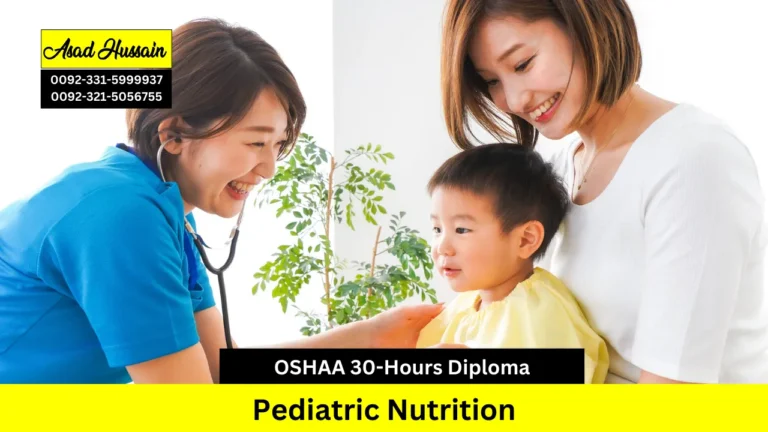
- Paediatric Nutrition and Health Promotion (3 Hours)
- Developmental Delays and Behavioural Disorders (4 Hours)
- Immunisation and Preventive Care in Children (5 Hours)
- Paediatric Health Assessment Techniques (3 Hours)
- Communication with Children and Families in Care Settings (2 Hours)
- Basic Paediatric First Aid and Emergency Response (2 Hours)
Entry Requirements
- Age Requirement: Applicants should be at least 18 years old to enroll in this diploma program.
- Educational Background: A minimum of secondary education is required. Candidates with prior certifications or diplomas in healthcare fields such as Diploma in Child Care, Certificate in Health & Safety, or Diploma in Nursing Assistance are encouraged, as these provide a strong foundation.
- Language Proficiency: Learners must have a good command of English to understand course materials and participate effectively in assessments.
- Work Experience: While not mandatory, prior experience in healthcare or childcare settings is considered beneficial and adds value to the learning journey.
This course is designed to be accessible yet professional, ensuring that motivated learners with the right background can excel. Meeting these entry requirements helps participants gain maximum benefit from the OSHAA 30‑Hours Professional Diploma in Paediatrics and positions them for success in their healthcare careers.
Learning Outcomes
Introduction to Paediatrics and Child Health (3 Hours)
- Understand the scope and importance of paediatric healthcare
- Identify the key differences between child and adult medical care
- Recognise the roles and responsibilities of professionals in paediatric settings
Growth and Development Milestones in Children (4 Hours)
- Describe the physical, cognitive, and emotional stages of child development
- Identify expected milestones across different age groups
- Recognise signs of developmental delay and the importance of early intervention
Common Childhood Illnesses and Their Management (4 Hours)
- Identify symptoms and causes of frequent paediatric illnesses such as respiratory infections, fever, and gastrointestinal issues
- Understand basic approaches to managing minor and moderate illnesses in children
- Recognise when referral or further medical attention is necessary
Paediatric Nutrition and Health Promotion (3 Hours)
- Understand nutritional needs at various stages of childhood
- Promote healthy eating habits and prevent common dietary deficiencies
- Support families in making informed nutritional choices for children
Developmental Delays and Behavioural Disorders (4 Hours)
- Recognise common developmental and behavioural disorders such as autism spectrum conditions and ADHD
- Understand the impact of these conditions on a child’s development and daily life
- Explore supportive strategies and referral pathways for further care
Immunisation and Preventive Care in Children (5 Hours)
- Understand the UK immunisation schedule and its importance in public health
- Explain the role of vaccines in preventing serious childhood diseases
- Educate families about vaccine safety and address common concerns
Paediatric Health Assessment Techniques (3 Hours)
- Learn how to perform basic health assessments such as checking temperature, pulse, and respiratory rate
- Understand the principles of child-friendly examination practices
- Recognise the signs of health concerns requiring further investigation
Communication with Children and Families in Care Settings (2 Hours)
- Apply age-appropriate communication techniques in paediatric contexts
- Build trust and rapport with children and their caregivers
- Handle sensitive conversations with empathy and clarity
Basic Paediatric First Aid and Emergency Response (2 Hours)
- Perform essential paediatric first aid, including CPR and management of choking
- Respond appropriately to common emergencies such as falls, allergic reactions, and burns
- Understand safety measures and emergency procedures in child care environments
Target Audience
The OSHAA 30‑Hours Professional Diploma in Paediatrics is designed for individuals who are passionate about child health and eager to strengthen their professional skills in paediatric care. This program is suitable for a wide range of learners who want to expand their knowledge, gain practical expertise, and enhance their career prospects in healthcare and childcare environments.
Healthcare Professionals
- Nurses working in hospitals or clinics
- Medical assistants supporting paediatricians
- Allied health workers involved in child care
- Community health practitioners
- Professionals seeking to broaden their paediatric knowledge
Childcare and Early Years Practitioners
- Nursery staff and early years educators
- Childcare providers in daycare settings
- Nannies and caregivers responsible for young children
- School support staff working with children
- Individuals aiming to improve child health awareness
Social and Community Workers
- Social workers supporting families and children
- Community outreach staff in health programs
- NGO workers focusing on child welfare
- Family support coordinators
- Volunteers engaged in child health initiatives
Parents and Guardians
- Parents wanting to understand child health better
- Guardians responsible for children’s wellbeing
- Foster carers managing diverse child needs
- Individuals interested in paediatric first aid
- Families seeking practical knowledge in child development
Students and Learners in Health Fields
- Learners with certificates in health and safety
- Holders of diplomas in child care or nursing assistance
- Students pursuing healthcare‑related certifications
- Individuals preparing for roles in paediatric support
- Those seeking recognition through professional diplomas
Career Changers and Aspiring Professionals
- Individuals transitioning into healthcare roles
- Professionals from related fields seeking paediatric expertise
- Career changers motivated by child welfare
- Those aiming to strengthen their CV with healthcare credentials
- Learners committed to professional development
This diploma is crafted to be inclusive and practical, ensuring that anyone with a genuine interest in paediatric healthcare can benefit. By meeting the entry requirements and engaging with the modules, participants gain valuable skills that empower them to make a meaningful impact in child health and wellbeing.