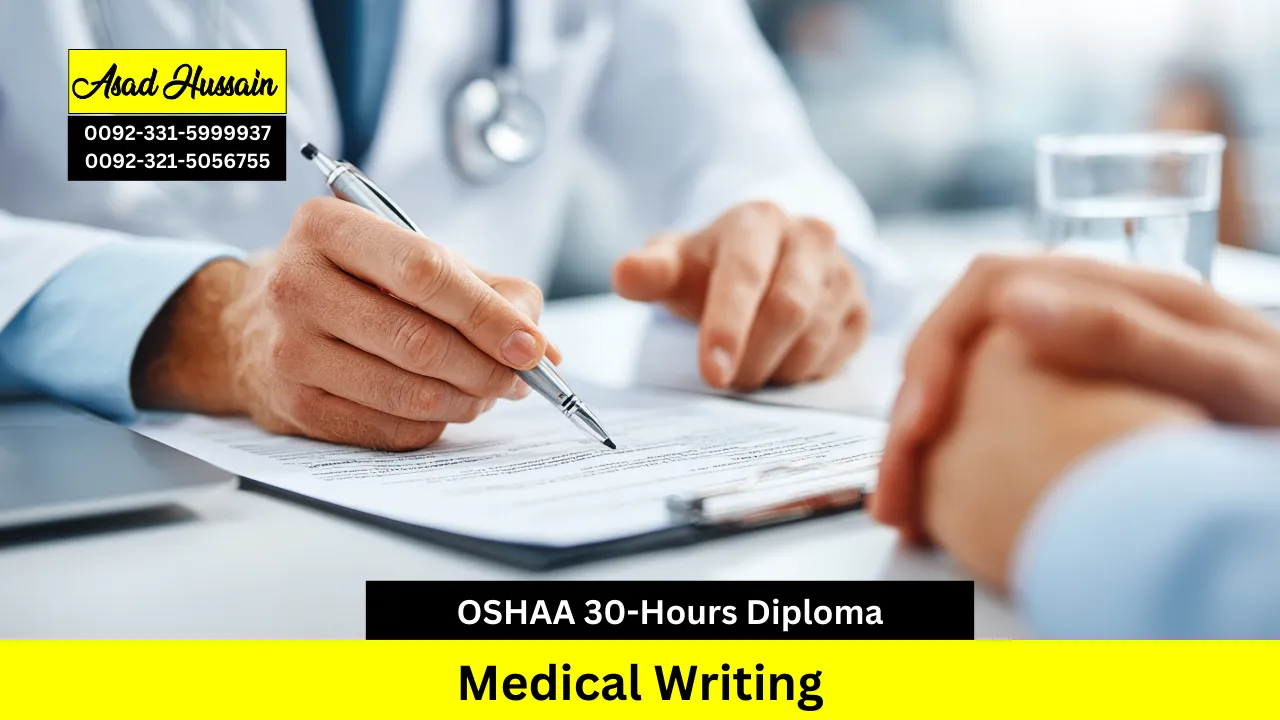
Unlock High-Impact Medical Writing Skills with Diploma
The OSHAA 30-Hours Professional Diploma in Medical Writing is designed to provide learners with a clear, structured introduction to the principles and practices of medical writing across healthcare and life sciences. This course builds essential knowledge in medical terminology, document structure, accuracy, and ethical communication. Learners develop an understanding of how complex medical and scientific information is transformed into clear, audience-appropriate content. While this course is not Ofqual regulated, it is aligned with industry expectations and professional standards, making it suitable for individuals seeking practical skills for real-world medical and healthcare communication environments.
Throughout the course, learners gain hands-on insight into different types of medical documents, including educational materials, clinical content, and healthcare-related publications. Emphasis is placed on clarity, consistency, compliance awareness, and responsible handling of medical information. The course supports skill development in research interpretation, data presentation, and professional writing style. Completion of this diploma can strengthen a learner’s professional profile and supports progression toward various certifications and diplomas relevant to medical writing, healthcare communication, regulatory documentation, and scientific content development.
OSHAA 30-Hours Professional Diploma in Medical Writing is structured to meet the needs of both new and developing medical writers seeking confidence and competence in this specialized field. The course promotes ethical writing practices, attention to detail, and effective communication tailored to healthcare audiences. Learners completing this program enhance their ability to contribute to medical, pharmaceutical, and health-related organizations. The knowledge and skills gained also support recognition within professional environments where additional certifications and diplomas in medical writing and healthcare communication are valued.
Program Highlights
Study Units
- Introduction to Medical Writing and Industry Applications (3 hours)
- Core Principles of Medical Language and Terminology (5 hours)
- Writing for Clinical Research: Protocols, Reports, and Abstracts (4 hours)
- Regulatory Writing: Structure, Guidelines, and Submissions (4 hours)
- Scientific Writing for Journals and Peer-Reviewed Publications (5 hours)
- Writing Patient Education and Public Health Materials (3 hours)
- Medical Journalism and Health Content for Media (4 hours)
- Referencing Systems, Literature Reviews, and Source Evaluation (2 hours)
The OSHAA 30-Hours Professional Diploma in Medical Writing is designed to be accessible to individuals who are motivated to build skills in medical and scientific communication. The course welcomes learners from diverse educational and professional backgrounds, with requirements aimed at ensuring readiness for independent study and practical application.
- Age Requirement: Participants should be at least 18 years old to ensure maturity and readiness for professional learning.
- Educational Background: A minimum of secondary education is recommended. Learners with related diplomas or certificates in life sciences, healthcare, pharmacy, nursing, scientific writing, or health communication will find the course particularly beneficial.
- Language Proficiency: A good command of English is required, as all course materials, assessments, and communications are delivered in English.
- Work Experience: Previous experience in healthcare, writing, research, or scientific environments is not mandatory, but any exposure to medical documentation or healthcare settings is advantageous.
This course is suitable for motivated individuals seeking to enhance their knowledge and practical skills in medical writing, providing a solid foundation for professional growth and supporting progression toward related certifications and diplomas in healthcare communication and scientific writing.
Learning Outcomes
Introduction to Medical Writing and Industry Applications (3 Hours)
- Understand the scope and importance of medical writing across healthcare sectors
- Identify various types of medical documents used in clinical, regulatory, and educational settings
- Recognise the key roles medical writers play in pharmaceutical, research, and public health environments
- Explore career pathways and industry expectations in medical writing
Core Principles of Medical Language and Terminology (5 Hours)
- Develop a solid foundation in medical vocabulary and scientific language
- Accurately interpret and use medical terms in different writing contexts
- Apply appropriate language styles based on target audience and purpose
- Understand the importance of clarity, precision, and consistency in medical communication
Writing for Clinical Research: Protocols, Reports, and Abstracts (4 Hours)
- Learn the structure and components of clinical research documents
- Draft clinical protocols, case study summaries, and trial reports using accepted formats
- Understand the process of translating clinical data into reader-friendly content
- Identify ethical considerations in clinical research reporting
Regulatory Writing: Structure, Guidelines, and Submissions (4 Hours)
- Understand the types of documents required in regulatory submissions
- Familiarise with global regulatory bodies and key documentation standards
- Learn to structure and prepare documents such as Investigator’s Brochures and Summary of Product Characteristics
- Apply compliance and accuracy in line with regulatory expectations
Scientific Writing for Journals and Peer-Reviewed Publications (5 Hours)
- Understand the structure of scientific manuscripts including IMRAD format
- Learn techniques for writing clear abstracts, introductions, and discussion sections
- Follow author guidelines for journal submission and peer-review requirements
- Apply referencing styles and citation practices used in scientific literature
Writing Patient Education and Public Health Materials (3 Hours)
- Learn how to simplify complex medical information for public understanding
- Adapt tone and style for non-specialist audiences, ensuring clarity and accessibility
- Create educational materials that promote informed health decisions
- Apply health literacy principles in document design and content development
Medical Journalism and Health Content for Media (4 Hours)
- Understand the principles of health communication in journalism and digital media
- Write compelling, factual, and balanced articles on medical topics for public audiences
- Recognise the role of media ethics, source credibility, and fact-checking in health reporting
- Explore content creation for blogs, magazines, websites, and social platforms
Referencing Systems, Literature Reviews, and Source Evaluation (2 Hours)
- Learn to conduct targeted literature searches using academic databases
- Evaluate the reliability and relevance of scientific sources
- Apply citation and referencing formats such as Vancouver, APA, and MLA
- Understand how to summarise and integrate evidence into medical writing effectively
Target Audience
This course is designed for individuals who want to develop professional skills in medical writing, gain confidence in creating accurate healthcare content, and enhance their career in the healthcare, scientific, or communication sectors.
Aspiring Medical Writers
- Individuals aiming to start a career in medical writing
- Learners interested in creating content for clinical, regulatory, or educational purposes
- People seeking to gain expertise in scientific and medical terminology
- Those who want to develop skills in drafting accurate and clear medical documents
- Learners looking to understand the ethical and professional standards of medical writing
Healthcare and Life Sciences Professionals
- Doctors, nurses, and allied health professionals wanting to expand communication skills
- Pharmacists and clinical researchers interested in documentation and reporting
- Lab technicians or scientific staff aiming to present data clearly and professionally
- Professionals looking to translate technical healthcare information for varied audiences
- Individuals working in hospitals, clinics, or research organizations
Content Creators and Health Communicators
- Bloggers, journalists, or writers focusing on health and wellness topics
- Individuals creating educational or awareness materials for public audiences
- Health educators seeking to simplify complex medical concepts
- Professionals managing digital or print health content
- People looking to improve accuracy, clarity, and readability of health information
Students and Graduates in Science or Healthcare
- Recent graduates in life sciences, medicine, pharmacy, or allied health fields
- Students wanting to strengthen writing and communication skills in medical contexts
- Individuals aiming to complement academic knowledge with practical writing skills
- Learners preparing for roles in healthcare communication or scientific publishing
- Those seeking a recognized credential to support career readiness
Professionals Looking to Upskill
- Individuals already in healthcare, wellness, or scientific roles seeking additional skills
- Those aiming to create reports, patient information, or research summaries
- Professionals who want to stay updated with medical writing best practices
- Learners looking to enhance employability in clinical, regulatory, or public health sectors
- People seeking practical skills applicable in multiple healthcare and communication settings
This course is ideal for anyone motivated to develop professional medical writing expertise, offering practical skills, industry knowledge, and confidence to succeed in diverse healthcare and scientific communication roles.