Empower Young Learners with Diploma in Early Childhood Developmental Language Disorder
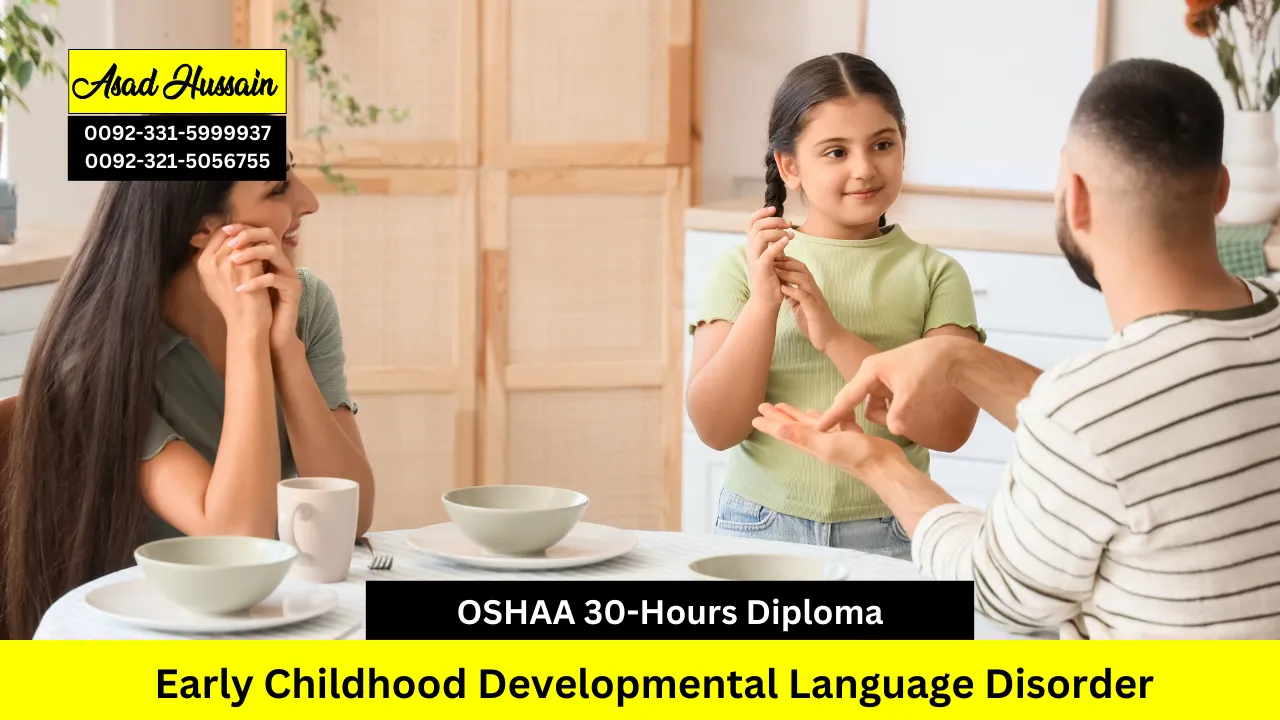
The OSHAA 30-Hours Professional Diploma in Early Childhood Developmental Language Disorder is a specialised course designed to provide learners with a deep understanding of language development challenges in young children. The programme covers the identification, assessment, and intervention strategies for children with developmental language disorders, focusing on enhancing communication, cognitive growth, and social skills. Learners will explore the causes, risk factors, and early signs of language delays, along with evidence-based approaches to support language acquisition and development in diverse early childhood settings.
This course combines theoretical knowledge with practical applications to equip learners with actionable skills in early intervention and child-focused support. Topics include speech and language milestones, assessment techniques, individualised education strategies, and collaborative approaches involving parents, educators, and therapists. Participants will also engage with case studies, role-playing exercises, and scenario-based learning to develop confidence in recognising communication difficulties and implementing strategies that promote effective learning and social interaction in young children.
OSHAA 30-Hours Professional Diploma in Early Childhood Developmental Language Disorder prepares learners to apply practical skills in educational, healthcare, and childcare settings. The programme provides knowledge that aligns with professional certifications and diplomas in early childhood development, speech and language support, and special needs education. By completing this course, participants gain the expertise to identify language development challenges early, implement intervention plans, support children’s communication growth, and collaborate effectively with families and professionals to improve developmental outcomes.
Program Highlights
Study Units
- Introduction to Developmental Language Disorder (3 hours)
- Typical Language Development in Early Childhood (6 hours)
- Core Features and Indicators of Developmental Language Disorder (4 hours)
- Assessment Tools and Screening Techniques for DLD (4 hours)
- Cognitive, Social, and Emotional Impacts of Language Difficulties (3 hours)
- Evidence-Based Intervention Strategies for Early Support (4 hours)
- Supporting Communication in Educational and Home Settings (3 hours)
- Collaborative Roles of Educators, Therapists, and Families (3 hours)
The OSHAA 30-Hours Professional Diploma in Early Childhood Developmental Language Disorder is designed to be accessible while ensuring learners can fully benefit from the course content.
- Age Requirement: Learners should be at least 18 years old to ensure readiness for professional learning and application in childcare and educational settings.
- Educational Background: A basic level of education is recommended. Learners with related diplomas or certificates in early childhood education, special needs education, speech and language therapy, childcare, or developmental psychology may find it particularly beneficial.
- Language Proficiency: Learners should have a good command of English to comprehend course materials, participate in discussions, and complete assessments effectively.
- Work Experience: Prior professional experience in childcare, education, therapy, or early intervention is not mandatory, but it can help learners relate course concepts to practical settings.
Overall, these entry requirements are designed to make the course inclusive while ensuring learners gain the knowledge and practical skills necessary to support children with developmental language disorders and enhance communication and learning outcomes.
Learning Outcomes
Introduction to Developmental Language Disorder (3 Hours)
- Understand the definition and classification of Developmental Language Disorder (DLD)
- Explore the prevalence and significance of DLD in early childhood
- Distinguish DLD from other language and developmental conditions
- Recognise the long-term implications of undiagnosed or unsupported DLD
Typical Language Development in Early Childhood (6 Hours)
- Identify key milestones in receptive and expressive language development
- Understand the stages of speech and language acquisition from birth to age five
- Differentiate between typical variation and signs of delay in language development
- Recognise the role of environment, interaction, and play in language learning
Core Features and Indicators of Developmental Language Disorder (4 Hours)
- Identify common characteristics and patterns seen in children with DLD
- Understand the differences in expressive and receptive language difficulties
- Recognise early warning signs across various developmental stages
- Explore co-occurring conditions and how they relate to DLD
Assessment Tools and Screening Techniques for DLD (4 Hours)
- Become familiar with commonly used screening and diagnostic tools
- Understand the process of early identification and referral pathways
- Learn how to interpret assessment findings to support intervention planning
- Develop awareness of observation techniques in naturalistic settings
Cognitive, Social, and Emotional Impacts of Language Difficulties (3 Hours)
- Explore the relationship between language and cognitive development
- Understand how DLD can affect emotional regulation and social interaction
- Recognise behavioural responses that may mask language difficulties
- Develop approaches to support children’s social inclusion and self-esteem
Evidence-Based Intervention Strategies for Early Support (4 Hours)
- Learn intervention approaches grounded in current research and best practice
- Understand the importance of early and consistent language support
- Explore strategies for enhancing vocabulary, sentence structure, and conversation
- Adapt interventions to suit individual communication profiles
Supporting Communication in Educational and Home Settings (3 Hours)
- Identify practical methods to foster language development in everyday routines
- Develop inclusive communication strategies in classrooms and homes
- Learn how to create language-rich environments for children with DLD
- Support parents and carers in encouraging interaction and language use
Collaborative Roles of Educators, Therapists, and Families (3 Hours)
- Understand the importance of a multidisciplinary approach to DLD support
- Define the roles and responsibilities of educators, speech therapists, and families
- Explore methods for effective collaboration and consistent communication
- Support the implementation of shared strategies across settings
Target Audience
This course is designed for This course is designed for individuals who want to gain professional knowledge and practical skills in supporting children with Developmental Language Disorder (DLD). It equips learners with evidence-based strategies, assessment techniques, and intervention approaches to improve communication, learning, and social outcomes in early childhood settings.
Educators and Early Childhood Teachers
- Teachers working with preschool and primary-age children
- Educators aiming to identify and support language delays in classrooms
- Staff developing inclusive learning environments for children with communication difficulties
- Teachers incorporating language development strategies into daily lessons
- Professionals planning early intervention activities for children with DLD
- Classroom aides assisting in speech and language support
Speech and Language Therapists
- Practitioners specialising in communication and language development
- Therapists looking to enhance early childhood intervention skills
- Professionals assessing and designing language support programmes
- Staff implementing evidence-based therapy approaches for DLD
- Therapists collaborating with educators and families to maximise outcomes
- Professionals monitoring developmental progress and adapting strategies
Childcare Professionals and Caregivers
- Nursery and daycare staff supporting early language development
- Caregivers assisting children with communication challenges
- Staff creating language-rich environments at home and in care settings
- Professionals implementing daily routines that encourage speech and interaction
- Caregivers promoting early intervention strategies for developmental delays
- Support staff enhancing social and emotional development through communication
Parents and Family Members
- Parents seeking practical guidance on supporting their child’s language growth
- Family members wanting to recognise early signs of language delays
- Caregivers learning strategies to encourage conversation and vocabulary development
- Guardians aiming to collaborate with educators and therapists effectively
- Families interested in creating nurturing, communication-friendly home environments
- Individuals supporting children’s self-esteem and social inclusion through language
Students and Aspiring Child Development Specialists
- Students in early childhood education, special needs, or developmental psychology
- Learners seeking professional diplomas and certifications in childhood language support
- Individuals aiming to build practical skills for future educational or therapeutic roles
- Aspiring specialists exploring evidence-based strategies for DLD intervention
- Students developing understanding of assessment, observation, and intervention techniques
- Learners preparing for careers in education, therapy, or childcare
Community and Health Support Professionals
- Community health workers supporting early childhood development programmes
- Staff raising awareness about developmental language disorders
- Professionals providing guidance to families in community or healthcare settings
- Volunteers assisting in early intervention initiatives for children with DLD
- Individuals coordinating multidisciplinary approaches between educators, therapists, and families
- Professionals promoting social inclusion and developmental support in local communities
Overall, this course is ideal for anyone committed to supporting children with developmental language challenges, enhancing early intervention skills, and positively impacting communication, learning, and developmental outcomes in early childhood settings.