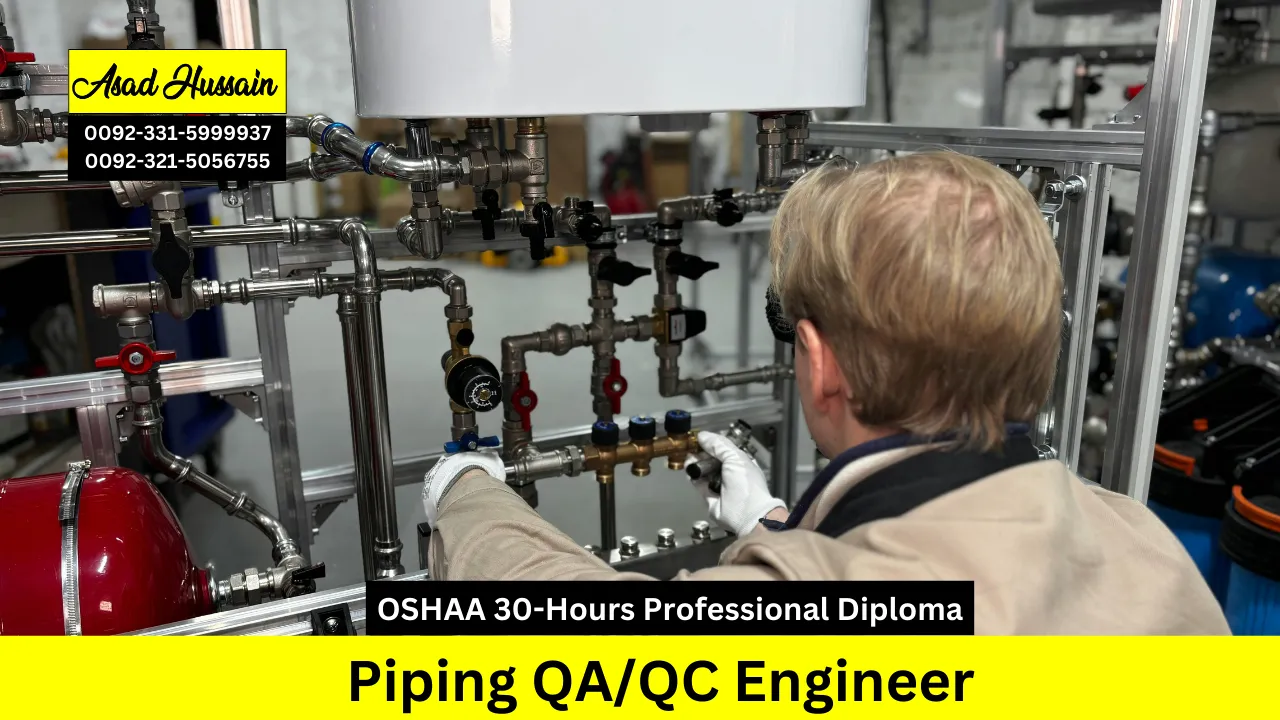
Advance Your Engineering Career with OSHAA 30-Hours Professional Diploma in Piping QA/QC Engineer
The OSHAA 30-Hours Professional Diploma in Piping QA/QC Engineer is a professionally structured training programme designed to develop strong quality assurance and quality control knowledge specific to piping engineering projects. This course introduces learners to core QA/QC principles, inspection workflows, piping materials, fabrication practices, and compliance requirements used in industrial environments. It highlights the importance of quality systems in achieving safe, efficient, and reliable piping installations. Through a practical and structured approach, participants gain clarity on QA/QC responsibilities and quality-focused decision-making within engineering projects.
This diploma provides in-depth understanding of piping engineering processes, inspection techniques, welding awareness, international standards application, and quality documentation control. Learners gain practical insight into how QA/QC activities are planned, implemented, and monitored throughout fabrication, installation, and commissioning stages. The programme complements professional certifications and diplomas related to piping inspection, mechanical engineering, industrial quality management, and engineering supervision. Emphasis is placed on applied knowledge, documentation accuracy, and consistent quality monitoring to support effective project execution.
OSHAA 30-Hours Professional Diploma in Piping QA/QC Engineer is designed to strengthen professional competence and technical credibility through focused learning outcomes. The course aligns well with other certifications and diplomas in QA/QC engineering, piping quality systems, inspection coordination, and industrial project quality control. It promotes structured quality practices, compliance awareness, and professional responsibility. This diploma supports individuals seeking to enhance performance, build confidence, and contribute effectively to quality-driven piping engineering projects across diverse industrial sectors.
Program Highlights
- Introduction to Piping QA/QC Engineering (2 Hours)
- Piping Materials, Components, and Fabrication Methods (3 Hours)
- International Codes and Standards: ASME, API, ISO (4 Hours)
- Welding Processes and Procedure Qualification (4 Hours)
- Non-Destructive Testing (NDT) Techniques and Applications (4 Hours)
- Piping Isometrics and Technical Drawing Interpretation (3 Hours)
- Inspection and Test Plans (ITPs) in Piping Projects (5 Hours)
- Identification of Fabrication Defects and Site Quality Issues (2 Hours)
- QA/QC Documentation: WPS, PQR, NDT Reports, and Records (3 Hours)
To ensure participants gain maximum value from the OSHAA 30-Hours Professional Diploma in Piping QA/QC Engineer, the following entry requirements are recommended:
- Age Requirement: Applicants should generally be at least 18 years of age to ensure maturity and readiness for technical and professional learning environments.
- Educational Background: A basic educational foundation is preferred, such as a diploma or certificate in mechanical engineering, piping engineering, industrial engineering, welding technology, or quality inspection. Candidates holding vocational diplomas, technical certificates, or industry-recognised QA/QC or piping-related diplomas are also well suited for this course.
- Language Proficiency: Learners should have a reasonable level of English proficiency, as course materials, technical terminology, and documentation are delivered and discussed in English.
- Work Experience: While prior work experience is not mandatory, individuals with practical exposure to piping projects, fabrication yards, construction sites, welding operations, inspection roles, or industrial maintenance will benefit from a stronger contextual understanding of QA/QC practices.
Learning Outcomes
Introduction to Piping QA/QC Engineering (2 Hours)
- Understand the role and responsibilities of a QA/QC engineer in piping projects
- Recognise the importance of quality assurance and quality control in industrial environments
- Identify the stages of quality management throughout the piping lifecycle
- Gain familiarity with key QA/QC terminology and workflow
Piping Materials, Components, and Fabrication Methods (3 Hours)
- Identify common piping materials and their characteristics
- Understand the function of piping components such as flanges, elbows, valves, and gaskets
- Explain various fabrication processes including cutting, welding, and bending
- Assess how material selection impacts performance, durability, and quality
International Codes and Standards: ASME, API, ISO (4 Hours)
- Interpret the structure and application of international piping standards
- Apply ASME, API, and ISO codes in quality control and inspection processes
- Understand compliance requirements in different industrial contexts
- Evaluate materials and fabrication work against global quality benchmarks
Welding Processes and Procedure Qualification (4 Hours)
- Understand various welding techniques used in piping fabrication
- Interpret Welding Procedure Specifications (WPS) and Procedure Qualification Records (PQR)
- Identify weld defects and understand their causes and implications
- Ensure welding compliance with applicable codes and project requirements
Non-Destructive Testing (NDT) Techniques and Applications (4 Hours)
- Explain the principles and objectives of NDT in piping systems
- Identify common NDT methods such as RT, UT, MT, and PT
- Select appropriate NDT techniques based on material, weld type, and defect probability
- Interpret NDT results for quality decision-making and compliance reporting
Piping Isometrics and Technical Drawing Interpretation (3 Hours)
- Read and interpret piping isometric drawings and general arrangement diagrams
- Identify key elements such as line numbers, elevations, weld joints, and material codes
- Correlate drawings with physical installations and inspection requirements
- Use technical drawings for planning and executing QA/QC activities
Inspection and Test Plans (ITPs) in Piping Projects (5 Hours)
- Understand the purpose and structure of ITPs in quality management
- Develop ITPs based on project scope, codes, and client specifications
- Define hold points, witness points, and control stages within the inspection cycle
- Coordinate with contractors, inspectors, and clients to implement ITPs effectively
Identification of Fabrication Defects and Site Quality Issues (2 Hours)
- Recognise common fabrication and site-related quality defects
- Apply inspection techniques to detect issues such as misalignment, corrosion, and improper welds
- Assess defect severity and recommend corrective actions
- Contribute to root cause analysis and quality improvement strategies
QA/QC Documentation: WPS, PQR, NDT Reports, and Records (3 Hours)
- Understand the purpose of quality documentation in piping projects
- Accurately review and verify WPS, PQR, NDT reports, and material certificates
- Maintain traceable and audit-ready records for inspections and tests
- Support project handover and compliance audits through effective documentation practices
The OSHAA 30-Hours Professional Diploma in Piping QA/QC Engineer is designed for individuals who wish to build strong practical knowledge and professional competence in quality assurance and quality control within piping and industrial projects.
Aspiring QA/QC and Piping Professionals
- Individuals aiming to start a career in piping quality assurance and quality control
- Fresh graduates seeking industry-relevant technical exposure
- Trainees interested in understanding piping inspection and quality workflows
- Learners planning to work on industrial or construction projects
- Candidates looking to strengthen their technical foundation in piping QA/QC
Mechanical and Piping Engineering Background Holders
- Diploma or degree holders in mechanical or piping engineering
- Technical graduates seeking practical QA/QC applications
- Engineering students preparing for site-based responsibilities
- Professionals wanting to align engineering knowledge with quality systems
- Individuals interested in code-based inspection and compliance
Welding, Fabrication, and Site Personnel
- Welding technicians seeking deeper inspection knowledge
- Fabrication supervisors involved in piping assembly
- Site personnel responsible for installation quality
- Workers aiming to understand defect identification and prevention
- Professionals wanting to improve coordination with QA/QC teams
Quality, Inspection, and Compliance Staff
- Existing QC inspectors expanding into piping projects
- QA/QC staff seeking structured knowledge of standards and procedures
- Professionals involved in inspection documentation and reporting
- Personnel responsible for inspection and test plans
- Individuals supporting audits and quality verification processes
Construction, Oil & Gas, and Industrial Project Teams
- Team members working on industrial construction sites
- Professionals involved in oil, gas, power, or petrochemical projects
- Site engineers coordinating fabrication and erection activities
- Project staff seeking quality-focused decision-making skills
- Individuals aiming to improve safety, reliability, and compliance
Career Switchers and Skill Enhancement Seekers
- Professionals transitioning into QA/QC engineering roles
- Individuals upgrading technical skills for better project involvement
- Workers seeking internationally aligned piping quality knowledge
- Learners aiming to enhance professional credibility
- Candidates interested in long-term industrial career growth