Master Piping Quality with OSHAA 30-Hours Professional Diploma in QC Piping Inspector
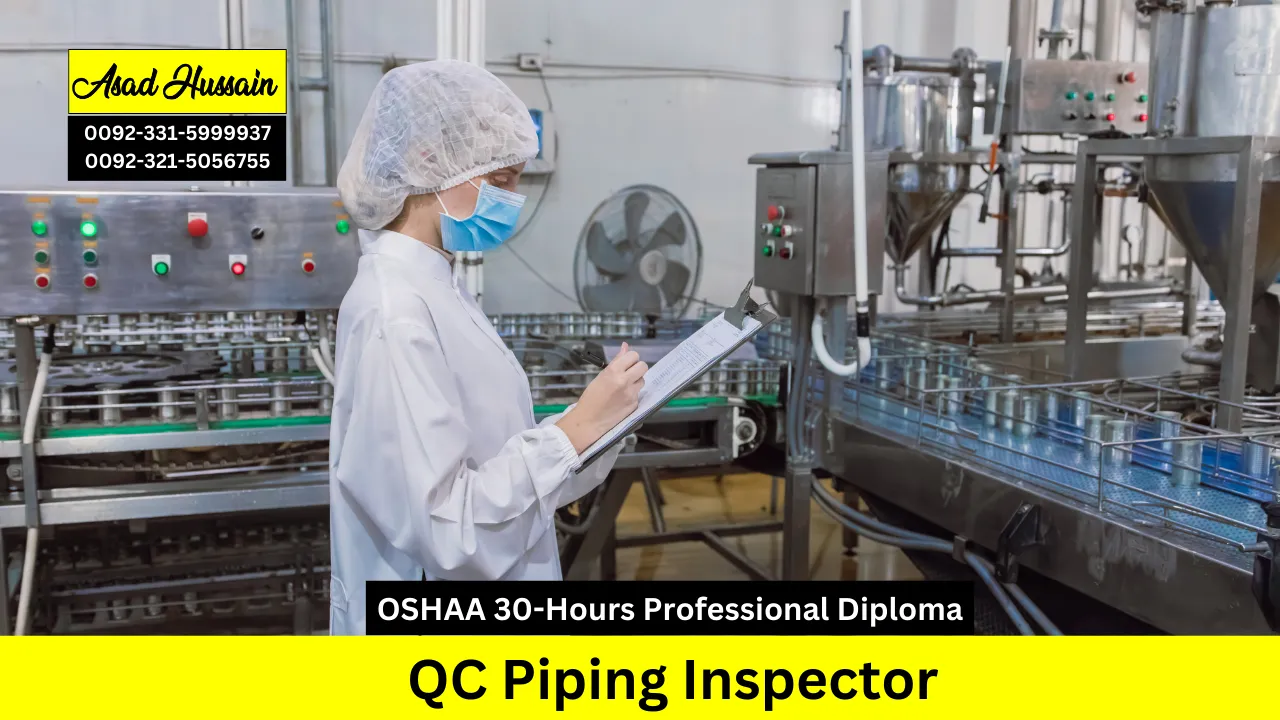
The OSHAA 30-Hours Professional Diploma in QC Piping Inspector is a professionally structured training programme developed to build strong quality control awareness and inspection competence in piping projects. This course introduces learners to essential QC principles, piping inspection practices, material verification, and compliance responsibilities within industrial environments. It highlights the role of quality control in maintaining safety, reliability, and performance of piping systems. Through focused learning, participants gain a clear understanding of inspection duties, industry expectations, and the importance of consistent quality monitoring across construction and engineering projects.
This diploma provides practical knowledge of piping materials, components, fabrication methods, welding fundamentals, and inspection techniques used during project execution. Learners develop the ability to recognise common piping defects, understand inspection checkpoints, and support quality control activities on-site. The programme complements existing certifications and professional diplomas related to piping inspection, mechanical inspection, industrial quality control, and engineering supervision. Emphasis is placed on practical application, documentation accuracy, and adherence to project specifications to support effective quality performance.
OSHAA 30-Hours Professional Diploma in QC Piping Inspector is designed to strengthen professional capability through applied inspection knowledge and quality-focused skills. The course aligns well with other certifications and diplomas in QC inspection, piping supervision, welding inspection support, and industrial quality management. It promotes structured inspection practices, proper reporting, and compliance awareness. This diploma supports individuals seeking to enhance professional credibility, improve inspection confidence, and contribute effectively to quality-driven piping projects in demanding industrial environments..
Program Highlights
- Introduction to QC Roles and Responsibilities in Piping Projects (2 Hours)
- Piping Materials, Components, and Fabrication Practices (3 Hours)
- International Codes and Standards: ASME, API, ISO (4 Hours)
- Welding Fundamentals and Visual Weld Inspection (6 Hours)
- Non-Destructive Testing (NDT) Methods and Field Applications (4 Hours)
- Reading and Interpreting Piping Isometrics and Layout Drawings (6 Hours)
- Inspection Procedures During Fabrication and Erection (3 Hours)
- Identification and Classification of Common Piping Defects (2 Hours)
To ensure effective learning and professional engagement, the following entry requirements apply to the OSHAA 30-Hours Professional Diploma in QC Piping Inspector:
- Age Requirement: Learners should be at least 18 years of age, demonstrating readiness for professional-level training and quality control responsibilities in industrial piping environments.
- Educational Background: A basic educational qualification is recommended, preferably supported by related diplomas or certificates in mechanical engineering, piping technology, welding, fabrication, industrial quality control, inspection practices, or engineering safety disciplines.
- Language Proficiency: Learners should have a functional level of English proficiency to understand technical terminology, inspection documentation, and course materials effectively.
- Work Experience: Prior or current experience in piping installation, welding, fabrication, construction, maintenance, inspection, or industrial project environments is advantageous and helps learners better relate theoretical concepts to practical QC inspection activities.
Learning Outcomes
Introduction to QC Roles and Responsibilities in Piping Projects (2 Hours)
- Understand the key responsibilities of a QC piping inspector in industrial projects
- Recognise the role of quality control in ensuring project safety, efficiency, and compliance
- Identify inspection stages across piping fabrication, installation, and commissioning
- Become familiar with communication flow within QA/QC teams and project management
Piping Materials, Components, and Fabrication Practices (3 Hours)
- Identify common piping materials and understand their mechanical properties
- Understand the functions of standard piping components such as flanges, valves, and elbows
- Gain insight into typical fabrication processes including cutting, welding, and fitting
- Assess how material selection influences piping system integrity and performance
International Codes and Standards: ASME, API, ISO (4 Hours)
- Interpret and apply ASME, API, and ISO standards in piping inspection activities
- Understand the relevance of international codes to piping fabrication and installation
- Evaluate materials and workmanship for compliance with global standards
- Navigate key sections of applicable codes during inspection and documentation
Welding Fundamentals and Visual Weld Inspection (6 Hours)
- Understand the basic principles of welding processes used in piping systems
- Interpret welding procedure specifications and procedure qualification records
- Identify visual welding defects and understand their causes and implications
- Perform basic visual inspection techniques to assess weld quality and acceptability
Non-Destructive Testing (NDT) Methods and Field Applications (4 Hours)
- Understand the principles and importance of non-destructive testing in piping QA/QC
- Identify common NDT methods such as ultrasonic, radiographic, magnetic particle, and dye penetrant testing
- Determine suitable NDT techniques based on material type, weld configuration, and inspection needs
- Interpret NDT reports and results to support defect detection and quality decisions
Reading and Interpreting Piping Isometrics and Layout Drawings (6 Hours)
- Develop proficiency in reading piping isometric drawings and layout plans
- Identify symbols, line numbers, weld joints, elevations, and material specifications
- Correlate drawings with on-site installation and inspection points
- Use drawings to plan inspections, trace piping routes, and verify compliance
Inspection Procedures During Fabrication and Erection (3 Hours)
- Conduct systematic inspections during fabrication, assembly, and site erection
- Verify alignment, fit-up, supports, and welding against project specifications
- Follow inspection checklists and hold points as defined in the Inspection and Test Plan
- Communicate inspection findings and coordinate actions with fabrication and construction teams
Identification and Classification of Common Piping Defects (2 Hours)
- Recognise common piping defects such as porosity, cracks, misalignment, undercut, and corrosion
- Classify defects based on severity and applicable acceptance criteria
- Understand root causes of defects and their impact on system performance
- Recommend corrective actions or rework procedures based on inspection outcomes
The OSHAA 30-Hours Professional Diploma in QC Piping Inspector is designed for individuals who wish to build strong quality control inspection skills and practical knowledge required for piping projects in industrial and engineering environments.
QC and Inspection Professionals
- Quality control inspectors involved in piping and mechanical works
- Site inspectors responsible for monitoring fabrication and installation quality
- QC personnel supporting inspection documentation and reporting
- Quality coordinators ensuring compliance with project requirements
- Professionals aiming to enhance inspection accuracy and consistency
Piping and Mechanical Engineering Personnel
- Piping engineers engaged in construction and maintenance activities
- Mechanical engineers supporting piping system execution
- Engineering technicians working with piping layouts and specifications
- Technical staff involved in material verification and inspection tasks
- Professionals seeking stronger integration of QC practices into engineering roles
Welding and Fabrication Workforce
- Welders involved in piping fabrication and site welding operations
- Fabrication technicians working with pipes, fittings, and assemblies
- Workshop supervisors overseeing welding and fabrication quality
- Skilled trades personnel seeking inspection awareness
- Fabrication staff aiming to improve adherence to quality procedures
Construction, Maintenance, and Site Supervisors
- Site supervisors managing piping installation activities
- Construction professionals working on industrial projects
- Maintenance personnel responsible for piping system reliability
- Field engineers coordinating inspection and testing operations
- Project team members supporting QC compliance on-site
Quality Documentation and Compliance Staff
- Personnel responsible for maintaining inspection and quality records
- Document controllers managing WPS, PQR, and NDT documentation
- Compliance staff supporting audits and quality verification
- Technical administrators involved in QC documentation processes
- Professionals ensuring alignment with project quality systems
Career-Oriented Learners and Skill Developers
- Individuals seeking to build professional competence in QC piping inspection
- Learners transitioning into quality control inspection roles
- Professionals aiming to strengthen technical and QC-focused profiles
- Technical workers seeking structured inspection knowledge
- Individuals committed to improving project quality performance