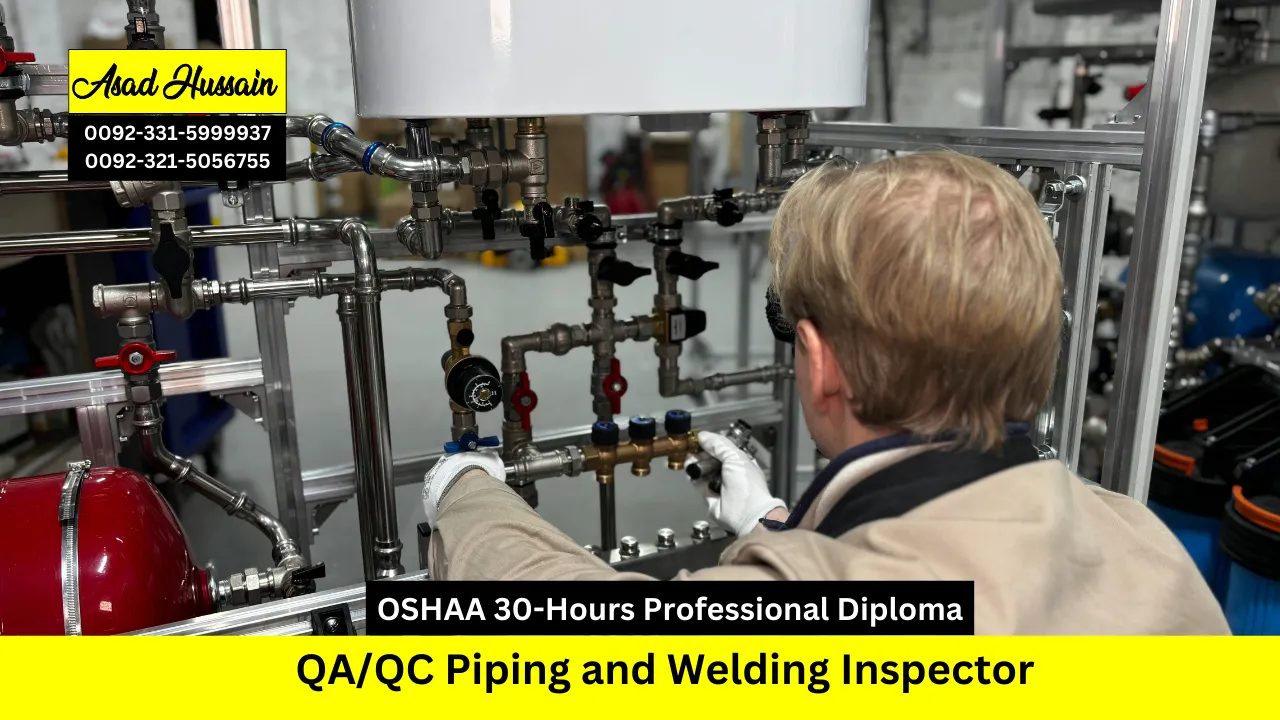
Master Industrial Standards with OSHAA 30-Hours Professional Diploma in QA/QC Piping and Welding Inspector
The OSHAA 30-Hours Professional Diploma in QA/QC Piping and Welding Inspector is a comprehensive professional training programme designed to build strong technical competence in quality assurance and quality control within piping and welding operations. This course provides a solid foundation in inspection principles, industry practices, material identification, welding procedures, and quality documentation. Learners gain practical insight into inspection roles across industrial environments such as oil and gas, construction, manufacturing, and power sectors. The programme focuses on developing inspection awareness, safety-conscious thinking, and quality-focused decision-making aligned with real-world operational demands.
This professional diploma equips learners with essential knowledge of piping systems, welding processes, inspection techniques, non-destructive testing awareness, and compliance requirements. Participants will understand how to identify defects, interpret inspection reports, and apply quality control measures effectively on-site. The course also supports career progression by complementing other professional certifications and diplomas in inspection, industrial safety, construction quality management, and engineering supervision. With a practical and industry-relevant approach, it helps learners enhance credibility, improve job performance, and meet employer expectations in quality-driven work environments.
OSHAA 30-Hours Professional Diploma in QA/QC Piping and Welding Inspector is structured to strengthen professional competence through focused learning outcomes and applied knowledge. The programme supports individuals aiming to validate their inspection skills alongside other certifications and professional diplomas in QA/QC inspection, welding inspection practices, piping supervision, and industrial quality systems. It emphasizes professional responsibility, accuracy, and compliance within inspection roles. This diploma is ideal for those seeking to enhance their professional profile, expand technical expertise, and demonstrate commitment to quality excellence in piping and welding inspection roles.
Program Highlights
- Introduction to QA/QC in Piping and Welding Inspection (2 Hours)
- Piping Materials, Components, and Fabrication Practices (3 Hours)
- Welding Technology and Procedure Qualification (4 Hours)
- International Standards and Codes: ASME, API, ISO (4 Hours)
- Non-Destructive Testing (NDT): Methods and Field Applications (4 Hours)
- Visual Inspection of Welds and Common Welding Defects (3 Hours)
- Interpretation of Piping Isometrics and Engineering Drawings (5 Hours)
- Inspection and Test Plans (ITPs) and Site Quality Procedures (3 Hours)
- Quality Documentation: WPS, PQR, NDT Reports, and Logs (2 Hours)
To ensure learners gain maximum benefit from the programme, the following entry requirements apply to the OSHAA 30-Hours Professional Diploma in QA/QC Piping and Welding Inspector:
- Age Requirement: Learners should be at least 18 years of age at the time of enrolment, demonstrating maturity and readiness to engage in professional technical training.
- Educational Background: A basic educational qualification is recommended, preferably supported by related diplomas or certificates in engineering, mechanical technology, welding, fabrication, industrial safety, quality control, or technical inspection fields.
- Language Proficiency: Learners should have a reasonable level of English language proficiency to understand course materials, technical terminology, and written documentation used during training.
- Work Experience: Prior or current experience in piping, welding, fabrication, construction, maintenance, inspection, or industrial environments is advantageous, as it supports better understanding of practical inspection concepts and quality procedures.
Learning Outcomes
Introduction to QA/QC in Piping and Welding Inspection (2 Hours)
- Understand the fundamentals and importance of quality assurance and quality control in piping and welding activities
- Identify the key responsibilities, duties, and professional roles of QA/QC inspectors in engineering projects
- Recognise the impact of effective QA/QC practices on safety performance, regulatory compliance, and overall project success
Piping Materials, Components, and Fabrication Practices (3 Hours)
- Identify common piping materials and understand their mechanical and chemical properties
- Understand the purpose, selection, and application of piping components across different systems
- Learn standard fabrication practices used in industrial piping and their quality considerations
Welding Technology and Procedure Qualification (4 Hours)
- Understand basic welding processes, equipment, and commonly used consumables
- Learn the requirements and steps involved in welding procedure qualification, including WPS and PQR
- Assess the importance of welder performance qualification in maintaining welding quality standards
International Standards and Codes: ASME, API, ISO (4 Hours)
- Gain familiarity with major international standards relevant to piping and welding inspection
- Understand how these codes are applied within QA/QC and inspection activities
- Interpret selected code requirements and their influence on inspection practices and documentation
Non-Destructive Testing (NDT): Methods and Field Applications (4 Hours)
- Identify key NDT methods such as RT, UT, PT, MT, and VT
- Learn when and where each NDT technique is applied in field inspection scenarios
- Evaluate the advantages and limitations of NDT methods in detecting welding defects
Visual Inspection of Welds and Common Welding Defects (3 Hours)
- Develop skills to perform accurate and systematic visual inspection of welds
- Recognise common welding defects and understand their root causes
- Understand acceptance criteria in line with applicable standards and inspection guidelines
Interpretation of Piping Isometrics and Engineering Drawings (5 Hours)
- Learn to read and interpret piping isometric drawings and layout plans
- Understand engineering symbols, dimensions, and drawing conventions
- Apply drawing interpretation skills to support inspection, verification, and quality control tasks
Inspection and Test Plans (ITPs) and Site Quality Procedures (3 Hours)
- Understand the purpose and structure of Inspection and Test Plans in projects
- Learn how to follow and apply site quality procedures and inspection checklists
- Identify hold points, witness points, and proper inspection record practices
Quality Documentation: WPS, PQR, NDT Reports, and Logs (2 Hours)
- Ensure documentation alignment with project specifications and quality requirements
- Understand essential QA/QC documentation used in piping and welding inspection
- Learn how to review, manage, and maintain inspection records and reports
The OSHAA 30-Hours Professional Diploma in QA/QC Piping and Welding Inspector is designed for individuals seeking to strengthen their technical knowledge, inspection skills, and quality-focused competence within piping and welding environments across various industries.
QA/QC and Inspection Professionals
- Quality assurance and quality control inspectors working on piping and welding projects
- Site inspectors responsible for monitoring fabrication and installation activities
- Quality personnel aiming to formalise and enhance inspection knowledge
- Inspection staff involved in documentation and compliance checks
- Professionals seeking improved understanding of inspection standards and practices
Welding and Fabrication Personnel
- Welders looking to expand knowledge of inspection requirements
- Fabrication technicians involved in piping and structural work
- Workshop supervisors overseeing welding quality
- Foremen responsible for weld acceptance and quality checks
- Skilled workers aiming to transition into inspection roles
Engineering and Technical Staff
- Mechanical engineers supporting piping and welding operations
- Engineering technicians involved in design and execution stages
- Site engineers coordinating quality and construction activities
- Technical staff working with drawings and specifications
- Professionals seeking stronger QA/QC awareness in engineering projects
Construction and Industrial Site Personnel
- Site supervisors managing piping and welding installations
- Construction professionals working in industrial projects
- Maintenance staff involved in piping systems and repairs
- Project team members supporting quality compliance
- Personnel working in oil, gas, power, or manufacturing environments
Quality Documentation and Compliance Staff
- Personnel responsible for inspection records and reports
- Staff managing WPS, PQR, and NDT documentation
- Quality coordinators ensuring procedural compliance
- Document controllers working with technical inspection files
- Professionals involved in audits and quality verification
Career-Focused Learners and Skill Enhancers
- Individuals committed to improving inspection accuracy and reliability
- Individuals seeking to build inspection-related technical skills
- Professionals aiming to strengthen their quality-focused career profile
- Learners transitioning into QA/QC roles within industrial sectors
- Technical workers seeking structured professional development