Master Critical Drone Operations with Emergency Response Drone Pilot Diploma
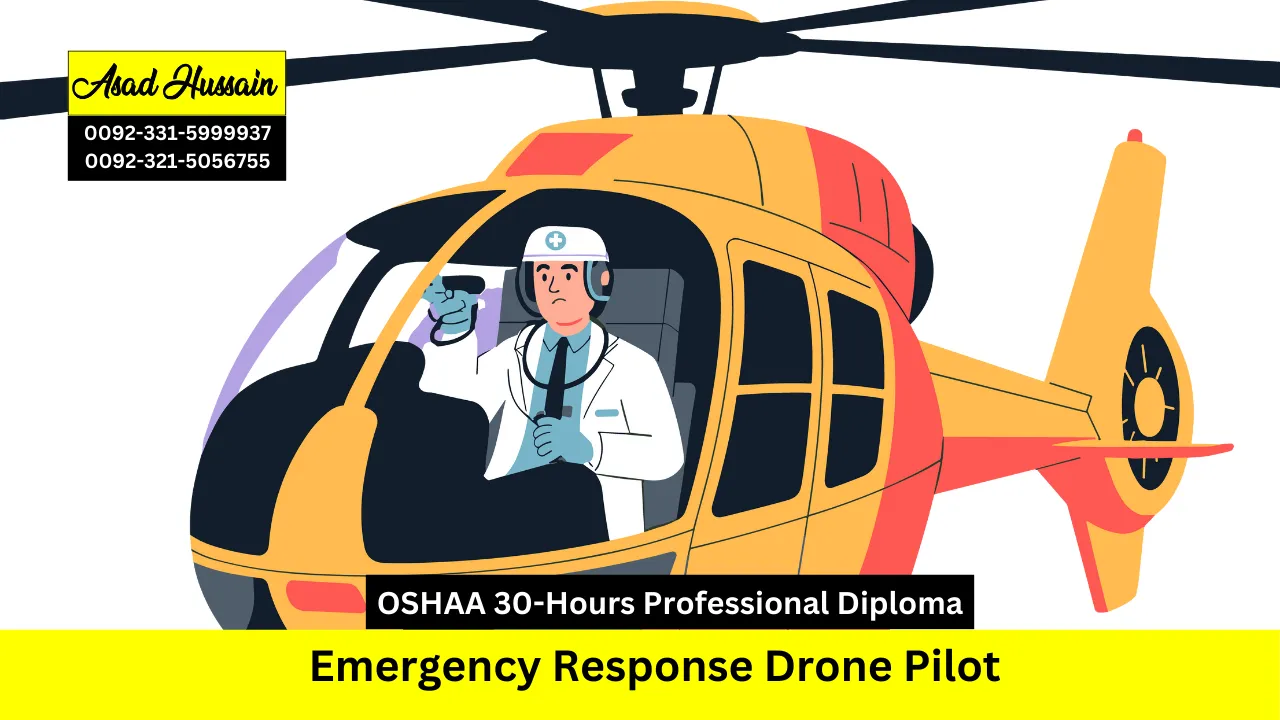
The OSHAA 30-Hours Professional Diploma in Emergency Response Drone Pilot is a specialised training programme designed to develop practical drone operation skills for emergency and high-risk response environments. This course focuses on the safe, controlled, and effective use of drones during incidents such as search and rescue, disaster response, site assessment, and emergency monitoring. Learners gain a strong understanding of drone technology, operational planning, situational awareness, and safety responsibilities. The programme is professionally structured to support real-world emergency response needs and is not OFQUAL regulated, making it suitable for skills-based professional development across diverse operational settings.
The course delivers a balanced blend of theoretical knowledge and applied learning to help participants operate drones confidently under pressure. Key areas include emergency flight planning, risk awareness, operational limitations, data capture, and communication during response scenarios. Emphasis is placed on responsible drone use, ethical practice, and compliance with operational safety expectations. This diploma also supports learners who may already hold or aim to complement certifications and diplomas in areas such as emergency management, occupational safety, disaster response, security operations, or remote technology operations, enhancing their professional capability without referencing academic progression.
OSHAA 30-Hours Professional Diploma in Emergency Response Drone Pilot equips learners with industry-relevant skills aligned with modern emergency response demands. The course is ideal for those seeking to strengthen operational readiness, improve response efficiency, and apply drone technology effectively in critical situations. By focusing on practical competence, safety awareness, and professional responsibility, this diploma supports individuals working or aspiring to work in emergency services, safety roles, and response coordination environments where drone operations add measurable value to incident management and situational control.
Program Highlights
Mandatory Units
- Introduction to Emergency Response Drone Operations and Roles (3 Hours)
- Basics of Drone Technology and Components (3 Hours)
- Drone Flight Regulations and Compliance (4 Hours)
- Pre-Flight Planning and Safety Protocols (3 Hours)
- Drone Flight Techniques and Controls (4 Hours)
- Aerial Imaging and Data Collection Methods (3 Hours)
- Emergency Response Applications and Mission Planning (4 Hours)
- Communication and Coordination with Emergency Teams (4 Hours)
- Data Analysis and Reporting for Emergency Situations (2 Hours)
Entry Requirements
To ensure learners gain maximum benefit from the OSHAA 30-Hours Professional Diploma in Emergency Response Drone Pilot, applicants are expected to meet the following general entry requirements.
- Age Requirement: Learners should be at least 18 years of age to safely manage drone operations and understand responsibilities during emergency response situations.
- Educational Requirement : A basic secondary education is recommended. Learners with related certificates or diplomas in emergency response, disaster management, occupational safety, security operations, aviation awareness, remote pilot operations, or technology-based training may find the course content more accessible.
- Language Proficiency: Participants should have a basic level of English language proficiency to understand training materials, operational instructions, and safety communications.
- Work Experience: Prior work experience is not mandatory; however, experience in emergency services, security, safety roles, field operations, or technical environments is considered an advantage.
Learning Outcomes
Introduction to Emergency Response Drone Operations and Roles (3 Hours)
- Understand the role of drones in emergency response operations
- Identify key responsibilities of drone pilots within emergency teams
- Recognise the impact of drone technology on public safety and rescue efforts
Basics of Drone Technology and Components (3 Hours)
- Explain the fundamental components and functions of drones
- Understand different types of drones used in emergency contexts
- Demonstrate basic knowledge of drone system operations and maintenance
Drone Flight Regulations and Compliance (4 Hours)
- Understand relevant national and international drone flight regulations
- Comply with legal requirements and safety standards for drone operation
- Identify no-fly zones and restrictions applicable to emergency drone use
Pre-Flight Planning and Safety Protocols (3 Hours)
- Conduct thorough pre-flight checks and risk assessments
- Develop effective flight plans tailored to emergency response missions
- Implement safety protocols to mitigate operational risks
Drone Flight Techniques and Controls (4 Hours)
- Demonstrate proficient control of drones in various flight conditions
- Apply advanced manoeuvring and navigation skills during missions
- Handle emergency scenarios and unexpected flight challenges confidently
Aerial Imaging and Data Collection Methods (3 Hours)
- Operate drone-mounted cameras and sensors for data capture
- Apply best practices for aerial imaging in emergency environments
- Understand data collection techniques to support situational analysis
Emergency Response Applications and Mission Planning (4 Hours)
- Develop mission plans addressing specific emergency scenarios
- Integrate drone operations with broader emergency response strategies
- Adapt drone usage to diverse emergency contexts such as search and rescue or damage assessment
Communication and Coordination with Emergency Teams (4 Hours)
- Apply effective communication protocols with multi-disciplinary teams
- Coordinate drone operations to support emergency response efforts
- Facilitate information sharing and collaboration during missions
Data Analysis and Reporting for Emergency Situations (2 Hours)
- Use data outputs to improve ongoing and future emergency operations
- Analyse aerial data to generate actionable insights
- Prepare comprehensive reports for emergency response documentation
Target Audiences
The OSHAA 30-Hours Professional Diploma in Emergency Response Drone Pilot is designed for individuals who want to develop practical drone operation skills for emergency, safety, and high-risk response environments.
Emergency Response and Disaster Management Personnel
- Individuals involved in emergency planning and response operations
- Team members supporting search, rescue, and incident assessment
- Personnel assisting during natural or man-made disaster situations
- Responders seeking improved situational awareness tools
- Professionals aiming to enhance response efficiency using drone technology
Safety, Security, and Risk Management Professionals
- Safety officers responsible for monitoring hazardous locations
- Security personnel managing large sites or sensitive areas
- Risk management staff involved in incident prevention and control
- Professionals supporting emergency preparedness initiatives
- Individuals seeking advanced operational safety skills
Search and Rescue and Field Operations Teams
- Members of search and rescue support units
- Field operators working in challenging or remote environments
- Teams involved in locating missing persons or assessing terrain
- Personnel requiring aerial visibility during operations
- Individuals focused on rapid and accurate incident assessment
Technology and Drone Enthusiasts in Safety Roles
- Drone operators interested in emergency response applications
- Technology-focused individuals working in safety-critical sectors
- Operators aiming to apply drones in real-world scenarios
- Professionals seeking structured emergency drone training
- Individuals interested in responsible and ethical drone use
Infrastructure, Site, and Facility Safety Coordinators
- Personnel responsible for site inspections and monitoring
- Facility safety coordinators managing large or complex areas
- Individuals involved in damage assessment after incidents
- Staff supporting emergency access planning
- Professionals aiming to improve visual reporting and data collection
Career Starters and Skill Development Seekers
- Individuals exploring opportunities in emergency drone operations
- Learners seeking practical and transferable safety skills
- Professionals transitioning into drone-supported response roles
- Individuals aiming to strengthen operational confidence
- Learners interested in high-impact emergency support skills