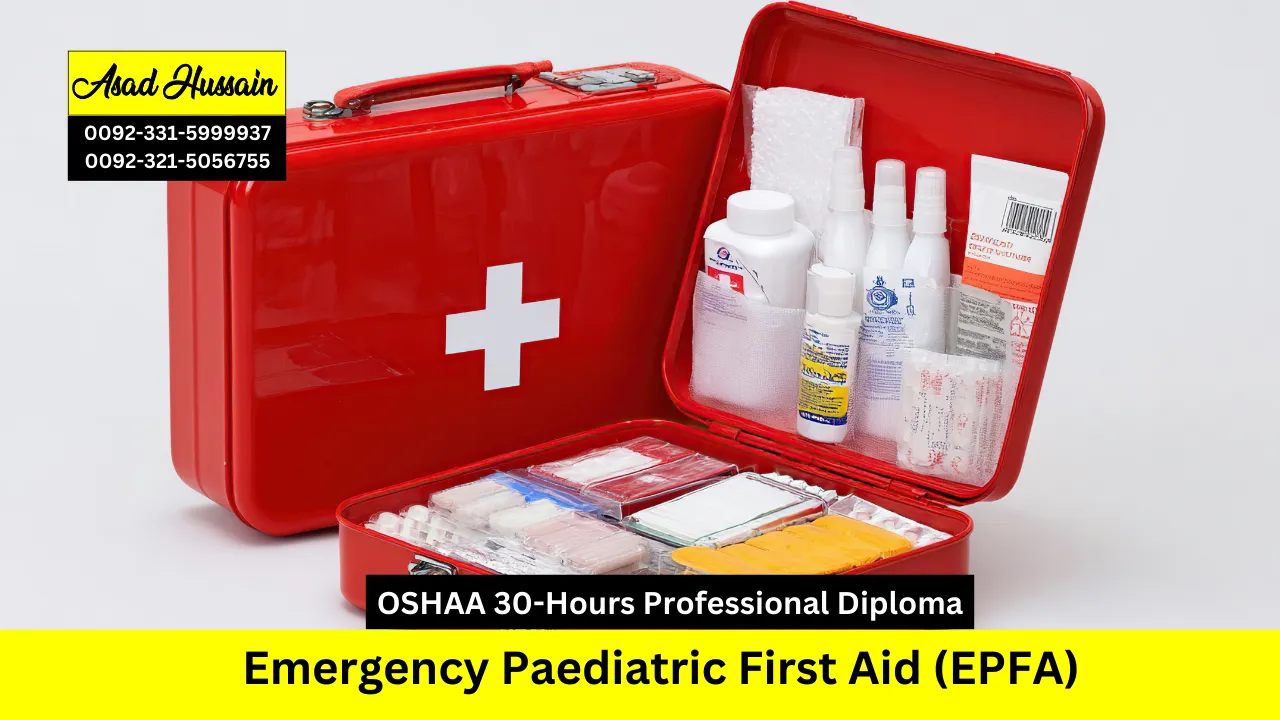
Advance Your Career with Professional Diploma in Paediatric First Aid (EPFA)
The OSHAA 30-Hours Professional Diploma in Emergency Paediatric First Aid (EPFA)) is a comprehensive and practical training programme designed to equip learners with essential life-saving skills for infants and children. This course focuses on real-world emergency response, helping participants confidently manage paediatric accidents, sudden illnesses, and critical situations. Through clear guidance and scenario-based learning, learners gain the knowledge required to act quickly and responsibly when it matters most. Although this programme is not Ofqual regulated, it is professionally developed to meet industry expectations and promote high standards of emergency paediatric care across diverse settings.
This intensive diploma emphasises hands-on understanding of paediatric first aid principles, including injury management, emergency assessment, and immediate response techniques. The curriculum is structured to support childcare professionals, educators, healthcare assistants, and responsible caregivers seeking practical, career-relevant skills. Learners benefit from flexible study options and clear learning outcomes that enhance confidence and workplace readiness. While the course does not lead to further qualifications, it provides strong progression opportunities toward additional professional certifications and advanced diplomas in health, safety, childcare, and emergency care, supporting long-term professional development and skill enhancement.
OSHAA 30-Hours Professional Diploma in Emergency Paediatric First Aid (EPFA) delivers focused, practical training that empowers learners to respond effectively to paediatric emergencies in professional and community environments. The course strengthens decision-making, communication, and emergency preparedness, ensuring learners can provide timely and appropriate care to children in distress. Designed for global relevance, this diploma supports continuing professional growth and serves as a valuable foundation for pursuing further certifications and specialised diplomas in paediatric care, first aid, and safety management, making it an ideal choice for those committed to safeguarding children’s health and wellbeing.
Program Highlights
Mandatory Unit
- Introduction to Emergency Paediatric First Aid and Legal Framework (2 Hours)
- Assessing Paediatric Emergencies and Incident Management (3 Hours)
- Primary Survey, Casualty Assessment, and Recovery Position for Infants and Children (3 Hours)
- Paediatric Cardiopulmonary Resuscitation (CPR) and Automated External Defibrillator (AED) Use (5 Hours)
- Management of Unconscious Infants and Children (4 Hours)
- Control of Bleeding, Wound Care, and Shock Management in Children (4 Hours)
- First Aid for Burns, Scalds, and Thermal Injuries in Paediatric Cases (3 Hours)
- Managing Fractures, Sprains, and Soft Tissue Injuries in Children (3 Hours)
- Response to Paediatric Medical Emergencies: Asthma, Seizures, and Severe Allergic Reactions (3 Hours)
- Age Requirement: Learners must be at least 16 years of age to ensure they have the maturity and responsibility needed to understand and apply emergency paediatric first aid procedures effectively.
- Educational Requirements: There are no formal academic prerequisites for this course. A basic educational background is sufficient; however, learners with prior knowledge or certificates in First Aid, Childcare, Health and Safety, Paediatric Care, or related diplomas may find the course especially beneficial.
- Language Proficiency:Learners should have a basic to intermediate understanding of the English language, as the course content, learning materials, and assessments are delivered in English to support clear communication and effective learning.
Learning Outcomes
Introduction to Emergency Paediatric First Aid and Legal Framework (2 Hours)
- Understand the fundamental principles of paediatric first aid in emergency situations
- Recognise the legal responsibilities and ethical considerations when providing first aid to children
- Identify the role and duties of a paediatric first aider in various care settings
Assessing Paediatric Emergencies and Incident Management (3 Hours)
- Conduct rapid and accurate assessments of paediatric emergencies
- Apply effective communication and coordination techniques during incidents
- Implement structured approaches to ensure child safety and prevent further harm
Primary Survey, Casualty Assessment, and Recovery Position for Infants and Children (3 Hours)
- Perform systematic primary surveys tailored to infants and children
- Accurately assess consciousness, breathing, and circulation in paediatric casualties
- Demonstrate correct application of the recovery position for different age groups
Paediatric Cardiopulmonary Resuscitation (CPR) and Automated External Defibrillator (AED) Use (5 Hours)
- Execute age-appropriate CPR techniques for infants and children
- Operate AED devices safely and effectively in paediatric emergencies
- Integrate CPR and AED use into a coordinated emergency response
Management of Unconscious Infants and Children (4 Hours)
- Identify causes and symptoms of unconsciousness in paediatric casualties
- Provide safe airway management for unconscious children
- Apply appropriate monitoring techniques to ensure continued stability
Control of Bleeding, Wound Care, and Shock Management in Children (4 Hours)
- Apply effective bleeding control methods suitable for paediatric patients
- Perform proper wound cleaning, dressing, and protection techniques
- Recognise and manage signs of shock in children promptly and effectively
First Aid for Burns, Scalds, and Thermal Injuries in Paediatric Cases (3 Hours)
- Identify different types and severities of burns and scalds in children
- Provide immediate and appropriate first aid for thermal injuries
- Implement measures to prevent infection and promote recovery
Managing Fractures, Sprains, and Soft Tissue Injuries in Children (3 Hours)
- Recognise symptoms of fractures, sprains, and soft tissue injuries
- Apply safe immobilisation and support techniques for injured limbs
- Reduce risk of further injury through effective handling and positioning
Response to Paediatric Medical Emergencies: Asthma, Seizures, and Severe Allergic Reactions (3 Hours)
- Recognise signs and symptoms of common paediatric medical emergencies
- Provide immediate first aid interventions for asthma attacks, seizures, and anaphylaxis
- Support ongoing care while awaiting professional medical assistance
Target Audience
The OSHAA 30-Hours Professional Diploma in Emergency Paediatric First Aid (EPFA) is designed for individuals who want to develop practical, life-saving skills to confidently respond to paediatric emergencies in professional and everyday settings.
Childcare and Early Years Professionals
- Nursery and preschool staff
- Childminders and nannies
- Early years practitioners
- Daycare and playgroup workers
- After-school club coordinators
- Babysitters and au pairs
Teachers and Educational Support Staff
- Primary and secondary school teachers
- Teaching assistants and learning support staff
- Special education professionals
- School administrators
- Sports and activity coordinators
- School transport supervisors
Healthcare and Support Workers
- Healthcare assistants
- Support workers and carers
- Community health workers
- Nursing aides and trainees
- Clinic and healthcare facility staff
- Home care providers
Parents, Guardians, and Caregivers
- Parents and foster parents
- Guardians and family caregivers
- New and expecting parents
- Home-based carers
- Volunteers working with children
- Individuals responsible for child safety
Sports, Leisure, and Community Workers
- Sports coaches and trainers
- Youth group leaders
- Camp and outdoor activity staff
- Fitness and recreation instructors
- Community centre workers
- Event and play area supervisors
Aspiring Safety and Care Professionals
- Individuals entering childcare or healthcare fields
- Learners seeking foundational paediatric first aid skills
- Career switchers into care-based roles
- Volunteers in child-focused organisations
- Individuals preparing for further certifications
- Those committed to child safety and wellbeing