Course Introduction
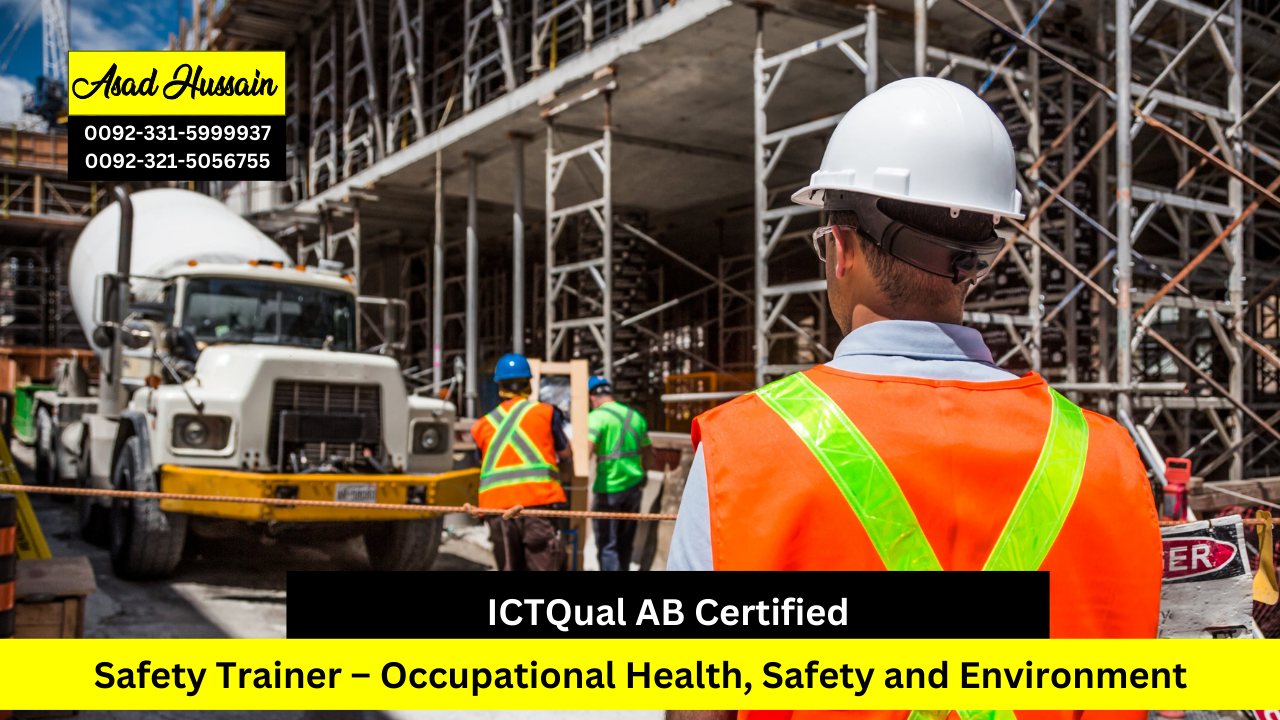
The ICTQual AB Certified Safety Trainer – Occupational Health, Safety and Environment is an internationally recognized qualification that prepares professionals to deliver effective training in workplace safety, risk management, and environmental protection. It is designed to meet global standards and support safer work environments across industries.
Learners gain practical knowledge in occupational health, hazard identification, accident prevention, and sustainability. The program emphasizes modern training methodologies and international frameworks, enabling participants to design and deliver engaging safety programs tailored to diverse workplace contexts.
Graduates achieve global credibility as professional safety trainers, capable of guiding organizations toward compliance and excellence. This qualification enhances career prospects in consultancy, training, and leadership, providing the recognition and skills needed to make a lasting impact in today’s safety‑driven world.
Just 25000/- PKR
Program Highlights
Mandatory Units
This qualification, the ICTQual AB Certified Safety Trainer – Occupational Health, Safety and Environment, consists of 6 mandatory units.
- Principles of Occupational Health, Safety and Environmental Management
- Risk Assessment, Hazard Identification and Incident Investigation
- Legal Frameworks and International HSE Standards
- Instructional Techniques for Safety Trainers
- Designing and Delivering Effective HSE Training Programmes
- Monitoring, Evaluation and Continuous Improvement in Safety Training
The ICTQual AB Certified Safety Trainer – Occupational Health, Safety and Environment is designed for professionals who aim to deliver effective training in workplace safety, risk management, and environmental protection. To ensure candidates are prepared for the demands of this qualification, the following entry requirements apply.
Age Requirement
- Applicants must be at least 18 years old, reflecting the maturity required to take on professional training responsibilities.
Educational Background
- A Level 5 diploma or equivalent qualification in occupational health, safety, environmental science, or a related discipline is recommended. Candidates with a bachelor’s degree in relevant fields are strongly preferred.
Professional Experience
- Applicants should have at least two to three years of work experience in safety management, compliance, auditing, or supervisory roles. This ensures learners can apply theoretical knowledge to practical workplace contexts.
Language Proficiency
- Since the program is delivered in English, candidates must demonstrate competence in written and spoken English. Non‑native speakers may be asked to provide evidence such as IELTS or equivalent certification.
Learning Outcomes for the Study Units:
Principles of Occupational Health, Safety and Environmental Management
- Understand core concepts of occupational health, safety, and environmental (HSE) management
- Identify key workplace hazards and their impact on employee wellbeing
- Explain the role of HSE policies in promoting safe work environments
- Analyse the relationship between safety culture and organisational performance
- Apply basic principles of environmental protection in workplace settings
- Recognise the importance of proactive safety planning and prevention
- Evaluate the effectiveness of HSE management systems across industries
Risk Assessment, Hazard Identification and Incident Investigation
- Conduct structured risk assessments using recognised methodologies
- Identify physical, chemical, biological, and psychosocial hazards in the workplace
- Prioritise risks based on severity, likelihood, and exposure
- Develop control measures to mitigate identified risks
- Understand the steps involved in incident reporting and investigation
- Apply root cause analysis techniques to workplace incidents
- Recommend corrective and preventive actions to improve safety outcomes
Legal Frameworks and International HSE Standards
- Interpret national and international HSE legislation and compliance requirements
- Understand the legal responsibilities of employers, employees, and trainers
- Explore global standards such as ISO 45001 and ILO conventions
- Apply legal principles to real-world safety training scenarios
- Recognise the consequences of non-compliance in various sectors
- Integrate legal and ethical considerations into training delivery
- Stay updated on emerging HSE regulations and global trends
Instructional Techniques for Safety Trainers
- Apply adult learning principles to safety training contexts
- Design engaging and inclusive training sessions for diverse learners
- Use visual aids, storytelling, and interactive methods to enhance retention
- Manage group dynamics and encourage active participation
- Assess learner understanding through formative and summative techniques
- Adapt training delivery to suit different learning styles and environments
- Build confidence and credibility as a professional safety trainer
Designing and Delivering Effective HSE Training Programmes
- Develop structured HSE training plans aligned with organisational goals
- Create learning objectives and outcomes that reflect industry needs
- Select appropriate training materials and delivery platforms
- Incorporate real-life case studies and simulations into training
- Evaluate training effectiveness using feedback and performance metrics
- Ensure accessibility and inclusivity in training design
- Deliver impactful sessions that drive behavioural change and compliance
Monitoring, Evaluation and Continuous Improvement in Safety Training
- Establish key performance indicators (KPIs) for training success
- Collect and analyse feedback from learners and stakeholders
- Identify gaps and opportunities for improvement in training delivery
- Implement continuous improvement strategies using data-driven insights
- Benchmark training outcomes against industry standards
- Prepare evaluation reports for internal and external audits
The ICTQual AB Certified Safety Trainer – Occupational Health, Safety and Environment is designed for professionals and organizations committed to building safer workplaces and promoting global standards in occupational health and environmental management.
- Aspiring safety trainers who want to develop the skills to deliver effective workplace safety and environmental training.
- Supervisors, auditors, and compliance officers working in industries such as construction, manufacturing, healthcare, and IT where safety and risk management are critical.
- Consultants and trainers aiming to expand their expertise by offering internationally benchmarked safety and environmental programs.
- Health and safety practitioners seeking global recognition and career advancement in occupational health and environmental management.
- Organizations and employers wishing to strengthen their safety culture and ensure compliance with international standards such as ISO 45001 and environmental frameworks.
- Experienced professionals who want to enhance their leadership, training delivery, and risk management skills to reduce workplace incidents and improve sustainability.