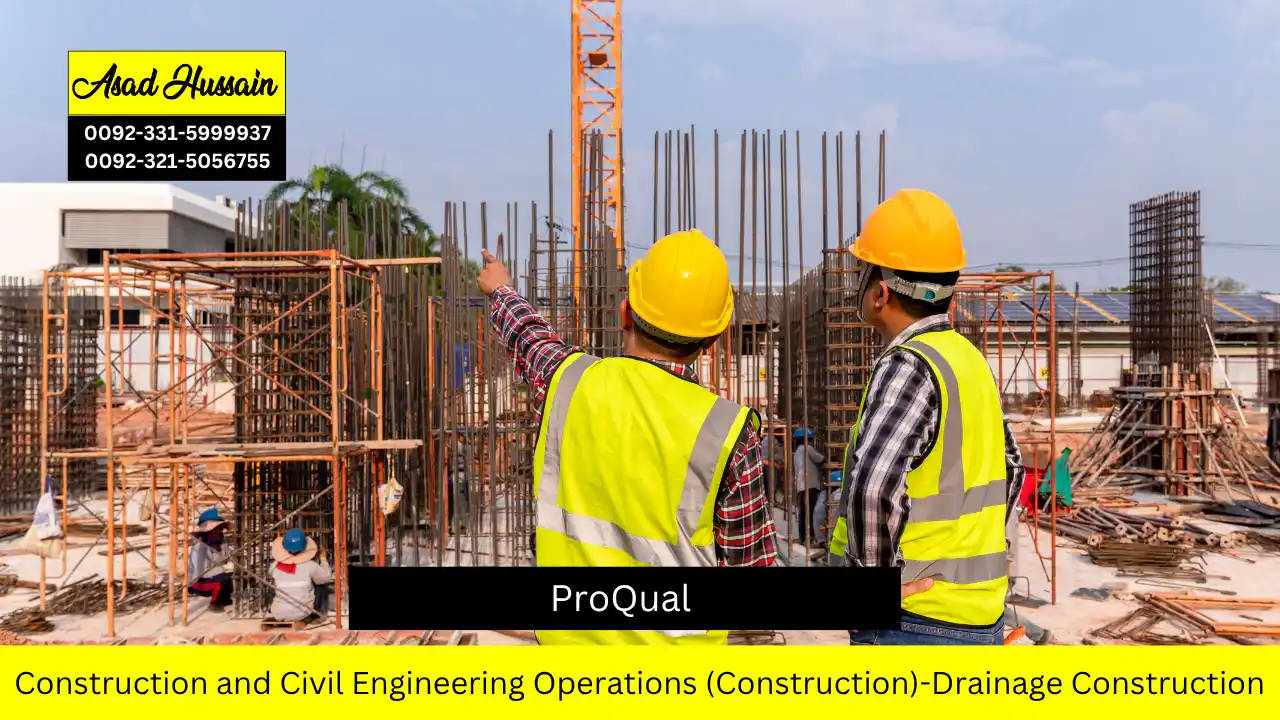
The ProQual Level 2 NVQ Diploma in Construction and Civil Engineering Operations (Construction)-Drainage Construction is a specialist vocational qualification designed for groundworkers and civil engineering operatives. This diploma focuses on developing the practical skills and knowledge required to install, test, and maintain below-ground drainage systems safely and effectively. As a ProQual accredited award, it provides a nationally recognised benchmark of occupational competence specifically in drainage work, though it is important to note that this qualification is not regulated by Ofqual.
Through on-site assessment and evidence collection, candidates will demonstrate their ability to interpret drawings, excavate trenches, install pipes and fittings, conduct pressure and water tests, and ensure all work meets strict industry and environmental standards. The programme emphasises a practical, hands-on approach to ensure learners not only understand theoretical best practices but can also reliably apply them to real-world projects. Key elements include working safely with underground utilities, waterproofing, and backfilling to specification.
The ProQual Level 2 NVQ Diploma in Construction and Civil Engineering Operations (Construction)-Drainage Construction serves as a vital credential for any operative specialising in this essential trade. Achievement of this diploma formally validates a worker’s expertise, enhancing their professional standing and employability within the civil engineering and construction sectors. It is a key certification for individuals committed to building a recognised, skilled career in the foundational and critical field of drainage construction.
Program Highlights
To achieve this ProQual Level 2 NVQ Diploma in Construction and Civil Engineering Operations (Construction)-Drainage Construction, candidates must complete all mandatory units and one optional unit from the list below.
Mandatory units
- Installing, maintaining and removing work area protection and safety equipment in the workplace
- Installing, maintaining and removing temporary excavation support in the workplace
- Installing drainage in the workplace
- Setting out secondary dimensional work control in the workplace
- Conforming to general health, safety and welfare in the workplace
- Conforming to productive working practices in the workplace
Optional Units
(Candidates must complete one optional unit from the following list)
- Reinstating ground condition in the workplace
- Preparing, mixing and distributing concrete and mortars in the workplace
- Laying, placing or applying construction-related materials in the workplace
- Preparing and operating forward tipping dumpers to receive, transport and discharge materials in the workplace
- Moving, handling and storing resources in the workplace
- Locating and excavating to expose buried utility services in the workplace
- Preparing and operating ride-on rollers to compact materials in the workplace
- Controlling, directing and guiding the operation of plant or machinery in the workplace
- Installing, constructing, maintaining, dismantling and removing temporary works in the workplace
- Cutting, drilling and shaping construction-related materials in the workplace
- Preparing and mixing construction-related materials in the workplace
- Identifying and marking the location of utilities apparatus and sub-structures in the workplace
Entry Requirements
To be eligible for this specialist diploma, prospective candidates are expected to meet the following entry criteria:
- Age and Status: Applicants must be at least 16 years of age and must be employed or have secured a work placement where they are actively engaged in drainage construction activities, as the qualification is assessed through direct observation in the workplace.
- Educational Background: While no specific formal qualifications are mandatory, possession of related prior learning such as a Level 1 NVQ in Construction Operations, a relevant Construction Skills Certification Scheme (CSCS) card, or other industry safety certifications is viewed favorably and indicates foundational readiness.
- Language Proficiency: Candidates must have a sufficient command of English to understand site safety instructions, interpret basic construction drawings and specifications, and communicate effectively with assessors and site personnel.
It is essential that applicants are in a role that provides them with practical opportunities to undertake a range of drainage tasks under appropriate supervision to generate the necessary evidence for assessment.
Learning Outcomes
Upon successful completion of the ProQual Level 2 NVQ Diploma in Construction and Civil Engineering Operations (Construction)-Drainage Construction, participants will achieve the following learning outcomes:
Installing, maintaining and removing work area protection and safety equipment in the workplace
- Interpret the given information relating to the work and resources when installing, maintaining, and removing work area protection and safety equipment
- Know how to comply with relevant legislation and official guidance when installing, maintaining, and removing work area protection and safety equipment.
- Maintain safe and healthy working practices when installing, maintaining, and removing work area protection and safety equipment.
- Select the required quantity and quality of resources for the methods of work to install, maintain and remove work area protection and safety equipment.
- Minimise the risk of damage to the work and surrounding area when installing, maintaining, and removing work area protection and safety equipment.
- Complete the work within the allocated time when installing, maintaining, and removing work area protection and safety equipment.
- Comply with the given contract information to install, maintain, and remove work area protection and safety equipment to the required specification.
Installing, maintaining and removing temporary excavation support in the workplace
- Interpret the given information relating to the work and resources when installing, maintaining and removing temporary excavation support.
- Know how to comply with relevant legislation and official guidance when installing, maintaining and removing temporary excavation support.
- Maintain safe and healthy working practices when installing, maintaining and removing temporary excavation support.
- Select the required quantity and quality of resources for the methods of work to install, maintain and remove temporary excavation support.
- Select the required quantity and quality of resources for the methods of work to install, maintain and remove temporary excavation support.
- Complete the work within the allocated time when installing, maintaining and removing temporary excavation support.
- Comply with the given contract information to install, maintain and remove temporary excavation support to the required specification.
Installing drainage in the workplace
- Interpret the given information relating to the work and resources when installing drainage.
- Know how to comply with relevant legislation and official guidance when installing drainage.
- Maintain safe and healthy working practices when installing drainage.
- Select the required quantity and quality of resources for the methods of work to install drainage.
- Minimise the risk of damage to the work and surrounding area when installing drainage.
- Complete the work within the allocated time when installing drainage.
- Comply with the given contract information to install drainage to the required specification.
Setting out secondary dimensional work control in the workplace
- Interpret the given information relating to setting out dimensional control of the work.
- Know how to comply with relevant legislation and official guidance to set out dimensional control of the work.
- Maintain safe and healthy working practices when setting out dimensional control of the work.
- Select the required quantity and quality of resources to set out dimensional control of the work.
- Minimise the risk of damage to the work and surrounding area when setting out dimensional control of the work.
- Complete the work within the allocated time when setting out dimensional control of the work.
- Comply with the given contract information to set out dimensional control of the work to the required specification.
Conforming to general health, safety and welfare in the workplace
- Comply with all workplace health, safety and welfare legislation requirements.
- Recognise hazards associated with the workplace that have not been previously controlled and report them in accordance with organisational procedures.
- Comply with organisational policies and procedures to contribute to health, safety and welfare.
- Work responsibly to contribute to workplace health, safety and welfare whilst carrying out work in the relevant occupational area.
- Comply with and support all organisational security arrangements and approved procedures.
Conforming to productive working practices in the workplace
- Communicate with others to establish productive work practices.
- Follow organisational procedures to plan the sequence of work.
- Maintain relevant records in accordance with the organisational procedures
- Maintain good working relationships when conforming to productive working practices.
Target Audience
The ProQual Level 2 NVQ Diploma in Construction and Civil Engineering Operations (Construction)-Drainage Construction is designed for practical, hands-on operatives who specialise in the critical infrastructure work of installing and maintaining below-ground drainage systems. This qualification is ideal for individuals seeking formal, industry-recognised certification of their specialist skills in a high-demand area of civil engineering and construction. It is particularly well-suited for:
- Groundworkers and Civil Engineering Operatives whose core duties involve excavating trenches, laying pipes, and constructing drainage runs for residential, commercial, or public infrastructure projects.
- Drainage Layers and Specialist Pipe Layers who focus on the precise installation of foul, surface water, and land drainage systems.
- New Entrants and Trainees in the construction sector aiming to build a certified, specialist skill set that significantly enhances their employability and career progression prospects.
- Experienced Labourers looking to formalise their on-the-job expertise to achieve recognised trade competency and qualify for skilled worker certification.
- Individuals requiring a CSCS/GQV Blue Skilled Worker Card, as this diploma is a direct and widely accepted route to proving the occupational competence needed for the card in this trade.
Ultimately, the ProQual Level 2 NVQ Diploma in Construction and Civil Engineering Operations (Construction)-Drainage Construction is for dedicated site-based personnel committed to mastering an essential and technical trade, ensuring they are recognised as proficient, safety-conscious, and fully qualified specialists within the construction industry.