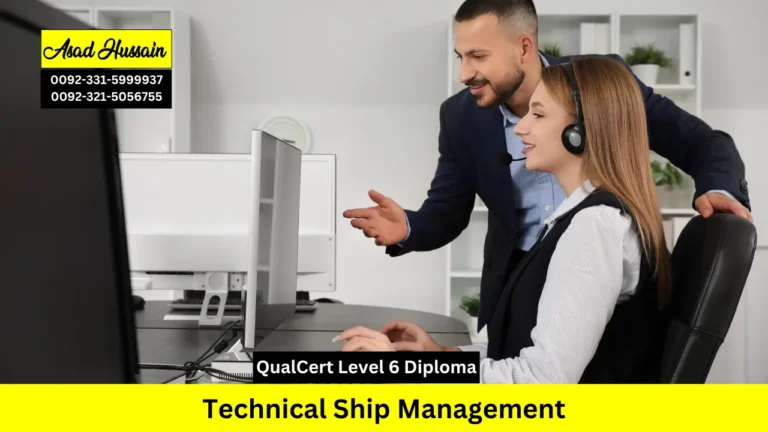
The QualCert Level 6 Diploma in Ship Superintendency is an advanced, professionally designed qualification aimed at equipping maritime professionals with the knowledge and skills required to manage ship operations efficiently and safely. This diploma provides in-depth training in ship management, regulatory compliance, operational planning, and crew supervision, ensuring participants are fully prepared to take on senior roles within the shipping industry.
Learners will gain expertise in areas such as ship maintenance, safety and environmental compliance, cargo operations, budgeting and financial management, risk assessment, and effective communication with crews and stakeholders. The programme also covers international maritime regulations, port operations, and quality management systems, preparing participants to ensure vessels operate efficiently, safely, and in line with global standards.
This course is ideal for ship superintendents, marine engineers, fleet managers, officers aspiring to senior management positions, and maritime professionals looking to enhance their leadership and operational skills. Through a combination of theoretical knowledge and practical insights, participants develop the competence to oversee ship performance, manage technical teams, and make strategic operational decisions.
Recognised internationally, the QualCert Level 6 Diploma in Ship Superintendency enhances career prospects, offering pathways into senior management positions within shipping companies, marine consultancy, and fleet operations worldwide, while providing a strong foundation for further maritime professional qualifications.
Program Highlights
Study Units
To achieve,QualCert Level 6 Diploma in Ship Superintendency; Candidates must Complete the 6 Manadatory Units.
- Strategic Ship Superintendency
- Advanced Maritime Law and International Conventions
- Technical Management and Dry-Docking
- Risk Management and Safety Leadership
- Financial and Commercial Management of Shipping
- Global Logistics and Maritime Sustainability
Entry Requirements
- Age Requirements: Applicants must be 18 years of age or older at the time of registration.
- Educational Background: A minimum of secondary school education (high school level) or equivalent is required.
- Language Proficiency:Learners must demonstrate competence in English, as all course materials, assessments, and examinations are delivered in English.
- Work Experience:Candidates should hold a Level 5 qualification in a maritime, nautical, or shipping-related field, or an equivalent professional qualification.
Please ensure all criteria are met to facilitate a smooth admission process into this professional program.
Learning Outcomes
- Strategic Ship Superintendency
- Critically evaluate the superintendent’s role in fleet management.
- Develop strategic plans for ship operations.
- Apply leadership skills to complex operational challenges.
- Analyse the impact of global trade trends on fleet operations.
- Evaluate performance indicators for ship management.
- Apply change management strategies in maritime organisations.
- Demonstrate advanced problem-solving in operational contexts.
- Advanced Maritime Law and International Conventions
- Analyse international maritime law and conventions.
- Apply legal frameworks to charter parties and contracts.
- Evaluate compliance strategies for global shipping operations.
- Interpret case law relevant to ship management.
- Understand dispute resolution mechanisms in maritime law.
- Apply knowledge of liability and insurance in shipping.
- Critically assess the impact of evolving regulations on operations.
- Technical Management and Dry-Docking
- Plan and manage dry-docking projects.
- Evaluate advanced technical maintenance strategies.
- Liaise effectively with classification societies.
- Apply asset management principles to ship maintenance.
- Analyse lifecycle costs of vessel maintenance.
- Develop contingency plans for technical failures.
- Demonstrate advanced project management in dry-docking.
- Risk Management and Safety Leadership
- Conduct advanced risk assessments for ship operations.
- Develop crisis management strategies.
- Lead safety initiatives to strengthen safety culture.
- Evaluate the effectiveness of safety management systems.
- Apply root cause analysis to incidents.
- Demonstrate leadership in emergency response.
- Integrate risk management into strategic planning.
- Financial and Commercial Management of Shipping
- Analyse financial performance of shipping operations.
- Apply advanced budgeting techniques.
- Evaluate commercial decision-making in global markets.
- Understand the role of insurance and risk financing.
- Apply cost-optimisation strategies to fleet operations.
- Assess the impact of chartering decisions on profitability.
- Demonstrate financial planning for long-term sustainability.
- Global Logistics and Maritime Sustainability
- Assess the impact of global logistics on ship operations.
- Evaluate sustainability practices in maritime operations.
- Apply digitalisation to improve efficiency and compliance.
- Analyse the role of shipping in global supply chains.
- Understand environmental regulations and green shipping initiatives.
- Evaluate the impact of decarbonisation strategies.
- Demonstrate knowledge of innovation and future trends in shipping.
Target Audience
The Level 6 Diploma is an advanced qualification for professionals with prior experience or academic background in maritime studies, engineering, or logistics.
- Marine Engineers and Deck Officers
- Professionals with supervisory experience.
- Officers seeking shore-based superintendent roles.
- Engineers aiming for fleet management positions.
- Learners motivated by technical leadership.
- Candidates preparing for senior responsibilities.
- Professionals transitioning from sea to shore.
- Those aspiring to technical superintendent roles.
- Mid-Career Maritime Professionals
- Individuals with several years of industry experience.
- Professionals seeking advanced knowledge.
- Learners aiming for compliance and operations expertise.
- Candidates motivated by career progression.
- Professionals preparing for senior management.
- Learners interested in international opportunities.
- Those aspiring to strategic leadership roles.
- Senior Technical Staff
- Professionals managing ship operations.
- Staff overseeing vessel maintenance.
- Learners aiming for fleet management.
- Candidates motivated by leadership roles.
- Professionals preparing for superintendent positions.
- Learners seeking advanced technical training.
- Those aspiring to operational leadership.
- Managers in Logistics and Port Operations
- Logistics managers expanding into shipping.
- Port staff seeking advanced maritime knowledge.
- Professionals motivated by international trade.
- Learners aiming for senior management roles.
- Candidates preparing for global logistics leadership.
- Professionals diversifying into ship management.
- Those aspiring to strategic maritime positions.
- Professionals Seeking Specialisation
- Individuals focusing on maritime law.
- Learners motivated by finance and sustainability.
- Professionals preparing for compliance leadership.
- Candidates aiming for niche maritime expertise.
- Learners interested in environmental regulations.
- Professionals motivated by global shipping challenges.
- Those aspiring to specialist superintendent roles.
- Aspiring Senior Leaders
- Professionals aiming for fleet manager roles.
- Candidates preparing for operations director positions.
- Learners motivated by strategic leadership.
- Professionals seeking international recognition.
- Learners aiming for senior superintendent roles.
- Candidates motivated by global career prospects.
- Those aspiring to executive-level positions.
- Learners Seeking Academic Progression
- Individuals preparing for postgraduate study.
- Learners motivated by advanced maritime law.
- Professionals aiming for international trade expertise.
- Candidates preparing for master’s-level qualifications.
- Learners seeking academic recognition.
- Professionals motivated by lifelong learning.
- Those aspiring to research or teaching roles.