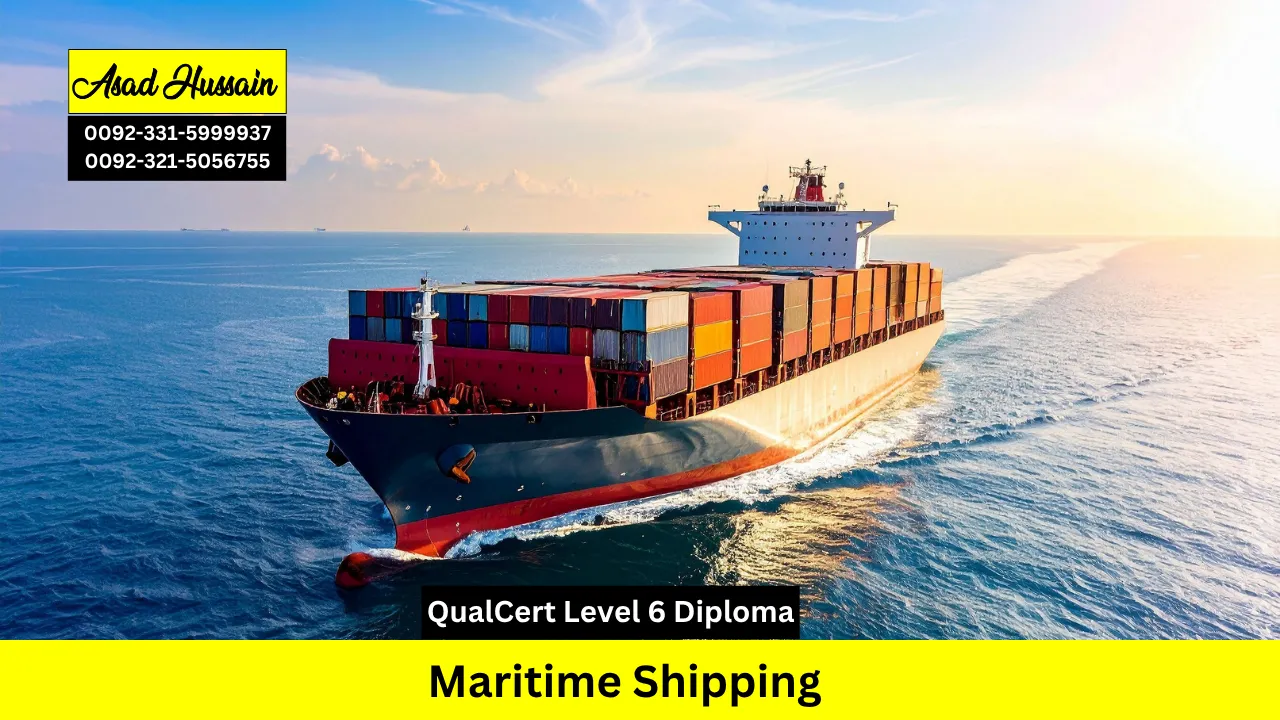
The QualCert Level 6 Diploma in Maritime Shipping is an advanced professional qualification designed to equip learners with comprehensive knowledge and strategic expertise required for senior roles in the maritime and shipping industry. As global trade continues to expand, efficient maritime operations and shipping management are essential for sustaining international commerce. This diploma provides professionals with the skills needed to oversee complex shipping operations, ensure regulatory compliance, and implement best practices in maritime logistics and management.
This program covers key areas such as vessel operations, maritime logistics, port and terminal management, shipping law, risk management, environmental compliance, and international trade regulations. Learners also gain strategic skills in decision-making, performance monitoring, and leadership, preparing them to manage teams, coordinate global shipping activities, and optimize operational efficiency. The course emphasizes real-world applications, enabling participants to tackle operational challenges and implement effective management strategies in dynamic maritime environments.
Ideal for shipping managers, maritime coordinators, logistics supervisors, and professionals aspiring to executive roles, this qualification enhances both operational and leadership capabilities. Upon completion, participants will be able to manage shipping operations efficiently, optimize supply chains, ensure compliance with international maritime standards, and drive organizational success. The QualCert Level 6 Diploma in Maritime Shipping is an internationally recognized credential, opening career opportunities in shipping companies, ports, maritime organizations, and global logistics networks worldwide.
Program Highlights
Study Units
To achieve,QualCert Level 6 Diploma in Maritime Shipping; Candidates must Complete the 6 Manadatory Units.
- Strategic Maritime Shipping Operations Management
- Global Maritime Law and Regulatory Compliance
- Advanced Port and Cargo Logistics
- Risk, Crisis and Emergency Management in Shipping
- Innovation and Digital Transformation in Maritime Shipping
- Research Project in Maritime Shipping Operations
Entry Requirements
- Age Requirements: Applicants must be at least 18 years old to ensure professional maturity and readiness for advanced training in maritime operations and management.
- Educational Background: Candidates should hold a Level 5 qualification in shipping, logistics, maritime studies, or a related field, or have an equivalent professional qualification.
- Language Proficiency: Since the course is delivered in English, applicants must demonstrate proficiency in reading, writing, and verbal communication.
- Work Experience:Applicants are expected to have at least 2–3 years of relevant work experience in shipping, maritime operations, ports, or logistics.
Please ensure all criteria are met to facilitate a smooth admission process into this professional program.
Learning Outcomes
- Strategic Maritime Shipping Operations Management
- Critically evaluate leadership and management theories within maritime shipping
- Develop strategies to manage large-scale shipping and port operations effectively
- Apply advanced decision-making models to complex maritime challenges
- Assess the impact of leadership on safety, efficiency, and service delivery in shipping
- Demonstrate the ability to manage and motivate diverse teams in maritime contexts
- Formulate policies that align shipping operations with organisational objectives
- Lead initiatives that promote operational excellence and continuous improvement
- Global Maritime Law and Regulatory Compliance
- Interpret and apply international maritime law and conventions (IMO, SOLAS, MARPOL)
- Evaluate the role of global regulatory bodies in shaping compliance frameworks
- Analyse the impact of legal requirements on shipping operations and trade
- Assess the ethical responsibilities of maritime professionals in maintaining compliance
- Critically evaluate case studies of regulatory breaches and their consequences
- Develop strategies to ensure organisational adherence to international standards
- Balance operational efficiency with strict legal and regulatory compliance
- Advanced Port and Cargo Logistics
- Design and implement strategies to optimise port and cargo logistics operations
- Evaluate the role of technology in enhancing efficiency and accuracy in cargo handling
- Apply advanced logistics and supply chain principles to maritime operations
- Assess the impact of globalisation on port logistics and cargo management
- Develop solutions to address complex challenges in port and cargo operations
- Integrate innovation into logistics processes for improved outcomes
- Critically evaluate the effectiveness of port and cargo management systems
- Risk, Crisis and Emergency Management in Shipping
- Apply advanced risk assessment methodologies to shipping and port operations
- Evaluate the effectiveness of crisis management frameworks in maritime contexts
- Develop contingency plans for a range of shipping-related emergencies
- Analyse the role of communication in crisis response and recovery
- Assess the resilience of shipping organisations in high-pressure situations
- Critically evaluate case studies of crisis management in the maritime industry
- Formulate strategic recommendations for improving organisational preparedness
- Innovation and Digital Transformation in Maritime Shipping
- Evaluate the role of emerging technologies in transforming shipping operations
- Analyse the impact of digital transformation on cargo, logistics, and port services
- Assess the benefits and risks of automation, AI, blockchain, and smart shipping systems
- Examine the role of cybersecurity in protecting maritime systems and trade data
- Critically evaluate the integration of digital platforms in shipping operations
- Develop strategies for adopting innovative technologies in maritime services
- Recommend digital transformation initiatives that align with international standards
- Research Project in Maritime Shipping Operations
- Identify and define a research problem relevant to shipping operations or management
- Conduct a comprehensive literature review to support the research framework
- Apply appropriate research methodologies and data collection techniques
- Analyse and interpret data to draw evidence-based conclusions
- Critically evaluate findings in relation to maritime service and safety practices
- Present research outcomes in a structured and professional format
- Develop practical recommendations to improve shipping operations and management
Target Audience
The QualCert Level 6 Diploma in Maritime Shipping is designed for professionals who are ready to advance their careers in the global shipping and logistics industry. This qualification provides the advanced knowledge, leadership skills, and strategic insight required to manage complex maritime operations.
- Experienced Shipping Professionals
- Individuals currently working in shipping operations seeking career progression
- Professionals aiming to move into supervisory or management positions
- Staff with operational experience who want to formalise their expertise with a recognised qualification
- Learners motivated to enhance their leadership and decision-making skills
- Shipping employees seeking to broaden their knowledge of international standards
- Those wishing to strengthen their professional credibility in the maritime sector
- Individuals preparing for senior-level responsibilities in shipping and logistics
- Aspiring Maritime Managers and Leaders
- Learners aiming to transition from operational roles into management positions
- Individuals motivated by the challenge of leading large teams in complex environments
- Professionals seeking to develop strategic planning and leadership skills
- Those preparing for roles such as shipping operations manager or port logistics director
- Learners who want to influence organisational policies and procedures
- Individuals aspiring to shape the future of shipping and maritime services
- Professionals committed to continuous improvement and operational excellence
- Career Changers with Relevant Backgrounds
- Professionals from logistics, transport, or international trade seeking to enter shipping
- Individuals with transferable skills in supply chain or operations management
- Learners motivated to apply their existing expertise to maritime contexts
- Those wishing to formalise prior experience with an advanced qualification
- Career changers seeking international opportunities in shipping and logistics
- Individuals aiming to strengthen their CV with a globally recognised diploma
- Professionals looking for a structured pathway into maritime leadership
- International Learners and Global Professionals
- Students from outside the UK seeking qualifications aligned with international standards
- Professionals aiming to work in shipping companies across different regions of the world
- Learners motivated by opportunities in global trade and maritime hubs
- Individuals seeking qualifications that support international career mobility
- Professionals preparing for roles in multinational shipping and logistics firms
- Learners wishing to progress to postgraduate study in maritime management
- Those seeking to align their skills with IMO and international trade frameworks
- Compliance and Safety Specialists
- Individuals aiming to specialise in maritime safety and regulatory compliance
- Professionals preparing for roles in quality assurance and compliance monitoring
- Learners motivated to understand IMO, SOLAS, and MARPOL frameworks in depth
- Those wishing to balance operational efficiency with strict safety standards
- Professionals seeking to develop expertise in risk management and crisis response
- Individuals preparing for compliance-focused leadership roles in shipping
- Learners aiming to contribute to safer, more secure maritime operations
- Innovators and Change Leaders
- Professionals motivated by digital transformation in shipping services
- Learners seeking to integrate technology into maritime operations
- Individuals aiming to lead innovation projects in cargo and logistics services
- Professionals preparing for roles in digitalisation and process improvement
- Those wishing to explore the impact of AI, blockchain, and automation in shipping
- Learners motivated to drive efficiency and sustainability in maritime operations
- Professionals committed to shaping the future of shipping through innovation
- Research-Oriented Professionals
- Learners interested in conducting applied research in shipping operations
- Professionals aiming to contribute to academic and industry knowledge
- Individuals motivated to explore solutions to complex maritime challenges
- Learners preparing for postgraduate study or specialised research roles
- Professionals seeking to publish or present findings in maritime forums
- Those wishing to apply evidence-based approaches to operational improvements
- Learners committed to advancing best practice in shipping operations and management