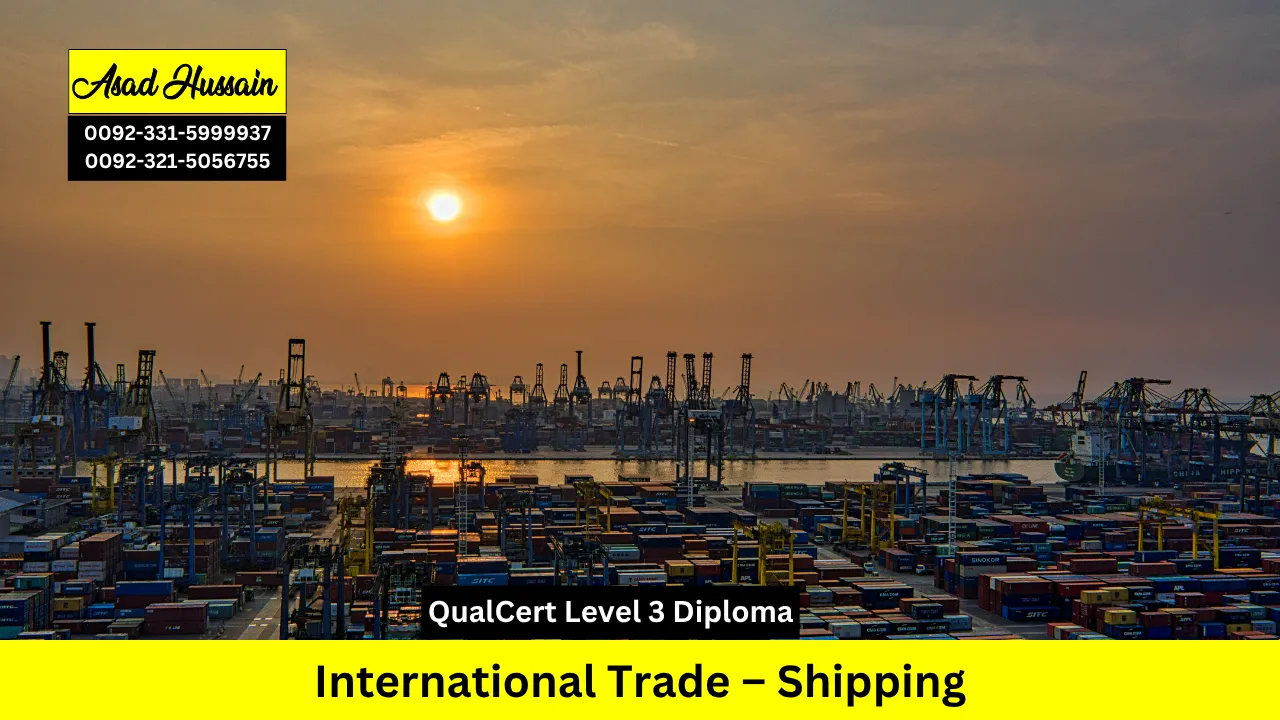
The QualCert Level 3 Diploma in International Trade – Shipping is a specialised qualification designed for professionals and learners seeking comprehensive knowledge of global shipping operations and international trade practices. As international trade continues to expand, understanding the shipping industry has become essential for businesses and professionals involved in import, export, and logistics management. This course equips learners with practical skills and theoretical knowledge to navigate complex shipping processes, regulations, and global trade environments.
The programme covers key areas such as shipping documentation, freight forwarding, cargo handling, logistics coordination, import/export compliance, international shipping regulations, and risk management. Learners will also gain insights into shipping contracts, transportation methods, customs procedures, and operational efficiency, enabling them to optimise global supply chains effectively.
Designed for both newcomers and professionals already working in trade and logistics, the Level 3 Diploma combines industry-relevant theory with practical applications, preparing participants to contribute confidently to international shipping operations. The course also provides awareness of global trade policies and practices, enhancing decision-making skills in dynamic commercial environments.
Upon successful completion, learners will possess the skills and knowledge required to pursue careers in shipping, freight forwarding, logistics coordination, import/export management, and supply chain operations. The QualCert Level 3 Diploma in International Trade – Shipping also serves as a foundation for further professional development in international trade, logistics, and supply chain management.
Program Highlights
Study Units
To achieve,QualCert Level 3 Diploma in International Trade – Shipping; Candidates must Complete the 6 Manadatory Units.
- Fundamentals of International Trade and Shipping
- Trade Documentation and Customs Procedures
- Cargo Handling, Ports and Shipping Operations
- Shipping Contracts, Payments and Incoterms
- Introduction to Marine Insurance and Risk Awareness
- Communication, Customer Service and Professional Practice in Trade
Entry Requirements
- Age Requirements: Applicants must be at least 18 years old at the time of enrollment.
- Educational Background: Applicants should possess a Level 2 qualification or equivalent secondary education (such as GCSEs, Matriculation, or an equivalent international qualification).
- Language Proficiency:Learners must have a reasonable level of English proficiency to understand course materials, participate in learning activities, and complete assessments
- Work Experience:No formal work experience is required. However, individuals with prior experience in shipping, logistics, international trade, or related commercial fields may benefit more from the course content.
Please ensure all criteria are met to facilitate a smooth admission process into this professional program.
Learning Outcomes
- Fundamentals of International Trade and Shipping
- Understand the role of shipping in supporting global trade.
- Identify key stakeholders in international trade and maritime operations.
- Explain the basic principles of import and export processes.
- Recognise the importance of ports and shipping lines in supply chains.
- Demonstrate awareness of trade routes and shipping markets.
- Apply basic trade concepts to practical shipping examples.
- Evaluate the significance of shipping in global commerce.
- Trade Documentation and Customs Procedures
- Identify the main documents used in international trade.
- Explain the purpose of bills of lading, invoices, and certificates of origin.
- Understand the role of customs authorities in regulating trade.
- Apply knowledge of Incoterms to trade documentation.
- Recognise the importance of accuracy in customs clearance.
- Demonstrate awareness of tariffs, duties, and compliance requirements.
- Evaluate the impact of documentation errors on trade operations.
- Cargo Handling, Ports and Shipping Operations
- Explain the principles of safe cargo handling in ports.
- Identify different types of cargo and their handling requirements.
- Understand the role of ports in facilitating international trade.
- Apply knowledge of port operations to shipping case studies.
- Recognise risks associated with cargo handling and storage.
- Demonstrate awareness of port equipment and technology.
- Evaluate the importance of efficiency in port and shipping operations.
- Shipping Contracts, Payments and Incoterms
- Understand the financial aspects of shipping contracts.
- Identify key terms and conditions in charter parties and contracts of carriage.
- Explain the role of Incoterms in defining responsibilities.
- Apply knowledge of payment methods in international trade.
- Recognise the importance of contract compliance in shipping.
- Demonstrate awareness of risks in contractual agreements.
- Evaluate the role of contracts in ensuring smooth trade operations.
- Introduction to Marine Insurance and Risk Awareness
- Explain the principles of marine insurance in shipping.
- Identify different types of marine insurance policies.
- Understand the concepts of insurable interest and indemnity.
- Apply knowledge of risk assessment to shipping operations.
- Recognise the importance of insurance in protecting financial assets.
- Demonstrate awareness of claims procedures and documentation.
- Evaluate the role of insurance in managing trade risks.
- Communication, Customer Service and Professional Practice in Trade
- Understand the importance of communication in international trade.
- Demonstrate effective customer service skills in a trade environment.
- Recognise the role of cultural awareness in global business.
- Apply problem-solving skills to trade-related challenges.
- Understand professional behaviour in shipping and trade contexts.
- Demonstrate teamwork and collaboration in trade operations.
- Evaluate the importance of customer satisfaction in trade success.
Target Audience
The QualCert Level 3 Diploma in International Trade – Shipping is designed for individuals who are beginning their journey into the world of global trade and maritime operations.
- School Leavers and College Graduates
- Ideal for those completing secondary education and seeking a vocational pathway.
- Provides a recognised qualification to support entry into the trade and shipping sectors.
- Offers practical skills that can be applied immediately in the workplace.
- Builds confidence for learners transitioning from education to employment.
- Aspiring Trade and Shipping Assistants
- Suitable for individuals aiming to work in trade support or shipping offices.
- Equips learners with knowledge of documentation and customs procedures.
- Provides training in basic shipping operations and cargo handling.
- Prepares learners for support roles in trade and logistics companies.
- Logistics and Freight Forwarding Staff
- Beneficial for those starting careers in logistics or freight forwarding.
- Helps learners understand the financial and operational side of shipping.
- Provides knowledge of Incoterms, payments, and compliance.
- Supports career progression into logistics and transport roles.
- Maritime Enthusiasts with No Prior Experience
- Accessible to learners with no background in trade or shipping.
- Offers a structured introduction to the maritime industry.
- Encourages interest in further study or career development.
- Provides a stepping stone to higher-level qualifications.
- Entry-Level Administrative and Customer Service Staff
- Suitable for those working in trade administration or customer-facing roles.
- Enhances communication and teamwork skills in a trade context.
- Provides knowledge of documentation and compliance requirements.
- Builds awareness of the importance of customer service in trade operations.
- International Learners Seeking Global Opportunities
- Recognised internationally, making it suitable for learners abroad.
- Provides transferable skills for employment in trade and shipping worldwide.
- Offers insight into international trade and customs procedures.
- Builds a foundation for global career mobility.
- Early-Career Professionals Seeking Specialisation
- Supports career development and progression.
- Suitable for individuals already working in logistics or administration.
- Provides an opportunity to specialise in international trade and shipping.
- Enhances employability by adding a recognised qualification.