
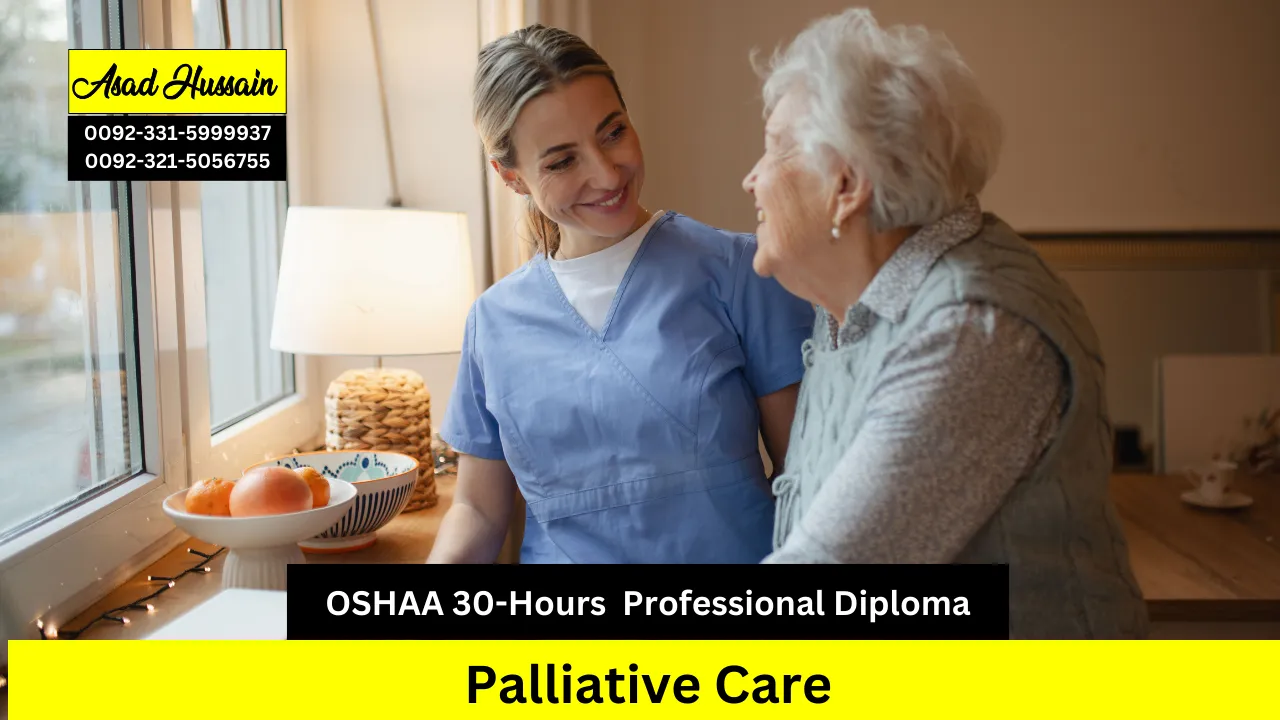
Master Compassionate Care with Professional Diploma in Palliative Care
The OSHAA 30-Hours Professional Diploma in Palliative Care is designed to equip learners with comprehensive knowledge and practical skills to provide compassionate, patient-centered care for individuals with life-limiting illnesses. The course covers essential principles of palliative care, including pain and symptom management, emotional and psychological support, and effective communication with patients and their families. Participants will gain insight into holistic approaches that enhance the quality of life and dignity of patients while supporting families and caregivers during challenging times.
Throughout this professional diploma, learners explore key areas such as end-of-life care planning, ethical considerations, multidisciplinary teamwork, and culturally sensitive care practices. The course emphasizes practical strategies for addressing physical, emotional, and spiritual needs of patients while ensuring safety, comfort, and respect. Learners also develop skills in symptom assessment, care coordination, and advocacy, which are critical for delivering effective and compassionate palliative care in various healthcare settings.
OSHAA 30-Hours Professional Diploma in Palliative Care provides a structured pathway for healthcare professionals, caregivers, and wellness practitioners seeking to enhance their expertise in palliative and end-of-life care. While this program is not Ofqual regulated, it aligns with recognized standards in patient care and professional practice. Upon completion, participants may pursue further certifications and professional diplomas in areas such as advanced palliative care, pain management, hospice care, and holistic health, strengthening both practical skills and professional credibility in compassionate patient care.
Program Highlights
Study Units
- Introduction to Palliative Care and Its Principles (3 hours)
- Understanding Life-Limiting Illnesses and Disease Progression (3 hours)
- Pain and Symptom Management in Palliative Care (5 hours)
- Communication Skills in Palliative Care (4 hours)
- Psychosocial and Spiritual Support (6 hours)
- Ethical and Legal Considerations in End-of-Life Care (3 hours)
- Multidisciplinary Teamwork and Collaborative Care (3 hours)
- Caregiver Support and Family Involvement (3 hours)
Entry Requirements
To ensure participants can fully engage with the course and apply palliative care principles effectively, learners should meet the following entry requirements:
- Age Requirement: Applicants must be at least 18 years old at the time of enrollment.
- Educational Background: A minimum of secondary school education or equivalent is recommended. Prior qualifications such as a Certificate in Healthcare, Nursing Assistant Diploma, Health and Social Care Certification, Patient Care Diploma, or related professional diplomas will be advantageous.
- Language Proficiency: Participants should have a good command of English to understand course materials, communicate with patients and families, and document care effectively.
- Work Experience: Previous experience in healthcare, caregiving, nursing, or wellness support is beneficial but not mandatory.
Meeting these entry requirements ensures learners are prepared to acquire practical skills in patient-centered care, pain and symptom management, and holistic support, enabling them to deliver compassionate and professional palliative care in various healthcare settings.
Learning Outcomes
Introduction to Palliative Care and Its Principles (3 Hours)
- Understand the fundamental principles and goals of palliative care
- Recognise the difference between palliative, curative, and hospice care
- Appreciate the importance of holistic, patient-centred approaches
- Identify the key roles and responsibilities in palliative care delivery
Understanding Life-Limiting Illnesses and Disease Progression (3 Hours)
- Gain knowledge of common life-limiting illnesses and their trajectories
- Understand the stages and progression of terminal diseases
- Recognise the physical, emotional, and social impacts of these illnesses
- Identify appropriate timing for initiating palliative care interventions
Pain and Symptom Management in Palliative Care (5 Hours)
- Learn methods for assessing and managing pain effectively
- Understand approaches to control other distressing symptoms such as nausea, breathlessness, and fatigue
- Apply pharmacological and non-pharmacological interventions safely
- Develop skills to tailor symptom management to individual patient needs
Communication Skills in Palliative Care (4 Hours)
- Acquire techniques for compassionate and effective communication with patients and families
- Develop skills to discuss prognosis and end-of-life issues sensitively
- Manage difficult conversations and emotional responses
- Promote informed decision-making through clear, honest dialogue
Psychosocial and Spiritual Support (6 Hours)
- Understand the psychological and spiritual challenges faced by patients and families
- Learn strategies to provide emotional and spiritual care
- Recognise signs of distress and appropriate referral pathways
- Support patients in finding meaning, comfort, and hope
Ethical and Legal Considerations in End-of-Life Care (3 Hours)
- Understand key ethical principles guiding palliative care practice
- Recognise legal rights and responsibilities related to consent, confidentiality, and advance directives
- Navigate ethical dilemmas commonly encountered in end-of-life care
- Apply ethical decision-making frameworks in complex situations
Multidisciplinary Teamwork and Collaborative Care (3 Hours)
- Appreciate the roles of various professionals within the palliative care team
- Understand the importance of effective teamwork and communication
- Develop skills to collaborate and coordinate care plans
- Promote a patient-centred, integrated approach to care delivery
Caregiver Support and Family Involvement (3 Hours)
- Recognise the needs and challenges faced by caregivers and families
- Learn techniques to support and involve families in care processes
- Develop strategies to reduce caregiver burden and enhance coping
- Facilitate communication and education for family members
Target Audience
The OSHAA 30-Hours Professional Diploma in Palliative Care is designed for individuals seeking to develop expertise in compassionate, patient-centered care for those with life-limiting illnesses. It is ideal for healthcare professionals, caregivers, wellness practitioners, and anyone aiming to enhance their ability to provide holistic support at the end of life.
Healthcare Professionals
- Nurses, doctors, and allied health staff looking to expand palliative care knowledge
- Clinicians aiming to improve patient comfort and symptom management
- Healthcare staff interested in ethical and legal aspects of end-of-life care
- Professionals seeking to enhance communication skills with patients and families
- Practitioners involved in care planning and patient advocacy
Caregivers and Support Staff
- Family caregivers supporting loved ones with chronic or terminal conditions
- Home healthcare aides providing direct patient care
- Volunteers assisting in hospice or community care programs
- Individuals interested in learning strategies to reduce caregiver stress
- Those seeking practical tools to support patients’ emotional and spiritual needs
Wellness and Counselling Practitioners
- Life coaches, counsellors, and social workers wanting to work with terminally ill clients
- Professionals supporting psychological and emotional wellbeing in patients and families
- Practitioners aiming to integrate holistic care approaches into their practice
- Individuals seeking to enhance skills in grief counselling and end-of-life support
- Mental health workers assisting with coping strategies for patients and caregivers
Educators and Trainers in Health Care
- Teachers and trainers delivering programs on palliative care or healthcare ethics
- Workshop facilitators guiding groups on patient-centred care techniques
- Professionals creating educational content for healthcare teams or volunteers
- Mentors supporting new staff in compassionate care practices
- Trainers promoting awareness of ethical and legal responsibilities in end-of-life care
Community Health and Hospice Workers
- Staff working in hospice or palliative care centers
- Professionals coordinating care for patients with life-limiting illnesses
- Volunteers supporting community health initiatives focused on end-of-life care
- Individuals advocating for patient dignity, comfort, and quality of life
- Healthcare coordinators ensuring integrated care across multidisciplinary teams
This course equips participants with the knowledge, practical skills, and confidence to deliver compassionate, ethical, and holistic palliative care, making a meaningful difference in the lives of patients and their families.