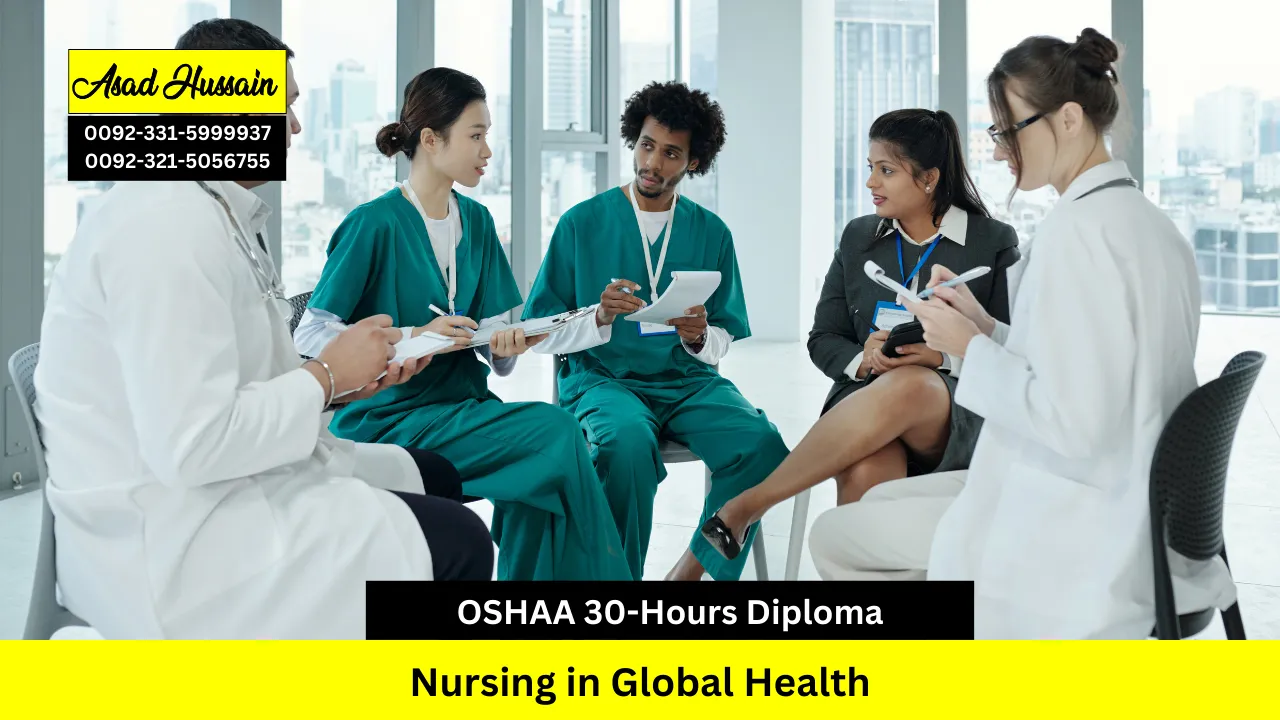
Unlock Professional Nursing Skills for Global Health with Diploma
The OSHAA 30-Hours Professional Diploma in Nursing in Global Health provides a comprehensive introduction to the essential principles of nursing within international healthcare settings. Participants will gain foundational knowledge of patient care, health promotion, and disease prevention across diverse populations. The course emphasizes critical thinking, ethical decision-making, and effective communication, enabling nurses to respond confidently to the challenges of global healthcare. Learners will explore case studies, evidence-based practices, and real-world scenarios that highlight the complexities of delivering healthcare in different cultural and resource settings. By focusing on both clinical skills and strategic problem-solving, the course prepares healthcare professionals to make meaningful contributions to global health initiatives.
Through the OSHAA 30-Hours Professional Diploma in Nursing in Global Health, learners will also acquire practical insights into public health interventions, community-based care, and infection control measures. The program introduces strategies for addressing prevalent health concerns, such as maternal and child health, communicable and non-communicable diseases, and health disparities in underserved populations. Participants will understand the importance of culturally sensitive care, interdisciplinary collaboration, and adherence to international healthcare standards. By engaging with interactive modules, assessments, and simulated patient scenarios, learners enhance their ability to manage health challenges efficiently while prioritizing patient safety and well-being.
The OSHAA 30-Hours Professional Diploma in Nursing in Global Health equips nurses and healthcare professionals with the expertise to operate effectively in international healthcare environments. This course provides in-depth knowledge of healthcare systems, global health policies, and preventive strategies, enabling participants to contribute to improved population health outcomes. Participants will gain skills in leadership, clinical decision-making, and risk management, ensuring they can navigate complex healthcare scenarios with confidence. By the end of the program, learners will be prepared to implement best practices, enhance patient care quality, and actively engage in initiatives that improve health outcomes globally, making this diploma a valuable asset for healthcare professionals aiming for excellence in international nursing.
Program Highlights
Study Units
- Introduction to Global Health and International Nursing Roles (3 hours)
- Social Determinants of Health and Health Inequities (6 hours)
- Communicable and Non-Communicable Diseases in Global Contexts (4 hours)
- Global Health Systems and Policy Frameworks (4 hours)
- Cultural Competence and Ethical Nursing Practice (3 hours)
- Maternal, Child and Adolescent Health in Low-Resource Settings (3 hours)
- Health Promotion, Education, and Community Engagement (4 hours)
- Emergency, Disaster, and Humanitarian Response in Global Nursing (3 hours)
Entry Requirements
To enrol in the OSHAA 30-Hours Professional Diploma in Nursing in Global Health, participants are expected to meet a few essential entry requirements to ensure they can fully engage with the course content.
- Age Requirement: Candidates must be at least 18 years old to participate in the programme.
- Educational Background: Applicants should have completed a relevant healthcare or science-related qualification, such as a diploma or certificate in Nursing, Health Sciences, Medical Assistance, or Public Health. Prior experience in health-related studies will be advantageous.
- Language Proficiency: Participants must be proficient in English, including reading, writing, and comprehension skills, as all course materials, assessments, and instructions are delivered in English.
- Work Experience: While prior professional experience in nursing or healthcare settings is not mandatory, having hands-on exposure to patient care, clinical settings, or community health work will enhance understanding and practical application of course concepts.
These entry requirements are designed to ensure that learners have the foundational knowledge and skills to fully benefit from the course content and actively apply their learning in professional healthcare environments.
Learning Outcomes
Introduction to Global Health and International Nursing Roles (3 Hours)
- Understand the core principles of global health and their relevance to nursing practice
- Recognise the roles and responsibilities of nurses in international and cross-cultural healthcare settings
- Explore the impact of globalisation on health trends, disease patterns, and healthcare delivery
Social Determinants of Health and Health Inequities (6 Hours)
- Identify the key social, economic, and environmental factors affecting health outcomes globally
- Evaluate the impact of poverty, education, gender, and access to care on health equity
- Develop approaches for addressing health disparities within diverse communities
Communicable and Non-Communicable Diseases in Global Contexts (4 Hours)
- Differentiate between major communicable and non-communicable diseases and their global burden
- Understand the global strategies for disease prevention, surveillance, and control
- Apply knowledge of nursing interventions in managing diseases in low-resource and international settings
Global Health Systems and Policy Frameworks (4 Hours)
- Compare different health systems across regions and their impact on nursing care delivery
- Examine international health policies, financing mechanisms, and the role of global organisations such as WHO
- Analyse the role of nurses in shaping and implementing health policy initiatives
Cultural Competence and Ethical Nursing Practice (3 Hours)
- Develop culturally responsive communication and care strategies
- Recognise ethical dilemmas in international nursing and apply relevant ethical principles
- Promote respect, sensitivity, and inclusiveness in diverse clinical environments
Maternal, Child and Adolescent Health in Low-Resource Settings (3 Hours)
- Identify key health challenges affecting mothers, children, and adolescents globally
- Explore evidence-based interventions to reduce maternal and child mortality
- Enhance nursing competencies in supporting reproductive, neonatal, and adolescent health
Health Promotion, Education, and Community Engagement (4 Hours)
- Design and deliver effective health education and behaviour change initiatives
- Engage communities in participatory health promotion and disease prevention efforts
- Foster sustainable health practices through empowerment and advocacy
Emergency, Disaster, and Humanitarian Response in Global Nursing (3 Hours)
- Understand the principles of emergency and disaster response within global nursing contexts
- Learn triage, crisis communication, and trauma-informed care strategies
- Assess the role of nurses in humanitarian aid and response to conflict or natural disasters
Target Audience
This course is designed for healthcare professionals, nurses, and aspiring global health practitioners who aim to enhance their skills in international healthcare settings. It is ideal for those looking to gain comprehensive knowledge of global health systems, disease prevention, and culturally competent nursing practices.
Registered Nurses and Healthcare Practitioners
- Nurses seeking to expand their understanding of global health challenges
- Healthcare practitioners interested in working in cross-cultural or international settings
- Professionals aiming to develop skills in public health promotion and disease prevention
- Clinicians looking to improve patient care in diverse communities
- Those involved in hospital or community-based healthcare programs
Public Health Officers and Coordinators
- Individuals responsible for community health initiatives and outreach programs
- Professionals managing disease prevention campaigns
- Staff involved in planning and evaluating health education strategies
- Coordinators aiming to improve health equity in vulnerable populations
- Officers responsible for monitoring and reporting health trends
Humanitarian Aid and Emergency Response Workers
- Professionals participating in disaster response or humanitarian missions
- Staff involved in crisis management and emergency care in low-resource settings
- Volunteers supporting health programs in conflict zones or disaster-affected areas
- Individuals seeking skills in triage, trauma care, and disaster preparedness
- Workers collaborating with international health organizations
Health Educators and Trainers
- Professionals delivering health promotion and educational programs
- Trainers providing community-based awareness campaigns on communicable and non-communicable diseases
- Educators involved in teaching safe health practices and preventive care
- Staff creating culturally sensitive educational materials
- Individuals designing behaviour change interventions for diverse populations
Nursing Students and Aspiring Global Health Practitioners
- Students aiming to gain foundational knowledge in global health nursing
- Individuals seeking practical insights into international healthcare systems
- Learners interested in maternal, child, and adolescent health programs
- Those exploring community engagement and health advocacy roles
- Participants wanting to develop leadership skills in global nursing contexts
This course is perfect for anyone committed to improving health outcomes in diverse populations and building practical expertise for global nursing roles.