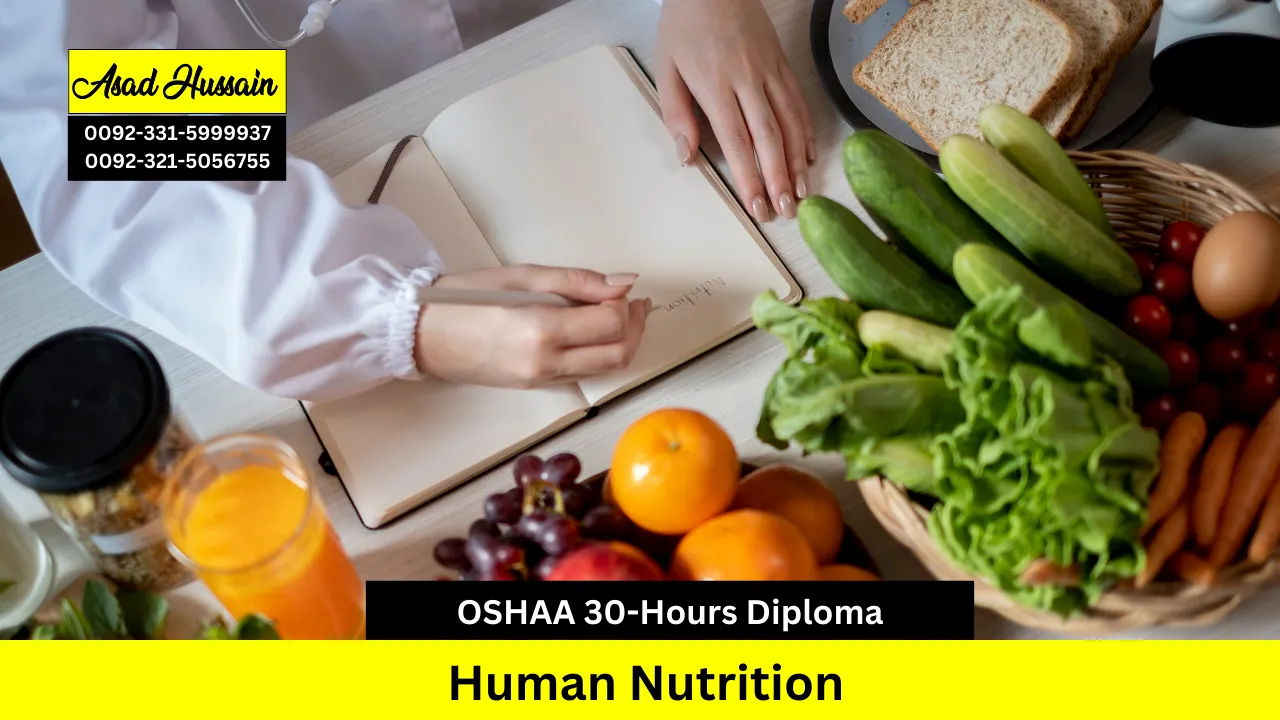
Advance Your Career with the Professional Diploma in Human Nutrition
The OSHAA 30-Hours Professional Diploma in Human Nutrition is designed to provide learners with a comprehensive understanding of the principles of human nutrition, dietary needs, and the impact of food on overall health and wellbeing. Participants will explore macronutrients and micronutrients, nutritional requirements across different life stages, and the relationship between diet and disease prevention. The course emphasises practical knowledge and evidence-based strategies to support healthier lifestyles, making it relevant for health enthusiasts, fitness professionals, and individuals looking to enhance their nutritional expertise.
The diploma combines scientific knowledge with practical application, allowing learners to understand digestion, metabolism, and the role of nutrition in physical and mental performance. Participants will also explore nutritional planning, dietary assessment, and health promotion techniques. The course aligns with related certifications and diplomas in clinical nutrition, dietetics, wellness coaching, and fitness nutrition, enabling learners to build a strong foundation in nutrition science and practical application for personal or professional use.
OSHAA 30-Hours Professional Diploma in Human Nutrition equips learners with the skills to assess, plan, and optimise dietary habits for individuals and communities. Through hands-on learning and applied nutrition concepts, participants gain the ability to create balanced meal plans, understand nutritional requirements, and promote healthy living. The course emphasises evidence-based approaches, practical guidance, and professional competence while offering insights relevant to certifications and diplomas in health, wellness, and nutrition fields.
Program Highlights
Study Units
- Introduction to Human Nutrition and Nutritional Science (3 hours)
- Macronutrients: Carbohydrates, Proteins, and Fats (4 hours)
- Micronutrients: Vitamins and Minerals (4 hours)
- Energy Balance, Metabolism, and Nutritional Needs (5 hours)
- Digestion, Absorption, and the Role of the Gut (4 hours)
- Nutrition Across the Life Stages (4 hours)
- Understanding Dietary Guidelines and Food Labelling (3 hours)
- Nutrition and Chronic Disease Prevention (3 hours)
Entry Requirement
The OSHAA 30-Hours Professional Diploma in Human Nutrition is designed to be accessible while ensuring learners have the foundational skills to fully engage with the course content on nutrition science, dietary planning, and health promotion. The entry requirements are flexible, accommodating learners from diverse backgrounds who wish to enhance their knowledge in human nutrition.
- Age Requirement: Learners should be at least 18 years old to ensure the maturity and focus needed for understanding nutritional principles and their practical applications.
- Educational Background: A basic educational qualification such as a high school diploma or equivalent is recommended. Learners with prior diplomas or certificates in health science, dietetics, fitness coaching, wellness, or nutrition-related fields will find the course particularly valuable, though it is not mandatory.
- Language Proficiency: The course is delivered in English, so learners should have adequate reading, writing, and comprehension skills to follow materials, complete exercises, and participate in discussions effectively.
- Work Experience: No prior professional experience is required; however, individuals working in healthcare, fitness, wellness, or food-related industries may benefit from applying their practical knowledge alongside course concepts.
Overall, these entry requirements ensure that learners can confidently engage with the OSHAA 30-Hours Professional Diploma in Human Nutrition, develop practical skills in dietary planning and health promotion, and enhance their professional competence in nutrition-related fields.
Learning Outcomes
Introduction to Human Nutrition and Nutritional Science (3 Hours)
- Understand the fundamental principles and scope of human nutrition
- Recognise the role of nutrition in promoting health and preventing illness
- Identify key terminology and concepts used in nutritional science
- Explore the relationship between diet, lifestyle, and wellbeing
- Develop foundational knowledge to support healthy dietary choices
Macronutrients: Carbohydrates, Proteins, and Fats (4 Hours)
- Describe the structure and function of carbohydrates, proteins, and fats
- Understand dietary sources and recommended intakes of macronutrients
- Evaluate the role of macronutrients in energy production and body function
- Identify the impact of macronutrient balance on health
- Apply knowledge to plan balanced meals with appropriate macronutrient distribution
Micronutrients: Vitamins and Minerals (4 Hours)
- Understand the functions and classifications of essential vitamins and minerals
- Identify signs and symptoms of common micronutrient deficiencies
- Explore dietary sources and factors affecting absorption of micronutrients
- Recognise the role of micronutrients in immune, skeletal, and neurological health
- Apply micronutrient knowledge to prevent deficiencies and support overall wellbeing
Energy Balance, Metabolism, and Nutritional Needs (5 Hours)
- Explain the concept of energy balance and its role in weight management
- Understand basal metabolic rate and factors influencing energy expenditure
- Assess individual energy and nutrient requirements
- Explore the impact of physical activity on nutritional needs
- Develop strategies for maintaining healthy weight and metabolic health
Digestion, Absorption, and the Role of the Gut (4 Hours)
- Understand the structure and function of the digestive system
- Explore the processes of digestion and nutrient absorption
- Identify factors that affect digestive health and nutrient bioavailability
- Recognise the role of gut health in overall wellbeing
- Apply knowledge to support digestive function and nutrient efficiency
Nutrition Across the Life Stages (4 Hours)
- Identify changing nutritional needs from infancy to older adulthood
- Understand the impact of nutrition on growth, development, and ageing
- Recognise key dietary considerations during pregnancy and lactation
- Explore tailored dietary strategies for different life stages
- Apply life-stage-specific nutrition for optimal health outcomes
Understanding Dietary Guidelines and Food Labelling (3 Hours)
- Interpret UK dietary guidelines and nutrition models such as the Eatwell Guide
- Understand how to read and evaluate food labels and packaging
- Assess portion sizes and nutritional content of everyday foods
- Apply dietary guidelines to create balanced meal plans
- Develop practical skills to make informed food choices
Nutrition and Chronic Disease Prevention (3 Hours)
- Explore the relationship between diet and non-communicable diseases
- Understand the role of nutrition in preventing obesity, diabetes, and heart disease
- Identify dietary strategies to support long-term health outcomes
- Recognise lifestyle factors that contribute to chronic disease risk
- Apply preventative nutrition strategies for healthier living
Target Audience
The OSHAA 30-Hours Professional Diploma in Human Nutrition is designed for anyone seeking to develop a deep understanding of nutrition science, improve dietary planning skills, and promote health and wellness. It is ideal for professionals, students, and enthusiasts looking to apply evidence-based nutrition knowledge in personal, clinical, or professional settings.
Health and Wellness Professionals
- Dietitians and nutritionists aiming to strengthen foundational and applied knowledge
- Fitness trainers and wellness coaches seeking to integrate nutrition into their programs
- Health practitioners supporting clients with dietary planning and lifestyle advice
- Professionals interested in nutrition for chronic disease prevention and wellbeing
- Individuals wanting to enhance practical skills for client-focused nutrition interventions
Students and Academics
- Students studying health sciences, nutrition, or public health
- Learners seeking a structured understanding of human nutrition principles
- Researchers interested in the relationship between diet, health, and disease
- Academics developing teaching resources or workshops in nutrition science
- Individuals aiming to apply nutrition knowledge in projects, assignments, or research
Healthcare Professionals
- Doctors, nurses, and allied health practitioners wanting to expand dietary knowledge
- Professionals involved in preventive healthcare and patient education
- Staff supporting health promotion campaigns and lifestyle interventions
- Clinicians exploring the impact of nutrition on metabolic, cardiovascular, and mental health
- Practitioners aiming to make evidence-based dietary recommendations
Food and Hospitality Industry Professionals
- Chefs, caterers, and culinary experts integrating nutrition into menu planning
- Food service managers understanding nutritional content and portion control
- Professionals developing health-conscious meal options for clients or customers
- Entrepreneurs in food businesses aiming to improve product health standards
- Staff seeking knowledge of dietary guidelines and nutritional labelling
Individuals Seeking Personal Knowledge
- Health-conscious individuals looking to optimise their own diet and lifestyle
- Parents or caregivers aiming to plan balanced meals for families
- Individuals managing health conditions through dietary interventions
- Enthusiasts wanting to explore food science, micronutrients, and energy balance
- Learners committed to improving wellbeing through practical nutrition strategies
Career-Oriented Professionals
- Professionals seeking to complement certifications or diplomas in dietetics, wellness, or fitness
- Learners aiming to enhance employability in nutrition, healthcare, or wellness sectors
- Individuals preparing to offer nutrition consulting or advisory services
- Professionals building expertise in preventive health and lifestyle management
- Those seeking practical, evidence-based nutrition skills for career advancement
Overall, this course is perfect for anyone committed to understanding human nutrition, applying practical dietary strategies, and promoting healthier lifestyles in personal, professional, or clinical contexts.