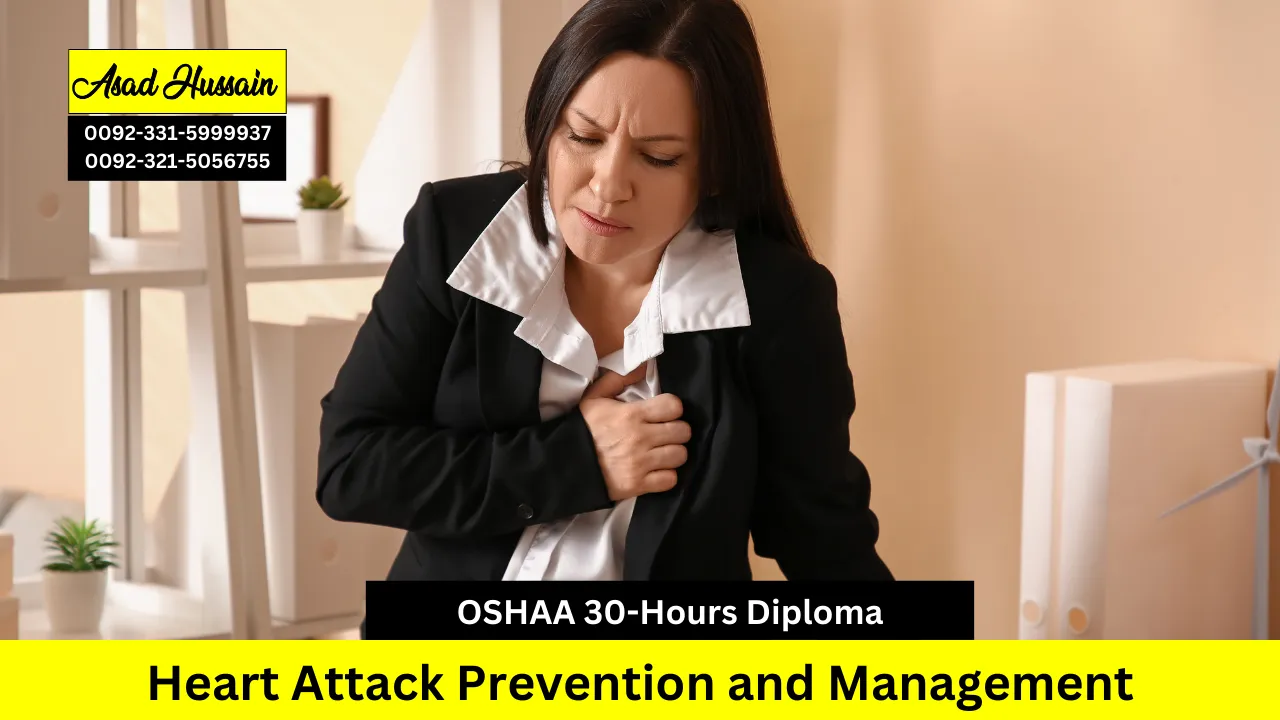
Diploma in Advanced Heart Attack Prevention and Life-Saving Management
OSHAA 30-Hours Professional Diploma in Heart Attack Prevention and Management
Cardiovascular diseases remain one of the leading causes of death worldwide, and understanding the mechanisms, risk factors, and preventive measures is crucial for professionals across healthcare and safety sectors. This course equips learners with comprehensive knowledge on how heart attacks occur, the signs and symptoms to watch for, and evidence-based strategies to reduce risk. Participants will explore lifestyle, genetic, and environmental factors that contribute to cardiac events, gaining practical insight into promoting heart health effectively. The program emphasises early recognition and proactive intervention, ensuring learners are prepared to act swiftly in emergencies.
Through interactive sessions and practical case studies, learners will develop the skills required for effective heart attack management, including monitoring vital signs, recognising warning signals, and initiating timely first aid measures. The course also covers the role of diet, exercise, stress management, and medical interventions in prevention, providing a holistic approach to cardiovascular health. Participants will gain familiarity with emergency response protocols, including CPR, defibrillator usage, and post-incident care strategies, enhancing their ability to safeguard individuals in both workplace and community settings.
OSHAA 30-Hours Professional Diploma in Heart Attack Prevention and Management focuses on empowering learners with the confidence and competence to prevent and manage cardiac events efficiently. By combining theoretical knowledge with practical techniques, the course ensures that participants can implement heart health initiatives, respond to emergencies, and educate others on lifestyle modifications and risk reduction. Learners will leave equipped with essential skills that are applicable in healthcare, corporate wellness, and community programs, making them valuable assets in promoting cardiac safety and improving overall public health outcomes.
Program Highlights
Study Units
- Introduction to Cardiovascular Anatomy and Physiology (3 hours)
- Understanding Heart Attack: Causes, Types, and Risk Factors (5 hours)
- Early Warning Signs and Symptom Recognition (5 hours)
- Emergency Response and Acute Management Protocols (5 hours)
- Diagnostic Procedures and Clinical Assessment Tools (3 hours)
- Pharmacological and Medical Interventions in Acute Care (3 hours)
- Post-Heart Attack Care and Secondary Prevention Strategies (3 hours)
- Lifestyle Modification and Behavioural Change Techniques (3 hours)
Entry Requirement
To enrol in this course, candidates should meet a few basic entry requirements to ensure they can fully engage with the material and practical components:
- Age Requirement: Participants should be at least 18 years of age to enrol, ensuring maturity and responsibility when learning emergency response techniques and health management strategies.
- Educational Background: A minimum of a high school diploma or equivalent is recommended. Candidates with prior certifications in healthcare, first aid, CPR, occupational health, or related diplomas will find the course easier to follow and more applicable.
- Language Proficiency: Participants should have a good command of English, as all course materials, instructions, and assessments are delivered in English. Effective comprehension is necessary for understanding technical terminology and emergency protocols.
- Work Experience: While prior work experience in healthcare, safety, or fitness sectors is advantageous, it is not mandatory. Individuals from non-medical backgrounds who are motivated to learn heart attack prevention and management can also successfully complete the course.
- This course is designed to be accessible for a wide range of learners, whether you are beginning your journey in health and safety or building on existing healthcare knowledge. Candidates with related certifications such as CPR, First Aid, Health and Safety, or Occupational Safety diplomas will find the content immediately relevant and practical.
Learning Outcomes
Introduction to Cardiovascular Anatomy and Physiology (3 hours)
Identify the key structures and functions of the cardiovascular system
Explain the circulatory process and how it supports bodily function
Describe the relationship between cardiovascular anatomy and heart function
Understand how physiological changes contribute to cardiovascular conditions
Understanding Heart Attack: Causes, Types, and Risk Factors (5 hours)
Differentiate between various types of heart attacks and their mechanisms
Recognise the major modifiable and non-modifiable risk factors
Explain the pathophysiological process leading to myocardial infarction
Analyse lifestyle, genetic, and environmental contributors to cardiac risk
Early Warning Signs and Symptom Recognition (5 hours)
Identify common and atypical symptoms of heart attacks in diverse populations
Recognise the differences in symptoms between genders and age groups
Assess symptom severity and onset to prioritise care urgency
Apply clinical reasoning to determine potential cardiac emergencies
Emergency Response and Acute Management Protocols (5 hours)
Demonstrate appropriate first-response actions for suspected heart attacks
Understand the roles of CPR, defibrillation, and emergency services coordination
Apply evidence-based guidelines for immediate cardiac care
Evaluate the urgency of intervention and stabilisation procedures
Diagnostic Procedures and Clinical Assessment Tools (3 hours)
Interpret key diagnostic tools such as ECG, cardiac enzymes, and imaging
Understand the significance of vital signs and symptom reporting
Perform basic clinical assessments to support early diagnosis
Recognise when to escalate care based on diagnostic findings
Pharmacological and Medical Interventions in Acute Care (3 hours)
Understand commonly used medications in acute cardiac care
Explain the indications, contraindications, and side effects of key drugs
Discuss the integration of medication within broader treatment plans
Monitor patients for responses and potential adverse reactions
Post-Heart Attack Care and Secondary Prevention Strategies (3 hours)
Develop post-event care plans that promote recovery and heart health
Identify strategies to reduce recurrence and long-term complications
Coordinate care across multidisciplinary rehabilitation teams
Support patients in managing medication adherence and follow-up
Lifestyle Modification and Behavioural Change Techniques (3 hours)
Educate patients on dietary, exercise, and smoking cessation strategies
Apply motivational interviewing to encourage sustained behavioural change
Design personalised prevention plans based on risk factor profiles
Promote self-management and long-term health maintenance practices
Target Audience
This course is designed for healthcare professionals, emergency responders, and individuals interested in learning critical skills to prevent and manage heart attacks. It equips participants with practical knowledge and techniques to respond effectively to cardiac emergencies, understand cardiovascular health, and promote long-term heart wellness.
Healthcare Professionals and Clinicians
Gain advanced knowledge of cardiovascular anatomy and physiology
Enhance skills in early recognition of heart attack symptoms
Apply evidence-based emergency response protocols
Understand pharmacological interventions and patient management
Develop strategies for post-event care and secondary prevention
Improve patient communication regarding lifestyle and risk factors
Emergency Responders and First Aid Providers
Learn effective CPR and defibrillation techniques
Recognise early warning signs and symptom patterns
Apply rapid assessment and triage skills in emergency situations
Coordinate with healthcare teams during acute cardiac events
Ensure safety and adherence to emergency guidelines
Maintain up-to-date knowledge on resuscitation and first-response care
Caregivers and Family Members of At-Risk Individuals
Understand heart attack risk factors and prevention strategies
Learn to recognise early signs and respond promptly
Support loved ones with lifestyle modification and adherence plans
Provide emotional support during recovery and rehabilitation
Develop knowledge of safe medication management
Promote heart health awareness within households
Fitness and Wellness Professionals
Identify clients with potential cardiovascular risks
Incorporate safe exercise and nutrition strategies into programs
Educate clients on lifestyle changes to prevent heart attacks
Support adherence to medical advice and prevention plans
Monitor client progress and recognise warning symptoms
Apply motivational strategies for sustained health behaviour change
Students and Trainees in Health-Related Fields
Acquire foundational knowledge of cardiovascular health
Understand practical management of heart attack emergencies
Develop assessment and clinical observation skills
Learn communication strategies for patient education
Enhance employability in healthcare and emergency response roles
Build confidence in practical intervention and prevention techniques
This course is suitable for anyone committed to improving heart health awareness, emergency response skills, and prevention strategies, ensuring safer and healthier communities.