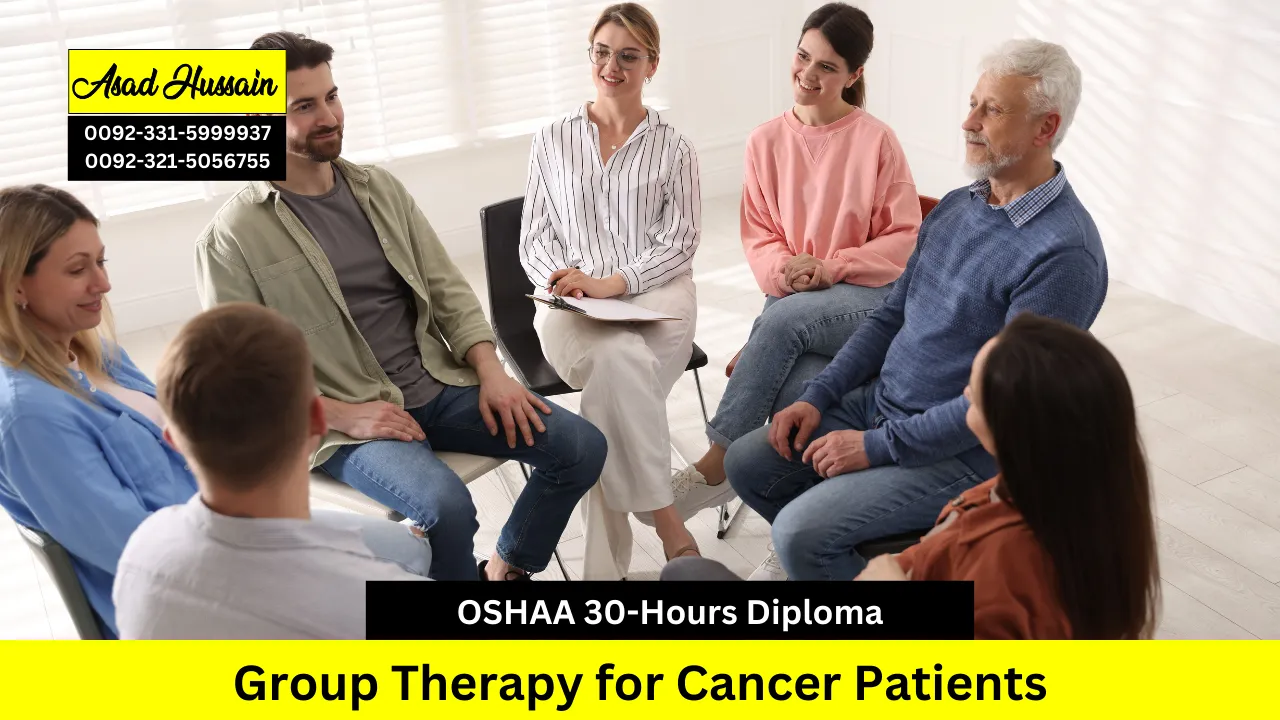
Globally Recognised Professional Diploma in Group Therapy for Cancer Patients
The OSHAA 30-Hours Professional Diploma in Group Therapy for Cancer Patients is designed to equip healthcare professionals, counsellors, and support workers with the knowledge and skills to facilitate therapeutic group sessions for individuals affected by cancer. This course explores the psychological, emotional, and social challenges faced by cancer patients, helping learners understand how group therapy can improve coping mechanisms, resilience, and overall wellbeing. Although it is not Ofqual regulated, the programme follows internationally recognised training practices, providing practical and applied learning for professionals working in healthcare, counselling, and support-focused roles.
The course focuses on practical approaches, evidence-based techniques, and communication strategies essential for conducting effective group therapy sessions. Participants will learn how to foster a safe and supportive environment, manage group dynamics, and implement structured interventions tailored to cancer patients’ emotional and psychological needs. The diploma also enhances professional development by complementing further certifications and diplomas in counselling, mental health support, oncology care, palliative care, and psychosocial rehabilitation, allowing learners to strengthen their practical expertise in therapeutic care.
OSHAA 30-Hours Professional Diploma in Group Therapy for Cancer Patients equips learners with practical, transferable skills to make a meaningful difference in the lives of individuals living with cancer. By understanding group dynamics, emotional regulation, and coping strategies, participants can effectively guide sessions that promote healing, connection, and resilience. The course emphasises applied skills, professional competence, and compassionate care while offering globally relevant insights for learners seeking to advance their practice through related certifications and diplomas in supportive and therapeutic care environments.
Program Highlights
Study Units
- Introduction to Group Therapy: Principles and Practice (3 hours)
- Understanding Cancer: Medical, Emotional, and Social Dimensions (4 hours)
- Psychological Impact of Cancer Diagnosis and Treatment (4 hours)
- Group Dynamics and Therapeutic Communication (4 hours)
- Structuring and Facilitating Cancer Support Groups (5 hours)
- Managing Emotional Expression and Difficult Conversations (3 hours)
- Building Empathy, Trust, and Group Cohesion (5 hours)
- Cultural Sensitivity and Diversity in Group Therapy (2 hours)
Entry Requirement
The OSHAA 30-Hours Professional Diploma in Group Therapy for Cancer Patients is designed to be accessible to learners while ensuring participants have the foundational skills to fully engage with therapeutic and group facilitation concepts. The entry requirements are flexible to accommodate individuals from diverse professional and educational backgrounds.
- Age Requirement: Learners should be at least 18 years old to ensure the maturity required for understanding sensitive emotional and psychological aspects of cancer care and group therapy.
- Educational Background: A basic educational qualification such as a high school diploma or equivalent is recommended. Learners with prior diplomas or certificates in counselling, mental health support, social work, healthcare, oncology care, palliative care, or psychosocial rehabilitation will benefit greatly, though this is not mandatory.
- Language Proficiency: As the course is delivered in English, learners should have adequate reading, writing, and comprehension skills to follow learning materials, participate in exercises, and complete assessments effectively.
- Work Experience: Previous professional experience is not required; however, individuals working in healthcare, counselling, support roles, or patient care environments may gain additional practical insights from the course.
Overall, these entry requirements ensure that learners can confidently engage with the course, develop practical group therapy skills, and enhance their professional capabilities in supporting cancer patients through structured therapeutic interventions.
Learning Outcomes
Introduction to Group Therapy: Principles and Practice (3 Hours)
- Understand the foundational theories and goals of group therapy
- Recognise various types of therapeutic groups and their structures
- Identify the stages of group development and facilitator roles
- Develop awareness of the benefits of group therapy for individuals with health challenges
- Explore how group settings support emotional and psychological wellbeing
Understanding Cancer: Medical, Emotional, and Social Dimensions (4 Hours)
- Gain basic knowledge of cancer types, treatments, and care pathways
- Understand the emotional and psychological responses associated with a cancer diagnosis
- Explore the social impact of cancer on patients and their families
- Recognise the role of group support in improving patient wellbeing
- Develop foundational knowledge for facilitating therapeutic interventions
Psychological Impact of Cancer Diagnosis and Treatment (4 Hours)
- Identify common emotional and mental health challenges faced by cancer patients
- Understand how cancer affects identity, relationships, and coping mechanisms
- Learn techniques to support emotional adjustment and psychological resilience
- Explore the role of therapeutic support in managing anxiety, depression, and trauma
- Apply insights to guide supportive group discussions
Group Dynamics and Therapeutic Communication (4 Hours)
- Understand the roles and behaviours that influence group dynamics
- Develop active listening and therapeutic communication skills
- Learn strategies to manage group interaction, participation, and silence
- Apply techniques to maintain a respectful and supportive group environment
- Enhance facilitation skills for effective group engagement
Structuring and Facilitating Cancer Support Groups (5 Hours)
- Learn how to design structured sessions based on participants’ needs
- Understand the facilitator’s role in guiding discussions and activities
- Plan appropriate themes, materials, and interventions for sessions
- Develop skills to support ongoing engagement and group progression
- Apply practical strategies to maximise therapeutic outcomes
Managing Emotional Expression and Difficult Conversations (3 Hours)
- Identify emotional responses such as fear, grief, and anger in group settings
- Develop techniques to support emotional regulation and expression
- Learn how to facilitate sensitive discussions with care and professionalism
- Understand how to manage group reactions to distressing content
- Apply strategies to maintain safety and empathy within the group
Building Empathy, Trust, and Group Cohesion (5 Hours)
- Explore methods for fostering mutual support and understanding among participants
- Understand the importance of trust-building in therapeutic relationships
- Learn techniques to encourage participation and emotional safety
- Apply principles of group cohesion to enhance therapeutic outcomes
- Develop skills to create a supportive and connected group environment
Cultural Sensitivity and Diversity in Group Therapy (2 Hours)
- Recognise the impact of cultural backgrounds on health beliefs and emotional expression
- Develop awareness of biases and assumptions in therapeutic settings
- Learn how to create inclusive and respectful group environments
- Apply culturally sensitive approaches to communication and facilitation
- Promote equity, understanding, and diversity in therapeutic practice
Target Audience
The OSHAA 30-Hours Professional Diploma in Group Therapy for Cancer Patients is designed for individuals who want to develop specialised skills in facilitating therapeutic group sessions for cancer patients. It is suitable for professionals and learners aiming to provide emotional, psychological, and social support in healthcare, counselling, and wellbeing-focused roles.
Healthcare and Clinical Practitioners
- Nurses, doctors, and allied healthcare professionals working with cancer patients
- Oncology specialists seeking to enhance patient support skills
- Palliative care providers aiming to improve emotional care strategies
- Healthcare assistants involved in patient wellbeing programmes
- Practitioners looking to integrate group therapy into clinical practice
Counsellors and Mental Health Professionals
- Psychologists and counsellors supporting cancer patients
- Mental health advocates focusing on emotional resilience and coping skills
- Therapists facilitating individual and group interventions
- Professionals aiming to strengthen therapeutic communication skills
- Practitioners enhancing expertise in emotional regulation and patient engagement
Support Workers and Care Coordinators
- Patient support officers in hospitals and community care settings
- Social workers providing psychosocial assistance to families and patients
- Care coordinators managing patient wellbeing and support groups
- Volunteers working with cancer support organisations
- Individuals seeking practical skills in group facilitation and patient interaction
Educators, Trainers, and Coaches
- Teachers and trainers in healthcare, counselling, or wellbeing programmes
- Facilitators designing workshops or educational sessions for patients
- Coaches supporting emotional development and resilience-building
- Individuals developing structured training for group therapy programmes
- Professionals delivering applied learning in therapeutic contexts
Researchers and Academic Learners
- Students of psychology, counselling, social work, or healthcare
- Researchers studying group therapy, psychosocial interventions, or oncology care
- Learners seeking applied knowledge of cancer-related emotional challenges
- Individuals exploring the impact of group dynamics on patient wellbeing
- Those aiming to implement research-informed practices in clinical settings
Career-Oriented Learners
- Professionals seeking to enhance their career profile with specialised skills
- Individuals pursuing further certifications and diplomas in counselling, mental health, or oncology support
- Learners aiming for transferable skills in therapeutic facilitation and patient engagement
- Those committed to providing compassionate and evidence-informed care
- Individuals focused on continuous professional development in supportive care
Overall, this course is ideal for anyone seeking to acquire practical, evidence-based skills in group therapy to support cancer patients emotionally, socially, and psychologically while enhancing professional competence in healthcare and counselling roles.